

Chinese workers arrive in Pakistan to speed up CPEC projects slowed by coronavirus

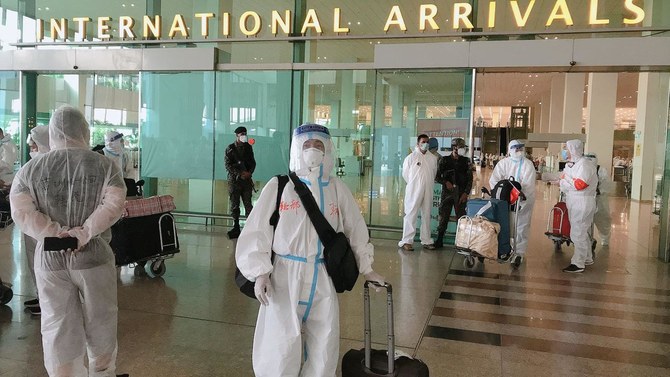
Chinese engineers and workers arrive at Islamabad International Airport, Pakistan, to expedite work on several hydropower projects under the China-Pak Economic Corridor, on July 13, 2020. (China Gezhouba Group Company)
Short Url
Updated 25 July 2020
Follow

Chinese workers arrive in Pakistan to speed up CPEC projects slowed by coronavirus

  • Majority Chinese workers left before Chinese New Year festival and were unable to return to Pakistan after the pandemic started
  • Pakistan and China have signed projects worth more than $12 billion since June 6 this year, including for two hydropower projects

ISLAMABAD/KARACHI: Around 215 Chinese engineers and other staff members have arrived in Pakistan from China this week to expedite work on several hydropower projects under the China-Pak Economic Corridor (CPEC), a spokesman for China Gezhouba Group Company, which is running the projects, said.

Pakistan’s federal government set up the CPEC Authority late last year to expedite work on over $60 billion worth of CPEC projects that have stalled since the government of Prime Minister Imran Khan came to power in 2018. Asim Saleem Bajwa, a retired military general, was appointed to head the body.
Since June 6, Pakistan and China have signed projects worth more than $12 billion, including for two hydropower projects in Pakistan-administered Kashmir, and the rehabilitation and upgrade of a 1,872 KM long colonial-era railway track at an estimated cost of $8.17 billion.
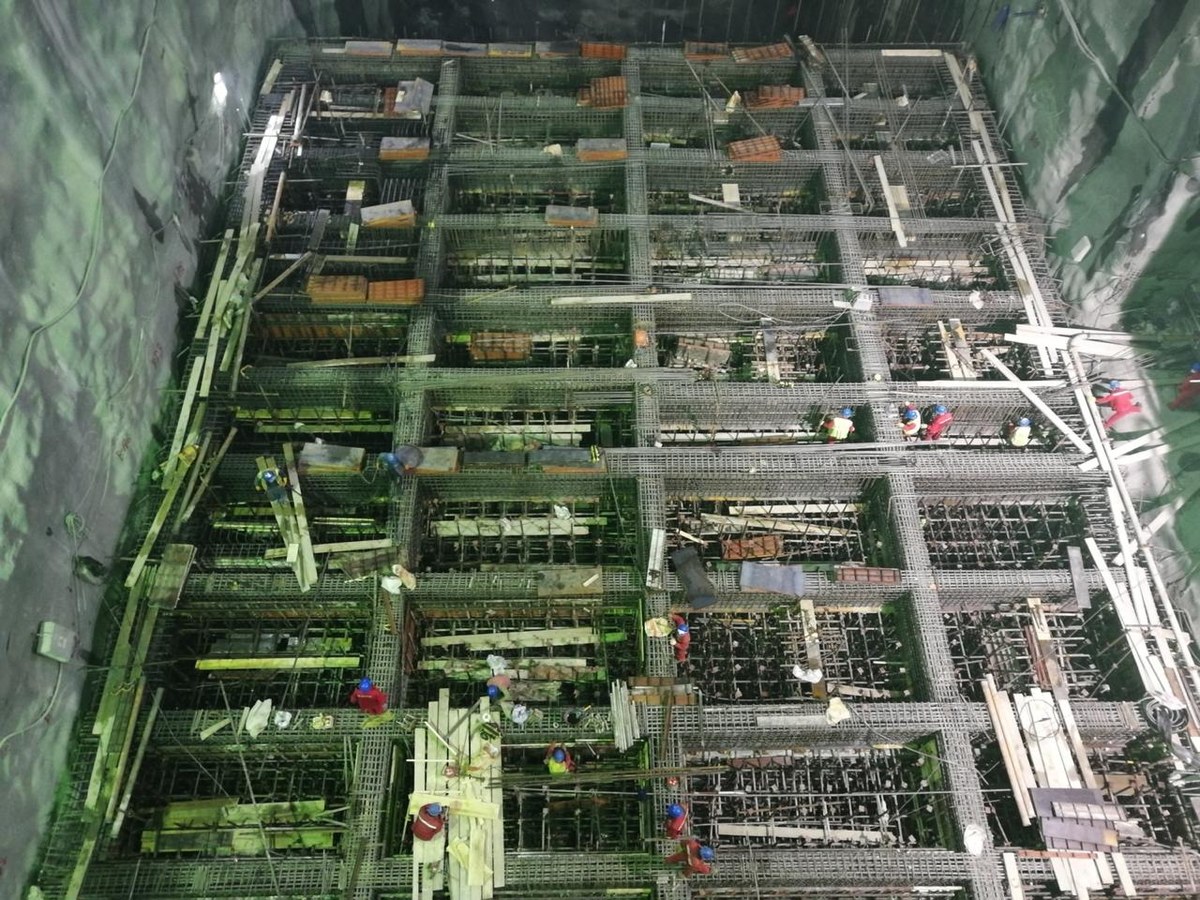


A view of tunnel work at CPEC Suki Kinari Hydropower Project. (Photo courtesy: China Gezhouba Group Company)

Travel restrictions to prevent the spread of the coronavirus, which has now killed more than half a million people, have idled much of the world’s second-largest economy, China, and choked key elements of its signature Belt and Road Initiative (BRI), of which CPEC is a flagship project.
But batches of Chinese staff are arriving in Pakistan once again to kickstart work on projects including the Suki-Kinari, Neelum Jhelum, and Dasu hydropower projects as well as the Mohmand Dam project.
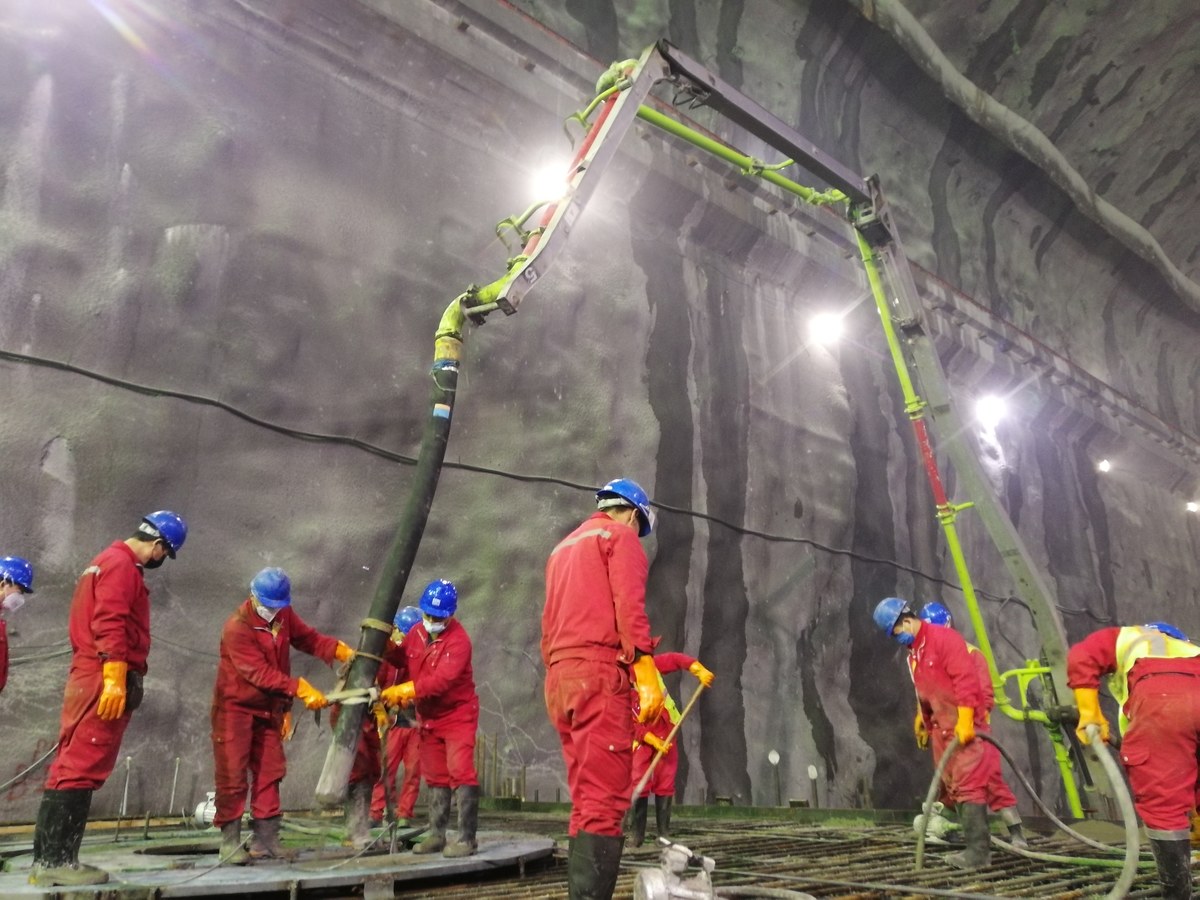


In this undated photo, Chinese construction workers of China Gezhouba Group Company working at a CPEC project site in Pakistan. (Photo courtesy: China Gezhouba Group Company)

A third group of Chinese engineers and other staff members arrived in Islamabad from China’s Sichuan Province on July 13, a press release from state-owned China Gezhouba Group Company said.
“This is the third batch of Chinese CPEC workers returning to Pakistan through charter plane organized by China Gezhouba with assistance from Ministry of Foreign Affairs since the COVID-19 outbreak,” said Mustafa Kamal, spokesman of China Gezhouba Group Company, said. “Majority of the Chinese workers had left Pakistan before the outbreak for the Chinese New Year festival and were unable to return to Pakistan because of the spread of coronavirus that resulted in lockdowns and international flight suspensions.”


China Gezhouba Group Company take a group photo after arriving in Islamabad, Pakistan to restart work on CPEC projects July 13, 2020. (Photo courtesy: China Gezhouba Group Company)


The company is one of the largest publicly owned Chinese entities, executing a number of projects in Pakistan — including under the CPEC umbrella — worth around $9 billion in Pakistan.
The company spokesman said all staff had gone through a compulsory quarantine period of 14 days in China and were tested for coronavirus there. After arrival at Islamabad airport, they had been taken straight to isolation centers established on project sites where they will be quarantined for an additional 14 days.
Two groups of CPEC staffers had arrived in Pakistan earlier, Kamal said, and were safely deputed to work. He said the company roughly had 24,800 local employees and around 14,000 Chinese workers working on various CPEC projects.


Bangladesh, Pakistan explore avenues for cooperation in railways sector

Updated 59 min 26 sec ago
Follow

Bangladesh, Pakistan explore avenues for cooperation in railways sector

  • Islamabad, Dhaka have lately been looking to strengthen institutional linkages to broaden cooperation amid thaw in ties
  • Pakistan offers expertise in railway development, rolling stock and manufacturing to visiting Bangladeshi officials

KARACHI: Pakistani and Bangladeshi officials have discussed ways to strengthen cooperation in the railways sector, including technical collaboration and capacity-building, the Pakistani railways ministry said on Saturday, as the two sides explore avenues to expand bilateral ties.

The statement came after a visit of Bangladesh’s Secretary for International Organizations Farhad Islam and High Commissioner to Pakistan Mohammad Iqbal Hussain Khan to the Pakistan Railways Workshop Division in Lahore.

It comes amid Islamabad’s efforts to rebuild relations with Bangladesh since the ouster of former prime minister Sheikh Hasina, with both countries looking to strengthen institutional linkages to broaden their cooperation.

The visiting Bangladeshi officials were welcomed at the Pakistan Railways headquarters and briefed on the overall functioning, technical capabilities and projects, according to the Pakistani railways ministry.

“The delegation was subsequently given a detailed tour of the Mughalpura Locomotive Workshop, where they were briefed on various stages of locomotive maintenance, rehabilitation, and manufacturing processes,” the ministry said.

“The distinguished guests termed their visit as highly informative, productive, and encouraging, and appreciated the technical expertise and professional competence of Pakistan Railways.”

Pakistan and Bangladesh were part of the same country until Bangladesh’s secession following a bloody civil war in 1971, an event that long cast a shadow over bilateral ties.

Both countries have moved closer since August 2024, following the ouster of Hasina who was considered an India ally. While Pakistan-Bangladesh ties warm up, relations between Dhaka and New Delhi remain strained over India’s decision to grant asylum to Hasina.

A short documentary highlighting the working and operational strength of Pakistan Railways workshops was also presented to the Bangladeshi officials during their visit.

“Federal Minister for Railways, Mr. Muhammad Hanif Abbasi, remains fully committed to further strengthening bilateral relations with brotherly country Bangladesh, particularly in the areas of railway development, exchange of expertise, rolling stock, and cooperation in manufacturing sectors,” the railways ministry said.

“Minister has expressed his resolve to take forward railway-to-railway cooperation between the two countries, emphasizing that mutual collaboration in the railway sector can yield substantial benefits for both nations.”