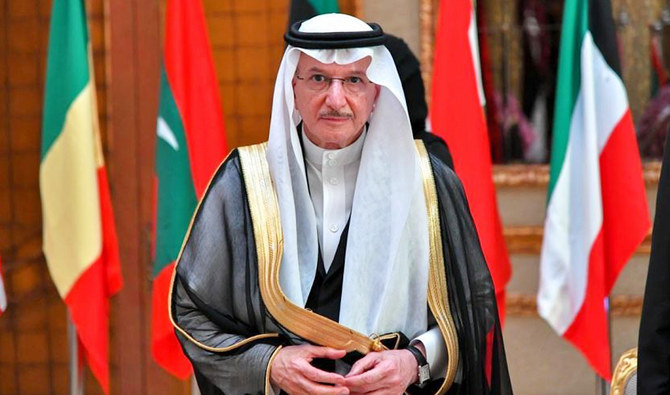
JEDDAH: The secretary-general of the Organization of Islamic Cooperation (OIC), Dr. Yousef Al-Othaimeen, has approved funds for 11 projects in eight member states. It is part of the support provided by the OIC through the Islamic Solidarity Fund (ISF), which is one of its subsidiary bodies.
The ISF’s executive director, Ibrahim Al-Khuzaim, said that the approved projects covered the education, health, and social sectors, adding that the 63rd and 64th sessions of the ISF’s permanent council had endorsed the projects.
Yemen, Niger, Palestine, Uganda, Côte d’Ivoire, Nigeria, Egypt, and Afghanistan are the beneficiaries of the development aid.
The ISF’s vision is to advance Muslim communities and provide material assistance to support them socially and culturally. The body also provides urgent humanitarian assistance to Muslim countries and societies exposed to disasters and crises.
The aid reflects the OIC’s solidarity with these countries and the ISF’s interest in achieving human development and raising the level of Muslims in the world, in addition to developing human capabilities in the social, economic, educational, cultural, and health fields.

Organization of Islamic Cooperation fund approves 11 projects in 8 member states
https://arab.news/n5gat
Organization of Islamic Cooperation fund approves 11 projects in 8 member states
- Yemen, Niger, Palestine, Uganda, Côte d’Ivoire, Nigeria, Egypt, and Afghanistan are the beneficiaries of the development aid
Saudi foreign minister: Youth are ‘future leaders’, ’messengers of peace’
- Prince Faisal chairs opening session of Global Forum of UN Alliance of Civilizations
RIYADH/SYDNEY: Youth are the leaders of the future and messengers of peace, Saudi Foreign Minister Prince Faisal bin Farhan bin Abdullah said on Sunday.
He made the remarks at the opening of the 11th Global Forum of the UN Alliance of Civilizations in Riyadh.
Saudi Arabia is hosting the forum under the theme: “Two Decades of Dialogue for Humanity: Advancing a New Era of Mutual Respect and Understanding in a Multipolar World.”
UN Secretary-General Antonio Guterres and High Representative for the UN Alliance of Civilizations Miguel Angel Moratinos attended the forum.
The event also featured foreign ministers, political and religious leaders, heads of international organizations, and civil society representatives.
In his opening address, the foreign minister affirmed that hosting the forum demonstrates the Kingdom’s support for UN efforts to promote dialogue, tolerance, and peaceful coexistence among civilizations and cultures.
He said that Saudi Vision 2030 reflects a national commitment to moderation, openness to other civilizations, and opposition to hate speech and extremism.
Prince Faisal said that the 11th session of the UN Alliance of Civilizations provides an opportunity to review past efforts and exchange ideas on managing diversity through communication and dialogue among civilizations and religions.
The minister highlighted the important role of youth in fostering a peaceful and tolerant world.
He said: “They are the leaders of the future and messengers of peace.”
Prince Faisal expressed his pleasure at the strong youth participation. “In this context, I cannot help but express my great pleasure at seeing so many young people in this hall.”
He said that a dedicated youth forum will be held alongside the main event, and the venue will also host the graduation ceremony for the eighth cohort of the Salam Project for Civilizational Communication’s Young Leaders Qualification Program.
“Accordingly, it can be said that this UN Alliance of Civilizations forum is a forum for youth,” he added.
The forum aims to review two decades of global dialogue, address current challenges, and plan future collaboration to enhance mutual understanding and support international peace and stability.


