SEOUL, South Korea: North Korea on Saturday reiterated it has no immediate plans to resume nuclear negotiations with the United States unless Washington discards what it describes as “hostile” polices toward Pyongyang.
The statement by North Korean First Vice Foreign Minister Choe Son Hui came after President Donald Trump’s former national security adviser, John Bolton, told reporters in New York Thursday that Trump might seek another summit with North Korean leader Kim Jong Un as an “October surprise” ahead of the US presidential election.
South Korean President Moon Jae-in, who had lobbied hard to help set up the now-stalled negotiations between Washington and Pyongyang, also expressed hope that Trump and Kim would meet again before the election in a video conference with European leaders on Tuesday.
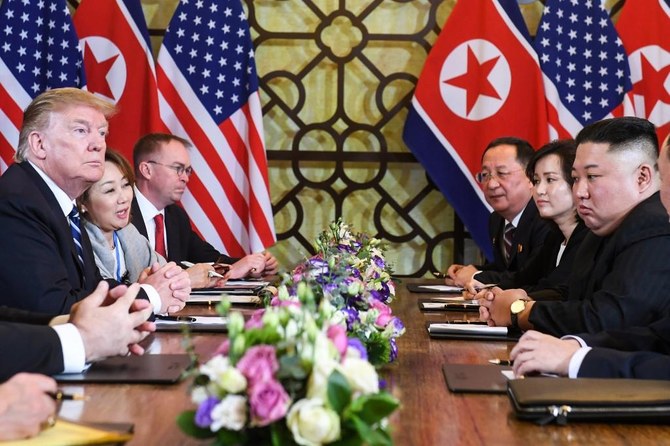
Kim and Trump have met three times since embarking on their high-stakes nuclear diplomacy in 2018, but negotiations have faltered since their second summit in February last year in Vietnam, where the Americans rejected North Korean demands for major sanctions relief in exchange for a partial surrender of its nuclear capability.
Kim entered 2020 vowing to bolster his nuclear deterrent in face of “gangster-like” US sanctions and pressure. Choe’s statement followed a series of similar declarations by the North that it would no longer gift Trump with high-profile meetings he could boast of as his foreign policy achievements unless it gets something substantial in return.
“Is it possible to hold dialogue or have any dealings with the US which persists in the hostile policy toward the DPRK in disregard of the agreements already made at the past summit?” Choe said, referring to North Korea by its formal name, the Democratic People’s Republic of Korea.
“We do not feel any need to sit face-to-face with the US, as it does not consider the DPRK-US dialogue as nothing more than a tool for grappling its political crisis,” she said.
Some analysts believe North Korea would avoid serious negotiations with the United States at least until the November presidential election as there’s a chance US leadership could change.
Choe said the North has already established a “detailed strategic timetable” for managing what she described as US threats.
“The US is mistaken if it thinks things like negotiations would still work on us,” she said.
The North in recent months have also been ramping up pressure against South Korea, blowing up an inter-Korean liaison office in its territory and threatening to abandon a bilateral military agreement aimed at reducing tensions. It follows months of frustration over Seoul’s unwillingness to defy US-led sanctions and restart joint economic projects that would breathe life into the North’s broken economy.
The North’s state media on Friday said that Kim, while supervising a Politburo meeting of the ruling Workers’ Party on Thursday, discussed “import issues related to the external affairs” but didn’t specify what they were.


![]()

North Korea: No plans to resume nuclear talks with US
Short Url
https://arab.news/mbnyd
North Korea: No plans to resume nuclear talks with US
- Kim Jong Un and Donald Trump have met three times since embarking on their high-stakes nuclear diplomacy in 2018


Latest updates


Recommended


© 2026 SAUDI RESEARCH & PUBLISHING COMPANY, All Rights Reserved And subject to Terms of Use Agreement.