




First Crack is a Jeddah-based coffee brand that reinvented the startup business model by investing its capital in participating in events.
Building itself from scratch, the startup came to local prominence without taking loans or opening up its own shop. Instead, they appealed to locals through small events and co-dependent stores.
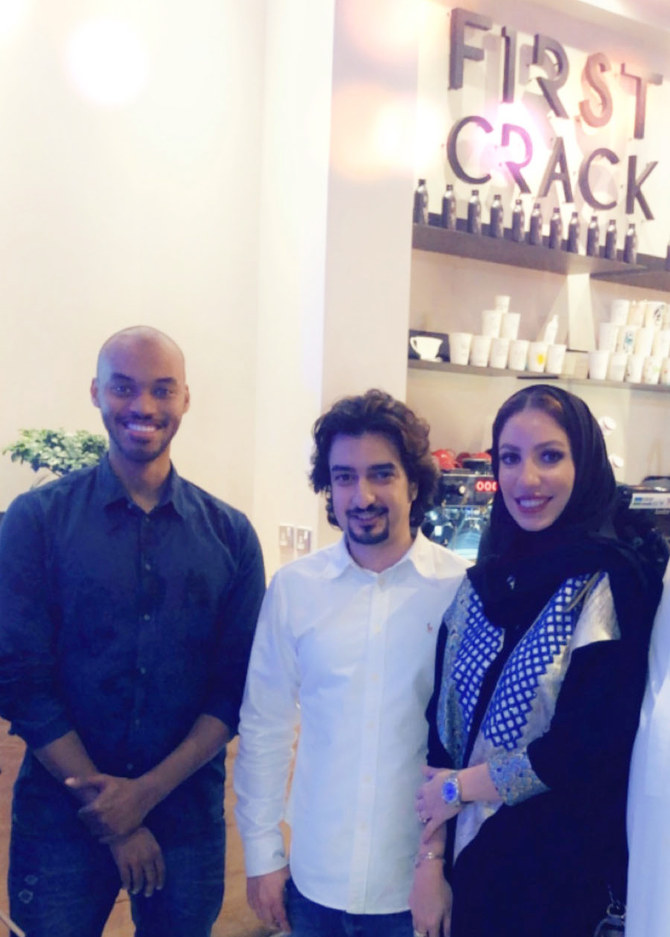
It is comprised of three founders: Hanady Uthman, who has a background in statistics, computer science and business management; Hamza Uthman, an industrial engineer; and Abdulrahman Hejji, who studied law.
Hejji has always been passionate about his cup of coffee and how it was made. He would try different coffee beans, locally and from around the world, and began to make them for friends. Hamza later suggested that he start a coffee business.
“The two sat down together and started a financial study to look into the capital needed to start the business. They came up SR1 million ($267,000) short, with renting a place, buying the necessary equipment, furniture and permits, and bringing in employees,” Hanady said.
First Crack later started at a charitable event in the first quarter of 2018 as a coffee truck project.
“We wanted to test the waters, see if the clients and market were interested. So I suggested we go with the food truck trend. Hejji’s coffee was good . . . but when you’re introducing it to clients, it’s a whole new demographic,” she said.
The trio introduced two signature drinks, Flex Latte and Cold Brew, which continue to be bestsellers at their shop today.
“Cold Brew, which is concentrated black coffee without any additives, is made by soaking coffee beans for over ten hours. Flex Latte, however, contains a mixture of condensed milk, an espresso shot and our secret ingredient,” Hanady said.
Picking coffee beans and roasters fell to Hejji and Hamza, who initially worked with international roasters but switched to local ones to support Saudi brands.
For six months, First Crack continued as an event-based business building their repertoire among coffee connoisseurs.
“It was definitely challenging. When you have your own store, you start your day and end it there and close up shop and leave. Moving our equipment around was draining, not to mention having to take out milk and coffee in case of a power outage,” she said.
But then a chance arose for the startup to launch through Makeen Space, a Saudi initiative that helps to develop local projects and provided the space needed to showcase their products.
“On the plus side, establishing a spot within Makeen helped us to cut down on losses — the area was set up, the bar was already part of the setting and the seating area was already there. We just needed to bring our equipment.
“On the other hand, our location wasn’t ideal, making it difficult for new customers to find us,” Hanady said.
The first three months were a struggle. The co-founder admitted they were not making any revenue, and the only regular customers they had were family members and friends.
“If someone were to ask me what marketing tool it was that kicked us off, I wouldn’t say social media or some agency. It was good old-fashioned word-of-mouth,” Hanady said.
Within its first year of operation with Makeen, First Crack expanded and branched out within a burger joint in Jeddah, Gilt, which proved challenging.
“We always aspire to think outside of the box, which is why (we) didn’t go for a stand-alone shop right away. Luckily, it worked out. People would show up at Gilt just to get a cup of coffee from First Crack,” Hanady said.
After leaving Makeen, First Crack moved to Corniche’s Mini Square, right across from Medd Cafe, a major competitor. The branch was still not an independent store but offered the cafe’s visitors more seating options, including an outdoor area overlooking the Red Sea.
“Medd are the pioneers of specialty coffee in Jeddah — no one can argue with how they’re at the top of the coffee scene — but we also managed to stand alongside them, and continue to do well, which in a way is a testament to our strength as well,” Hanady said.
Nowadays, the coffee brand’s name has built momentum. Hanady said that this was due to their continuous participation in local events, which also provided quick income. “We recently had a booth in Winter Wonderland for Riyadh Season, and it’s really helped us to reach a bigger audience.”
Similar to their beginnings, First Crack has begun to explore clientele in other regions of the Kingdom in order to branch out.
Today, the coffee shop is working on two stand-alone stores in Jeddah and Riyadh, but these plans have been put on hold due to the pandemic.
One upside of the current crisis has been that it made First Crack explore the concept of coffee delivery.
“Our customers would always suggest it,” Hanady said, “but it seemed so unlikely before.”
“How would we get the coffee to them in time or keep it cool enough or warm enough? Because people love our brand, we wanted to give back to them so we began delivering through apps and from our store as well,” she said.
Hanady said that the delivery service will continue beyond COVID-19, as many customers would leave their store or feel discouraged if it became too crowded.


