

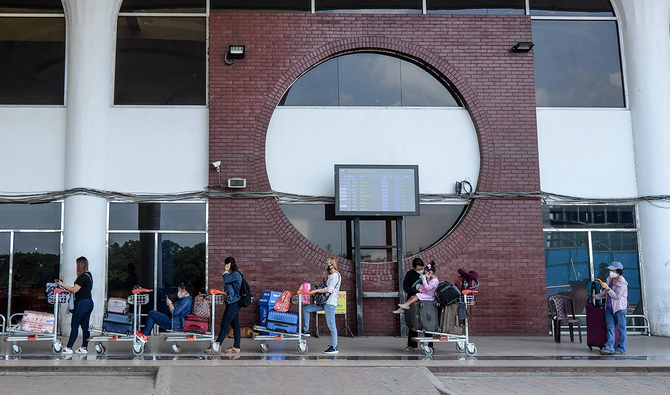
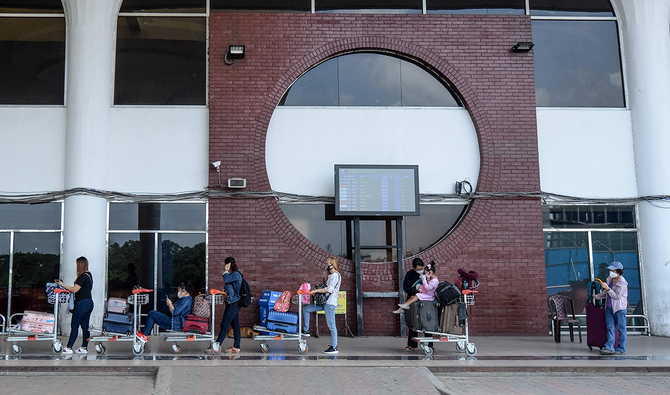
DHAKA: Bangladesh is bracing itself to receive home hundreds of thousands of migrant workers laid off in their host countries due to the coronavirus disease (COVID-19) pandemic.
Dr. A. K. Abdul Momen, the Bangladeshi minister of foreign affairs, told Arab News on Sunday that the returning workers would be offered training and financial assistance to help them set up their own enterprises.
“We have created a fund of around $85 million to ease the plight of the returnees. They will be provided with soft loans through the expatriates’ welfare bank to start small businesses here,” he said.
Earlier this month, the International Organization for Migration warned that due to the global economic and labor crises created by the COVID-19 outbreak, hundreds of thousands of migrant workers would be expected to return to Bangladesh by the end of the year. According to the Bureau of Manpower, Employment and Training (BMET), more than 700,000 Bangladeshis left the country last year to work abroad.
The Bangladeshi Ministry of Expatriates’ Welfare and Overseas Employment said it was finalizing the reintegration plan.
“We will have a meeting in this regard on Monday. The returnees will be provided with the necessary training through our technical training centers across the country and later on receive soft loans to get self-employed,” Mosharraf Hossain, additional secretary at the ministry’s planning and development wing, told Arab News.
Shahidul Alam, another ministry additional secretary, said each returnee would receive up to $3,500 without any collateral. “If needed, they will be provided with a fund up to $6,200,” he added.
Data from Bangladesh-based international NGO BRAC indicated that 87 percent of returnees had no alternative sources of livelihood and more than one-third of them would run out of savings in less than three months.
“Almost all of them returned home hastily and were initially promised by employers that they would be returned when the situation became normal. But after several months of the pandemic, now they have little hope of joining their work again anytime soon as employers are not sure when they would be able to resume operations,” said Shariful Hasan, head of the migration program at BRAC.
According to BRAC, around 200,000 Bangladeshi migrant workers returned home between mid-February and mid-March, including 41,000 from Saudi Arabia, 38,000 from the UAE, and 20,000 from other Gulf countries.
Migration experts believe that Bangladeshi missions in the workers’ host countries, especially in the Gulf, should play a more active role in helping them stay in their duty locations.
Between mid-April and mid-June, another 17,000 migrant workers returned to Bangladesh from the Middle East and other Asian countries.
More than 2 million Bangladeshi workers are currently living in Saudi Arabia, which is the most popular destination for them in the Middle East.
The Middle East is also the main source of Bangladesh’s remittances and its second-largest foreign currency source after the garment sector.
Last year, $18.32 billion was transferred by Bangladeshi migrant workers, according to BMET, and 73 percent of remittances were sent from Gulf Cooperation Council (GCC) countries.
“In this context, Bangladeshi missions in the Middle East should make more synchronized and coordinated efforts to ease the plight of the migrants who are struggling with the pandemic situation in GCC countries,” Hasan said.
Momen said that the Bangladeshi government was trying to help workers stay in their current locations.
“I have already sent letters to the manpower-receiving governments, including the GCC countries, and requested them to employ the Bangladeshi migrants in some alternative sectors, especially in agriculture and fisheries.
“But in case of job termination, I also requested the migrants’ receiving countries to pay the workers six months’ salary as compensation,” he added.


