

UK knife attack suspect was known to security services: reports

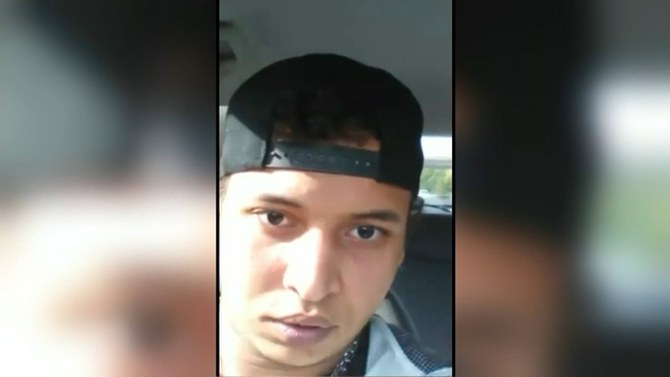
Khairi Saadallah (pictured) is being held on suspicion of murder.
Short Url
Updated 06 January 2021
Follow

UK knife attack suspect was known to security services: reports

  • Saadallah came to the attention of British intelligence services when he was said to have planned to travel to Syria.
  • The attacker would have been one of thousands on security services' watch list.

READING: A man held on suspicion of stabbing three people to death in a British park at the weekend was known to the security services, media reported on Monday.
The 25-year-old, widely identified as Khairi Saadallah, a Libyan refugee, was held on suspicion of murder on Saturday night, soon after the rampage in Reading, west of London.
Thames Valley Police then re-arrested him under the Terrorism Act 2000, which allows for detention without charge for up to 14 days.
Witnesses to the attack in Forbury Gardens described seeing a lone assailant walking through a park filled with people and stabbing them at random.
British media said Saadallah fled the civil war in Libya and had been released from prison earlier this month, after serving time for a series of non-terror offenses.
He briefly came to the attention of the domestic intelligence agency MI5 last year and was said to have planned to travel abroad, reportedly to Syria.
But he was not deemed to be a substantial risk. His mental health is understood to be a factor for investigating officers.
Mark Rowley, a former assistant commissioner for specialist operations in the Metropolitan Police, said Saadallah would have been one of thousands of people on MI5’s watch list.
Some 3,000 people are under investigation at any one time but there are up to 40,000 people who have come up on the radar in relation to extremist ideology, he told BBC radio.
“To spot one of those who is going to go from a casual interest into a determined attacker... is the most wicked problem that the services face,” he added.
The reports about the suspect’s time in prison will again raise questions about the early release of offenders after two previous terror attacks in the past year.
In November, a convicted jihadist on parole was shot dead by police after stabbing five people — two fatally — near London Bridge in the heart of the British capital.

Armed officers also shot dead another assailant who injured three people in a London stabbing attack in February. He had also been released early from a terrorism conviction.
Those attacks prompted Prime Minister Boris Johnson’s government to tighten the law on early prison releases.
A second, named as Joe Ritchie-Bennett, was said to have moved to Britain from Philadelphia in the United States some 15 years ago.
US Ambassador to Britain Woody Johnson offered condolences to everyone affected. “To our great sorrow, this includes an American citizen,” he wrote on Twitter.
Security Minister James Brokenshire said that despite the attack, Britain’s terrorist threat level remains unchanged at “substantial,” which means an attack is deemed “likely.”
“People must remain vigilant,” he told the BBC.


Italian suspect questioned over Bosnia ‘weekend sniper’ killings

Updated 7 sec ago
Follow

Italian suspect questioned over Bosnia ‘weekend sniper’ killings

  • The octogenarian former truck driver from the Friuli-Venezia Giulia region of northeast Italy, is suspected by Milan prosecutors of “voluntary homicide aggravated by abject motives,” according to Italian news agency ANSA

ROME: An 80-year-old man suspected of being a “weekend sniper” who paid the Bosnian Serb army to shoot civilians during the 1990s siege of Sarajevo was questioned Monday in Milan, media reported.

The octogenarian former truck driver from the Friuli-Venezia Giulia region of northeast Italy, is suspected by Milan prosecutors of “voluntary homicide aggravated by abject motives,” according to Italian news agency ANSA.

Lawyer Giovanni Menegon told journalists that his client had answered questions from prosecutors and police and “reaffirmed his complete innocence.”

In October, prosecutors opened an investigation into what Italian media dubbed “weekend snipers” or “war tourists“: mostly wealthy, gun-loving, far-right sympathizers who allegedly gathered in Trieste and were taken to the hills surrounding Sarajevo where they fired on civilians for sport.

During the nearly four-year siege of Sarajevo that began in April 1992 some 11,541 men, women and children were killed and more than 50,000 people wounded by Bosnian Serb forces, according to official figures.

Il Giornale newspaper reported last year that the would-be snipers paid Bosnian Serb forces up to the equivalent of €100,000 ($115,000) per day to shoot at civilians below them.

The suspect — described by the Italian press as a hunting enthusiast who is nostalgic for Fascism — is said to have boasted publicly about having gone “man hunting.”

Witness statements, particularly from residents of his village, helped investigators to track the suspect, freelance journalist Marianna Maiorino said.

“According to the testimonies, he would tell his friends at the village bar about what he did during the war in the Balkans,” said Maiorino, who researched the allegations and was herself questioned as part of the investigation.

The suspect is “described as a sniper, someone

who enjoyed going to Sarajevo to kill people,” she added.

The suspect told local newspaper Messaggero Veneto Sunday he had been to Bosnia during the war, but “for work, not for hunting.” He added that his public statements had been exaggerated and he was “not worried.”

The investigation opened last year followed a complaint filed by Italian journalist and writer Ezio Gavanezzi, based on allegations revealed in the documentary “Sarajevo Safari” by Slovenian director Miran Zupanic in 2022.

Gavanezzi was contacted in August 2025 by the former mayor of Sarajevo, Benjamina Karic, who filed a complaint in Bosnia in 2022 after the same documentary was broadcast.

The Bosnia and Herzegovina prosecutor’s office confirmed on Friday that a special war crimes department was investigating alleged foreign snipers during the siege of Sarajevo.

Bosnian prosecutors requested information from Italian counterparts at the end of last year, while also contacting the International Residual Mechanism for Criminal Tribunals in The Hague, it said. That body performs some of the functions previously carried out by the International Criminal Tribunal for the former Yugoslavia.

Sarajevo City Council adopted a decision last month authorizing the current mayor, Samir Avdic, to “join the criminal proceedings” before the Italian

courts, in order to support Italian prosecutors.