

Saudi Arabia will ‘come out on top’ in oil markets, JP Morgan predicts

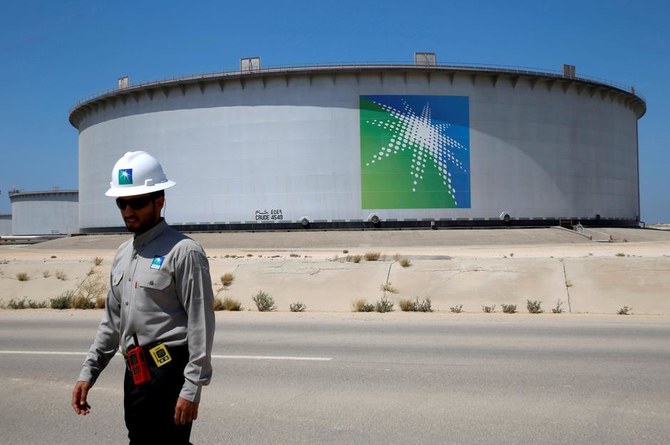
Saudi Aramco’s Ras Tanura oil refinery and oil terminal in Saudi Arabia, May 21, 2018. (Reuters)
Short Url
Updated 13 June 2020
Follow

Saudi Arabia will ‘come out on top’ in oil markets, JP Morgan predicts

  • Analyst Christyan Malek: Saudi Arabia will come out on top in the fight for market share as non-OPEC and US production fades
  • The Kingdom will see its share of the market rise from the current level of 11.6 per cent to around 15 per cent

DUBAI: Saudi Arabia’s strategy in the oil market has won a vote of confidence from the American investment bank JP Morgan, which predicts the Kingdom will “come out on top” in the global energy business.

“Saudi Arabia will come out on top in the fight for market share as non-OPEC and US production fades,” JP Morgan analyst Christyan Malek said in a report on the oil industry, which suggested that Saudi Arabia will see a large increase in its share of the international oil market as the American shale industry weakens and production declines from outside the Organization of Petroleum Exporting Countries (OPEC).

The Kingdom, which has been leading global efforts to stabilize the global oil market in the wake of an unprecedented decline in demand because of the COVID-19 pandemic, will see its share of the market rise from the current level of 11.6 per cent to around 15 per cent — its highest level since the 1980s — by 2025, JPM said.

Oil production from the US shale fields, which propelled America to its position as the biggest producer in the world in 2019, is forecast to rise only slightly to 11m barrels a day this year. Before the crash in oil prices in March and April, US shale oil was expected to climb steadily to reach 17m barrels per day over the next decade.

Oil prices are down around 40 percent so far this year, but have recovered from historic lows in April after Saudi Arabia and Russia — via the OPEC+ alliance — orchestrated record cuts in output in April. Just last weekend, the deal was extended and tough new guidelines introduced to ensure oil producers comply with the new regime.

Prince Abdul Aziz bin Salman, Saudi Arabia’s energy minister, said: “Through our commitment to a proactive policy, within a cohesive and collective framework, we are restoring confidence to global oil markets. We have grounds to be optimistic about the future.”

JP Morgan expects demand to increase sharply in the second half of this year, for an average of 91m barrels per day for 2020. This is down from the 100m barrels per day the world was consuming before the pandemic first hit global economies. That level will only resume in November of next year, JP Morgan predicted.

With oil prices currently at comparatively low levels, capital expenditure in oil will be cut back, JP Morgan said, which could create a “supercycle” from 2022, leading to falling supply and a surge in crude prices.

JP Morgan is the biggest bank in the world measured by profits, and has been a partner of Saudi Arabia for many years, having helped fund the original investment in the oil industry in the 1930s.


Saudi Arabia, Japan trade rises 38% between 2016 and 2024, minister says

Updated 11 January 2026
Follow

Saudi Arabia, Japan trade rises 38% between 2016 and 2024, minister says

RIYADH: Trade between Saudi Arabia and Japan has increased by 38 percent between 2016 and 2024 to reach SR138 billion ($36 billion), the Kingdom’s investment minister revealed.

Speaking at the Saudi-Japanese Ministerial Investment Forum 2026, Khalid Al-Falih explained that this makes the Asian country the Kingdom’s third-largest trading partner, according to Asharq Bloomberg.

This falls in line with the fact that Saudi Arabia has been a very important country for Japan from the viewpoint of its energy security, having been a stable supplier of crude oil for many years.

It also aligns well with how Japan is fully committed to supporting Vision 2030 by sharing its knowledge and advanced technologies.

“This trade is dominated by the Kingdom's exports of energy products, specifically oil, gas, and their derivatives. We certainly look forward to the Saudi private sector increasing trade with Japan, particularly in high-tech Japanese products,” Al-Falih said.

He added: “As for investment, Japanese investment in the Kingdom is good and strong, but we look forward to raising the level of Japanese investments in the Kingdom. Today, the Kingdom offers promising opportunities for Japanese companies in several fields, including the traditional sector that links the two economies: energy.”

The minister went on to note that additional sectors that both countries can also collaborate in include green and blue hydrogen, investments in advanced industries, health, food security, innovation, entrepreneurship, among others.

During his speech, Al-Falih shed light on how the Kingdom’s pavilion at Expo 2025 in Osaka achieved remarkable success, with the exhibition receiving more than 3 million visitors, reflecting the Japanese public’s interest in Saudi Arabia.

“The pavilion also organized approximately 700 new business events, several each day, including 88 major investment events led by the Ministry of Investment. Today, as we prepare for the upcoming Expo 2030, we look forward to building upon Japan’s achievements,” he said.

The minister added: “During our visit to Japan, we agreed to establish a partnership to transfer the remarkable Japanese experience from Expo Osaka 2025 to Expo Riyadh 2030. I am certain that the Japanese pavilion at Expo Riyadh will rival the Saudi pavilion at Expo Osaka in terms of organization, innovation, and visitor turnout.”

Al-Falih also shed light on how Saudi-Japanese relations celebrated their 70th anniversary last year, and today marks the 71st year of these relations as well as how they have flourished over the decades, moving from one strategic level to an even higher one.