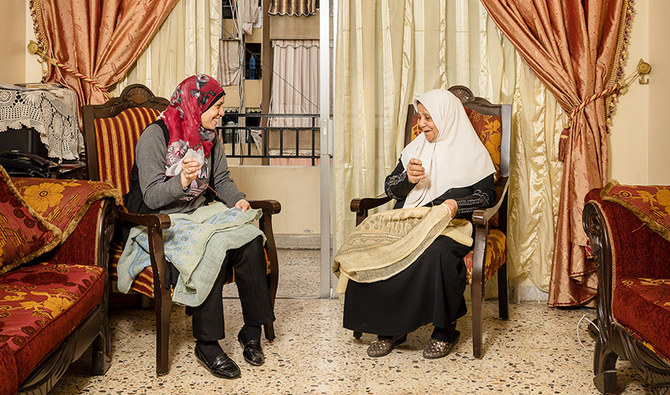
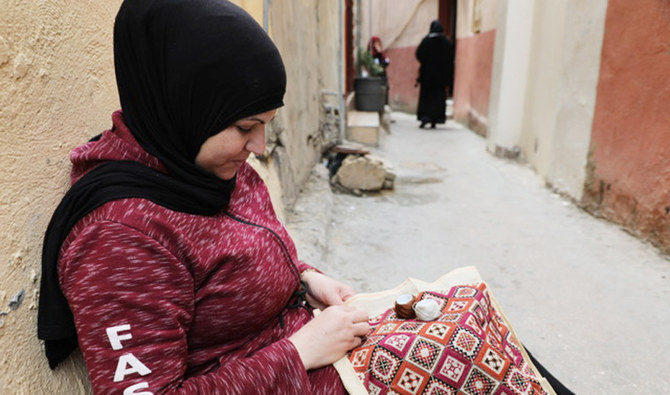
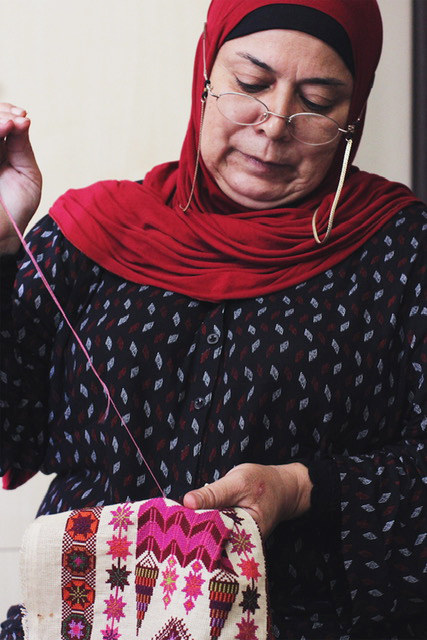
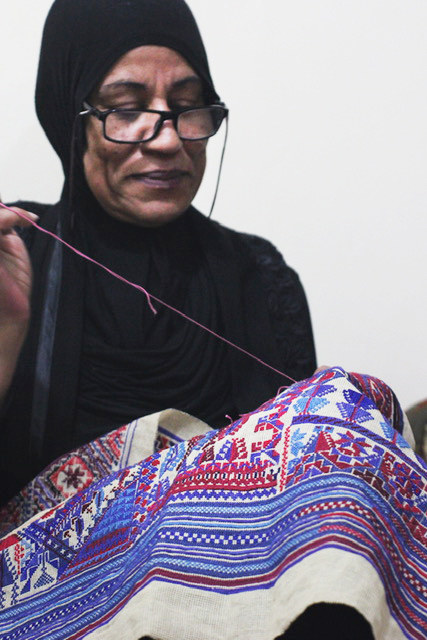


PARIS: Embroidery has offered Palestinian women living in refugee camps in Lebanon the much-needed opportunity to improve their lives for more than half a century.
It has also turned some of them into internationally acclaimed artists, with their work displayed in galleries and institutions in France — including the Centre Georges Pompidou, the Institut du Monde Arabe, and UNESCO’s headquarters in Paris — and other institutions and organizations around the world.
It is all thanks to a project launched by Inaash, a charitable Lebanese organization founded 51 years ago. Not only has it helped the women to preserve a traditional skill that is part of their heritage, in doing so it also provides them with a way to earn a decent living.
Inaash president Nadia Abdelnour said that the association currently works with Palestinian women, and the Lebanese women who support them, in five camps: Mar Elias, Ein El-Hilweh, Rashidieh, Bourj El-Shamali and Wavel, near Baalbeck.
“We take DMC threads (a brand of thread popular for embroidery) to the various camps and once items are finished, we pay the women for them and sell their work,” she said. “The more we can sell, the more the Palestinian women benefit.
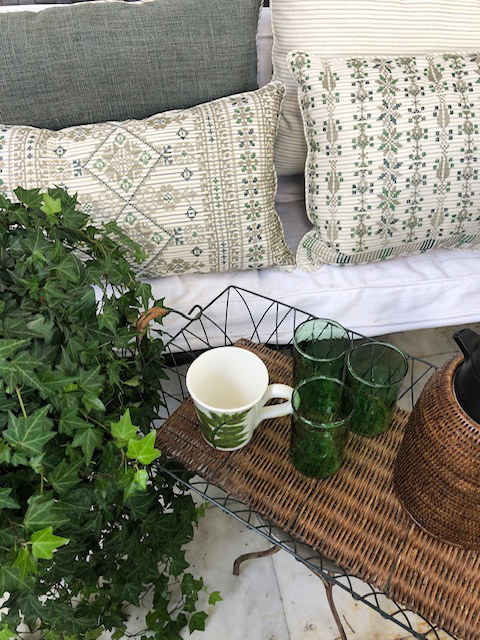
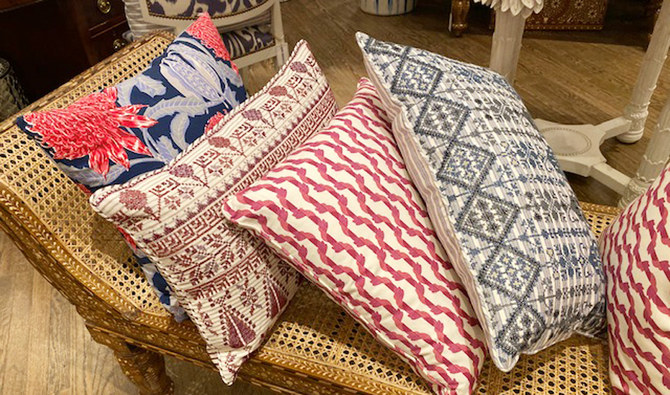
“Inaash has been doing this work for 50 years. We sell cushions, clothing and other things for the home, and we have had exhibitions in Europe.”
For example, The Centre Georges Pompidou in Paris, and a number of other international galleries, exhibited “12 Windows,” an artwork conceived by renowned Beirut-born Palestinian artist Mouna Hatoum in partnership with Inaash. Each of its 12 exquisitely embroidered panels represents, through motifs and patterns, a key region of Palestine. Researched and designed by Rahim, the panels were embroidered by some of Inaash’s most experienced craftswomen. The work has also been exhibited at Institut du Monde Arabe and at UNESCO in the French capital, and in Kuwait, Abu Dhabi and New York.
Although its shop in Beirut has remained closed during the coronavirus pandemic, Inaash has continued to give work to the women in the camps to help support them during these difficult times.
It all began in 1969, when Serene Husseini Shahid — a member of an influential Palestinian family who was born in Jerusalem, and died in Beirut in 2008 — was visiting New York and saw a beautiful, embroidered Palestinian dress on display in a shop window.
She went into the shop to ask about it, only to be told it was Israeli. Angered by this claim, because she recognized the style of Palestinian embroidery from her youth, she asked who owned the shop and was told it was Ruth Dayan, the wife of Israeli military leader and politician Moshe Dayan.
Shahid returned to Beirut, where her husband Munib was a doctor at the American University Hospital. Still upset by the appropriation of Palestinian heritage she had discovered, she decided to join recently launched Inaash, the Lebanese Association for the Development of Palestinian Camps.
It was founded by Huguette El-Khoury Caland, the daughter of Bechara El-Khoury, Lebanon’s first post-independence president, Shermine Hneine and Gebran Majdalani. Shahid convinced them to switch the focus of their efforts from encouraging women in the camps to knit to teaching them traditional Palestinian embroidery.
The organization expanded, with Shahid’s sisters, Malak Abdel Rahim and painter Joumana Husseini, joining the team. In the early days, Husseini and Rahim visited the camps personally to teach the women embroidery. Inaash opened a workshop in Shatila Camp, along with a nursery where the women could leave their children to be cared for while they worked. This led to Inaash establishing kindergartens in the Bourj El-Brajneh and Mar Elias camps, although they were difficult to sustain and eventually closed.
Husseini’s eldest daughter, designer Maya Shahid Corm, is now vice president of the association, continuing her mother’s good work. In France, Husseini’s youngest daughter, Zeina Shahid, contributes by organizing a popular annual exhibition and sale of Palestinian embroidered cushions.
A number of well-known Lebanese designers have worked with Inaash, including Nada Debs and fashion designers Rabih Kayrouz and Mira Hayek. Interior designer May Daouk organized a successful exhibition and sale of cushions, designed by her and embroidered by Inaash women, at the John Rosselli Gallery in New York.
Together with the founders of Inaash, and those who continue their good work, they have contributed to the revival, preservation and support of Palestinian heritage, while helping to improve the lives of women in the camps.