

CEO of Malaysian oil company Petronas to resign after five years

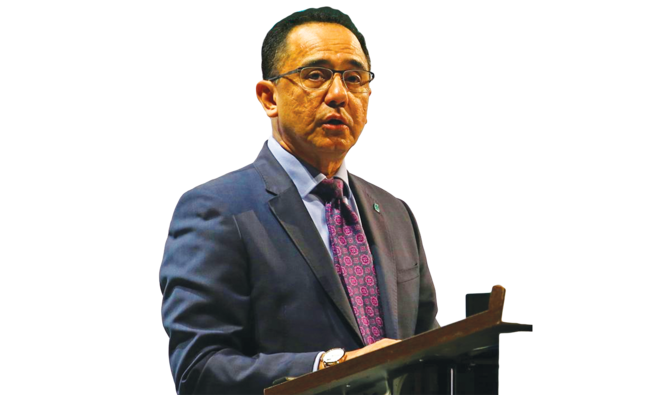
Petronas CEO Wan Zulkiflee Wan Ariffin. (Reuters)
Short Url
Updated 07 June 2020
Follow

CEO of Malaysian oil company Petronas to resign after five years

  • Wan Zulkiflee championed an ambitious $27 billion oil refinery and petrochemical project with partner Saudi Aramco

KUALA LUMPUR: The CEO of Malaysian state energy firm Petroliam Nasional Bhd, or Petronas, will soon step down after five years at the helm, state media reported on Saturday.

Wan Zulkiflee Wan Ariffin will resign as president and chief executive officer, and will be succeeded by an internal candidate, state news agency Bernama said, citing unidentified sources.

The reported resignation comes at a challenging time for Petronas as low oil prices, weak demand and the coronavirus pandemic lower profits. It also follows a string of changes at state agencies since a new government led by Prime Minister Muhyiddin Yassin came into power in March.

The CEO position at Petronas, fully owned by the Malaysian government, is a prime ministerial appointment. Wan Zulkiflee’s term as CEO was renewed in 2018 for three years.

Petronas declined to comment on “market rumor or speculation.”

The prime minister’s office did not immediately respond to a request for comment.

Wan Zul, as he is known, is a Petronas veteran, joining the company in 1983 as a process engineer and working his way up through the ranks. He took over as CEO in 2015 and led the company through a period of tumultuous oil prices.

Benchmark Brent crude plunged to near 12-year lows soon after he took over, forcing Petronas to cut $12 billion from costs and thousands of jobs for the first time.

BYD Americas CEO hails Middle East as ‘homeland for innovation’

Updated 21 January 2026
Follow

BYD Americas CEO hails Middle East as ‘homeland for innovation’

  • In an interview on the sidelines of Davos, Stella Li highlighted the region’s openness to new technologies and opportunities for growth

DAVOS: BYD Americas CEO Stella Li described the Middle East as a “homeland for innovation” during an interview with Arab News on the sidelines of the World Economic Forum.

The executive of the Chinese electric vehicle giant highlighted the region’s openness to new technologies and opportunities for growth.

“The people (are) very open. And then from the government, from everybody there, they are open to enjoy the technology,” she said.

BYD has accelerated its expansion of battery electric vehicles and plug-in hybrids across the Middle East and North Africa region, with a strong focus on Gulf Cooperation Council countries like the UAE and Saudi Arabia.

GCC EV markets, led by the UAE and Saudi Arabia, rank among the world’s fastest-growing. Saudi Arabia’s Public Investment Fund has been aggressively investing in the EV sector, backing Lucid Motors, launching its brand Ceer, and supporting charging infrastructure development.

However, EVs still account for just over 1 percent of total car sales, as high costs, limited charging infrastructure, and extreme weather remain challenges.

In summer 2025, BYD announced it was aiming to triple its Saudi footprint following Tesla’s entry, targeting 5,000 EV sales and 10 showrooms by late 2026.

“We commit a lot of investment there (in the region),” Li noted, adding that the company is building a robust dealer network and introducing cutting-edge technology.

Discussing growth plans, she envisioned Saudi Arabia and the wider Middle East as a potential “dreamland” for innovation — what she described as a regional “Silicon Valley.” 

Talking about the EV ambitions of the Saudi government, she said: “If they set up (a) target, they will make (it) happen. Then they need a technology company like us to support their … 2030 Vision.”