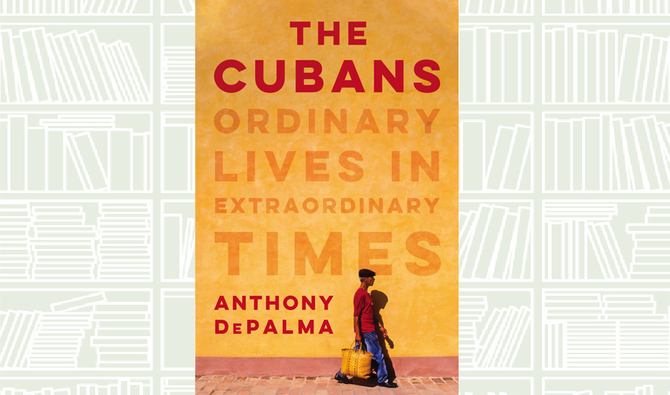
What We Are Reading Today: The Cubans by Anthony DePalma

Short Url
Updated 31 May 2020
Follow

What We Are Reading Today: The Cubans by Anthony DePalma

The Cubans from Anthony DePalma, a former foreign correspondent for The New York Times,  is a must-read for anyone interested in Latin America, say critics.

“In his thoroughly researched and reported book, replete with human detail and probing insight, DePalma renders a Cuba few tourists will ever see,” said Marie Arana in a review for  The New York Times.

DePalma burrows deep into one enclave of Havana, the historic borough of Guanabacoa, some three miles southeast of the capital.

“Lying across the famous harbor from the city center, Guanabacoa is close enough to have ties to Havana’s businesses, politics and culture,” he writes.

“Yet it operates at its own speed, with its own idiosyncrasies and an overriding sense, as one Cuban told me, of ‘geographic fatalism’ that comes from being so close to the capital, yet so very hard to reach from there.”

The book sadly leaves scant hope that anything will change in Cuba in the foreseeable future, but is testament to the resilience and ingenuity of the Cuban people.


What We Are Reading Today: ‘Fixed’

Updated 22 December 2025
Follow

What We Are Reading Today: ‘Fixed’

Authors: John Y. Campbell and Tarun Tamadorai

We interact with the financial system every day, whether taking out or paying off loans, making insurance claims, or simply depositing money into our bank accounts. 

“Fixed” exposes how this system has been corrupted to serve the interests of financial services providers and their cleverest customers—at the expense of ordinary people.

John Campbell and Tarun Ramadorai diagnose the ills of today’s personal finance markets in the US and across the globe, looking at everything from short-term saving and borrowing to loans for education and housing, financial products for retirement, and insurance. 

They show how the system is “fixed” to benefit those who are wealthy and more educated while encouraging financial mistakes by those who are aren’t, making it difficult for regular consumers to make sound financial decisions and disadvantaging them in some of the most consequential economic transactions of their lives.