Al Jazeera publishes article glorifying Egyptian terrorist, then takes it down

1 / 2
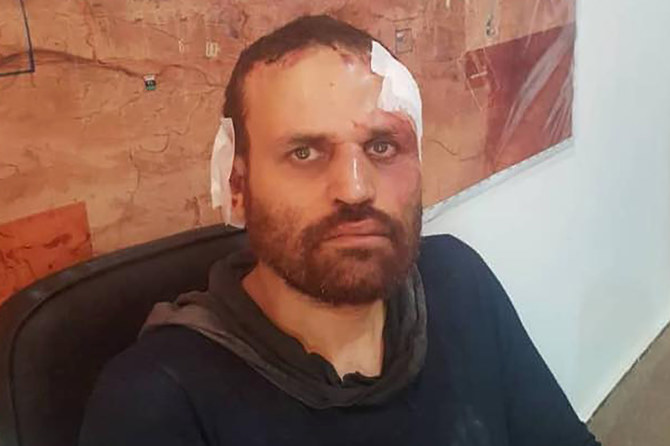
Egyptian militant leader Hisham Al-Ashmawy was arrested on Oct. 8, 2018, in eastern Libya during a military operation in the city of Derna. (File/Libyan Armed Forces / AFP)
2 / 2
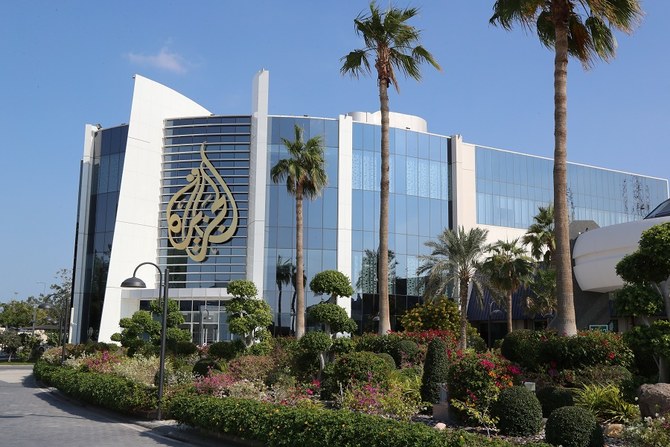
Al Jazeera removed the content. (File/AFP)
Short Url
Updated 21 May 2020
Follow

Al Jazeera publishes article glorifying Egyptian terrorist, then takes it down

  • It comes the same month the Qatari-owned network published a podcast glorifying killed Iranian General Qasim Soleimani
  • Al Jazeera say the article was later removed

LONDON: Al Jazeera published an article last week titled “Hisham Ashmawy...the other side of Al-Ikhtiyar (The Choice)” where the author praised the Egyptian terrorist and sought to clear his name, but later took down the piece due to “contradictions with Al Jazeera publishing policies,” according to the news site.

This comes within the same month that the Qatari-owned network published a podcast glorifying killed Iranian General Qasim Soleimani, as well as a full interview with terrorist-designated Hamas’s leader Ismael Haniya.

“Not only did Al-Jazeera glorify Hisham Ashmawy, but it also always glorified different terrorist leaders and organizations as long as they fought the people and systems (or governments) that disagree with the Qatari regime’s policy,” Terrorism and extremism expert Hani Nesira told Arab News.

“Qatari Al-Jazeera network and its websites on the Internet have consistently glorified the symbols of extremism and terrorism and portrayed them as symbols of resistance and national liberation.”

The full article, which cannot be accessed anymore, began by suggesting that political systems resort to television programs and drama series in order to influence peoples’ minds, notably highlighting current Egyptian Ramadan show Al-Ikhtiyar (The Choice).

“It deliberately used lies and slander in their portrayal of a number of prominent Islamic figures, such as Sheikh Rifai Sorour, as well as other personalities who chose the path of armed resistance against the Egyptian coup regime, such as officer Emad Abdel Hamid and his colleague Hesham Ashmawy,” the author, Islamic scholar and Member of the Political Bureau of the Salafi Front, Mustafa Al-Badry wrote.

“The character inspired by Hesham Ashmawy was one of the elements on which the drama series greatly relied. The series portrayed him in a way that is different from how he is known by the people who were close to him. I, therefore, hope to shed light on the real story of Maj. Hesham Ashmawy,” Badry continued.Ashmawy was an Egyptian security officer who was suspected of having been involved in and having orchestrated several terrorist attacks on security officials and state institutions, including the 2014 Farafra ambush that left at least 22 killed, and the 2015 assassination of Prosecutor general Hisham Barakat.

The news site has since removed the article, which was shown in its opinions section, replacing the text with an explainer noting its deletion.

“This article has been deleted, as it contradicts Al Jazeera’s publishing policies and the requirements of professional behavior. Al Jazeera’s blogs confirm that what happened was an individual professional mistake and that appropriate measures will be taken to hold the person responsible accountable and ensure that it is not repeated again in the future,” it read.


Media watchdogs condemn Israeli airstrike that killed 3 journalists in Gaza, call for investigation

Updated 22 January 2026
Follow

Media watchdogs condemn Israeli airstrike that killed 3 journalists in Gaza, call for investigation

  • International Press Institute, Committee to Protect Journalists and Reporters Without Borders among organizations demanding urgent action

DUBAI: Media watchdogs including the International Press Institute, the Committee to Protect Journalists and Reporters Without Borders have spoken out against Israel’s treatment of media workers following an airstrike that killed 3 journalists in Gaza on Wednesday.

Those killed were Mohammed Salah Qashta, Abdul Raouf Shaat and Anas Ghneim.

The Israeli military said the attack targeted what it had identified as “several suspects” operating a drone and “affiliated with Hamas.”

According to eyewitnesses, the journalists were using a drone to record aid distribution by the Egyptian Relief Committee when the strike hit one of the committee’s vehicles.

The IPI called for an “immediate and credible investigation” and renewed pressure on the international community to take “concrete actions” to hold Israel accountable.

IPI executive director Scott Griffen said the Israeli government has “failed to credibly investigate attacks on journalists” and that the “international community has failed to hold Israel to account for its pattern of targeting and killing journalists.”

He urged strong action, saying that “it is long past time for the international community to take concrete steps to end the cycle of complete impunity for killings of journalists in Gaza.”

The International Federation of Journalists and the Palestinian Journalists Syndicate also condemned the killings and attacks on journalists, calling for an immediate investigation.

The IFJ appealed to all “combatants in this conflict to do their utmost to safeguard journalists and media professionals,” said IFJ general secretary Anthony Bellanger.

“Media workers in areas of armed conflict must be treated and protected as civilians and allowed to perform their work without interference,” he added.

The PJS said that the direct shelling of the journalists’ vehicle constitutes a war crime and a crime against humanity under international humanitarian law, in violation of the Geneva Conventions and UN resolutions that guarantee the protection of journalists during armed conflicts.

The syndicate called on the International Criminal Court to open “urgent and serious investigations” and to “issue arrest warrants against those responsible for the killing of journalists.”

It also urged the UN and other international organizations to take action “rather than limiting their response to statements of condemnation.”

The CPJ condemned the strike, which took place amid a ceasefire, said regional director Sara Qudah.

“Israel, which possesses advanced technology capable of identifying its targets, has an obligation under international law to protect journalists,” she said.

On Thursday, CPJ and RSF called on the 29 member states of the Media Freedom Coalition, in a joint letter, to take concrete steps toward guaranteeing media access to the Gaza Strip.

The move comes ahead of the Israeli Supreme Court hearing on Jan. 26 that will determine whether the press will have independent access to Gaza.

The signatories asked governments to send official representatives to the Jan. 26 hearing and to prioritize press freedom in their engagement with the new technocratic government, formed under a US-backed plan to govern Gaza.

They also urged states to ensure that the International Stabilization Force applies UN Security Council Resolution 2222, which recognizes journalists as civilians during armed conflict and affirms their right to protection and access.

“The inaction of states around the world encourages censorship and sets a dangerous precedent for other conflicts, to the detriment of civilian populations, humanitarian aid and political decisions based on verified facts,” said RSF director general Thibaut Bruttin.

More than 200 Palestinian journalists and media workers have been killed since the start of the war in October 2023, according to multiple reports.