Pakistani artists come together for COVID-19 fundraiser

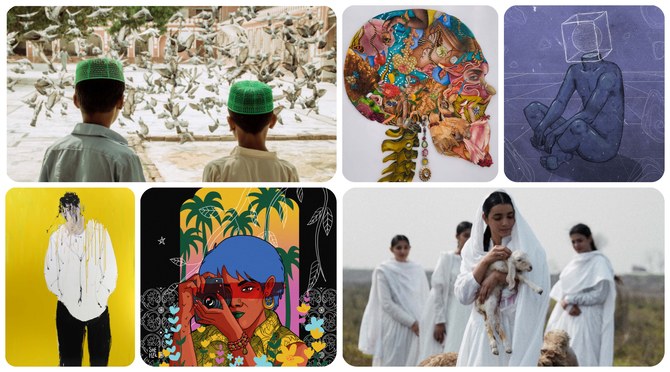
Artworks of Pakistani artists are on display during the online Prints for Pandemic Relief (PfPR) fundraiser for COVID-19 response which started on May 1, 2020. (Photo courtesy: PfPR)
Short Url
Updated 04 May 2020
Follow

Pakistani artists come together for COVID-19 fundraiser

  • Online initiative ends on May 22 with profits going toward relief work across the country
  • It’s a ‘reminder of how creativity can bring about social change’, organizers say

RAWALPINDI: It’s a striking image of four women in synchronized clothing, with one holding a new-born lamb.

“It’s raw, real and the shot was completely happenstance,” Lahore-based photographer Aleena Naqvi told Arab News on Monday while describing “Mary and the Lamb.”
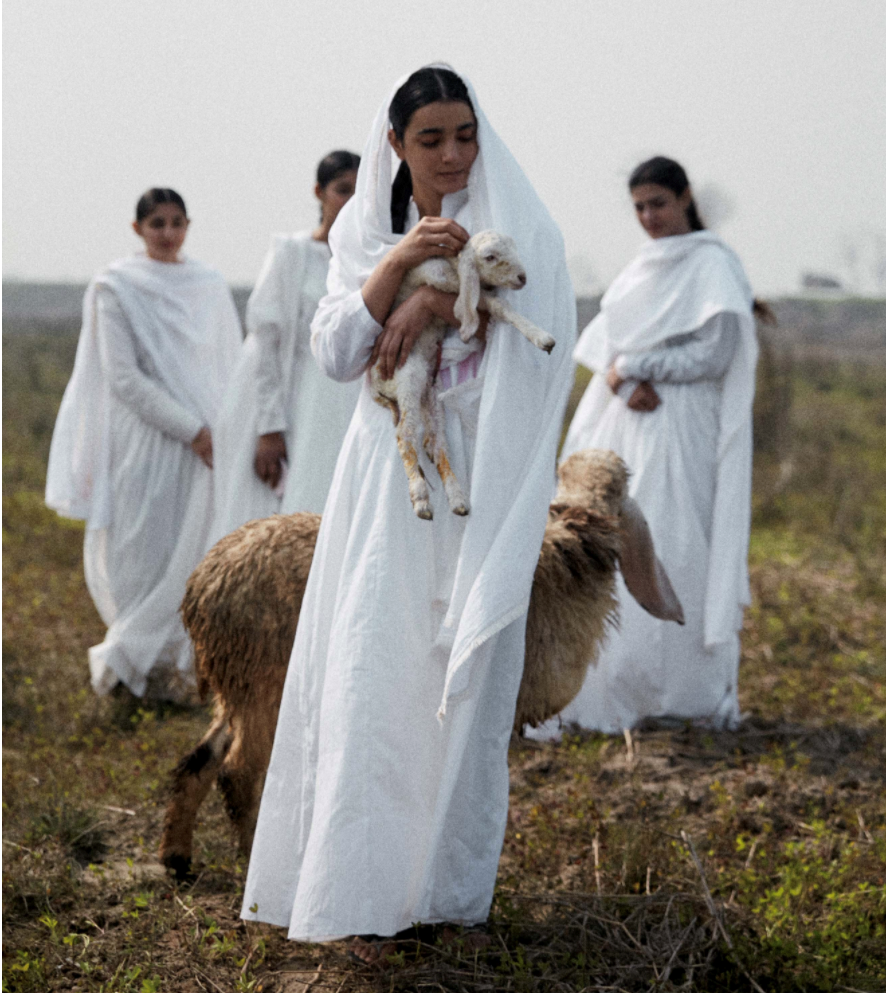


"Mary and the Lamb" by Aleena Naqvi is on sale during the Prints for Pandemic Relief (PfPR) fundraiser on May 1, 2020. (Photo courtesy: PfPR)

The artwork is part of several coveted pieces on display at the Prints for Pandemic Relief (PfPR) fundraiser – a locally conceptualized online initiative to provide relief efforts for the COVID-19 outbreak across Pakistan. 

Naqvi says it’s one of her favorite works and explains how “it all came together.”
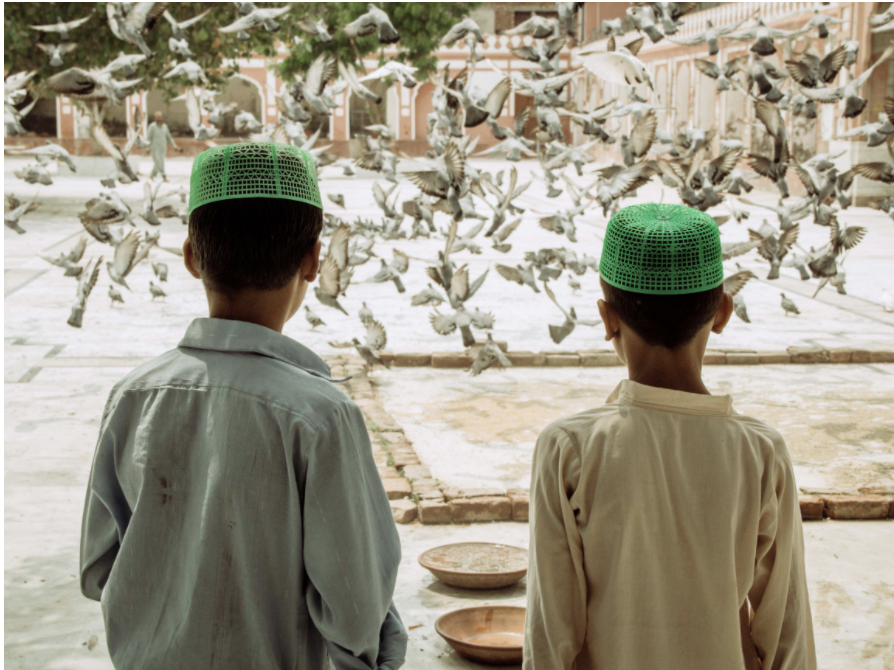


The photograph shows "Two Friends at the Shrine of Mian Meer Sahib," an artwork by Nade Aly, on sale during the online Prints for Pandemic Relief (PfPR) fundraiser which started on May 1, 2020. (Photo courtesy: PfPR)

“That image was shot in Sialkot when I was working on an assignment for a designer brand. We were in between shots, and the extras had wandered off into the fields. So, I took my camera and went looking for them. When I finally found them, I could see they were all looking down at something. That’s when I shot “Cult.” 

As I inched closer, I realized that the girls had stopped to witness the actual birth of a lamb. No one was moving; no one was saying anything...when suddenly, one of the girls bent down and picked up the new-born lamb. That’s when I clicked the picture,” Naqvi, 28, said, talking about one of her “favorite works.”

She added that “Mary and the Lamb” was the most obvious choice for the fundraiser as it reminded her of a time when “everything came to a screeching halt” just like “it has come now because of the coronavirus.”

Naqvi joins 56 other highly-coveted artists – including photographers, painters, illustrators and graphic designers – from across Pakistan who have donated two to four of their artwork for the initiative which began on May 1 and ends on May 22.
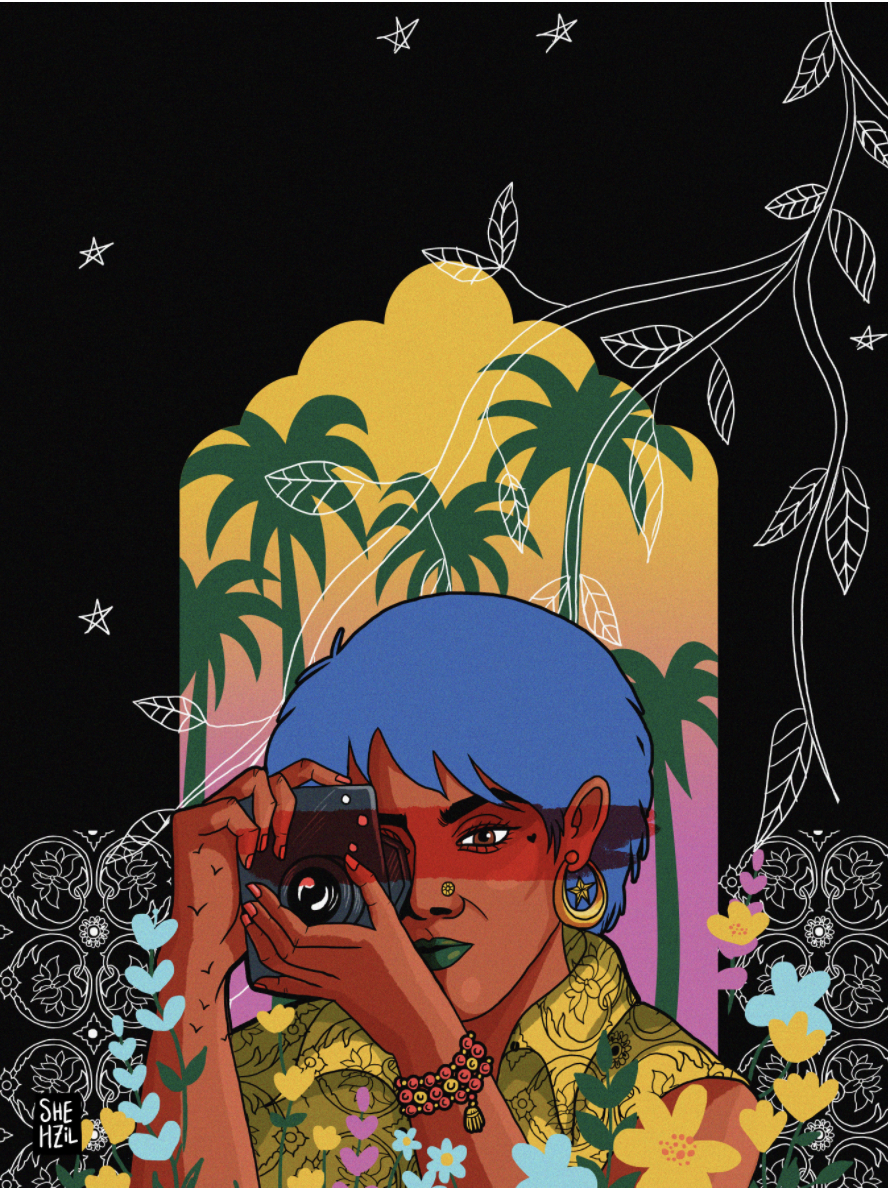


"Haya" by Shehzil Malik is featured at the PfPR fundraiser. (Photo courtesy: PfPR)

To ensure uniformity and a “combined sense of purpose,” all the prints are sized at 9x12 inches and priced at Rs6,000 each.

PfPR co-organizer, Seyhr Qayum, said that it was an idea that was “waiting to happen.” 

“My panic increased incrementally with each headline [about the coronavirus crisis]. I came across an incredibly successful fundraiser named “Pictures for Elmhurst” — that recently took place for the Elmhurst Hospital in NYC and thought, ‘this is genius — we should do this for Pakistan,” Qayum, who is an artist herself and is pursuing an MFA in Fine Arts at the Pratt Institute in Brooklyn, NY, told Arab News.

She added that the “model was easy to replicate with little to no immediate costs,” and was convinced that it would be a win-win for all.
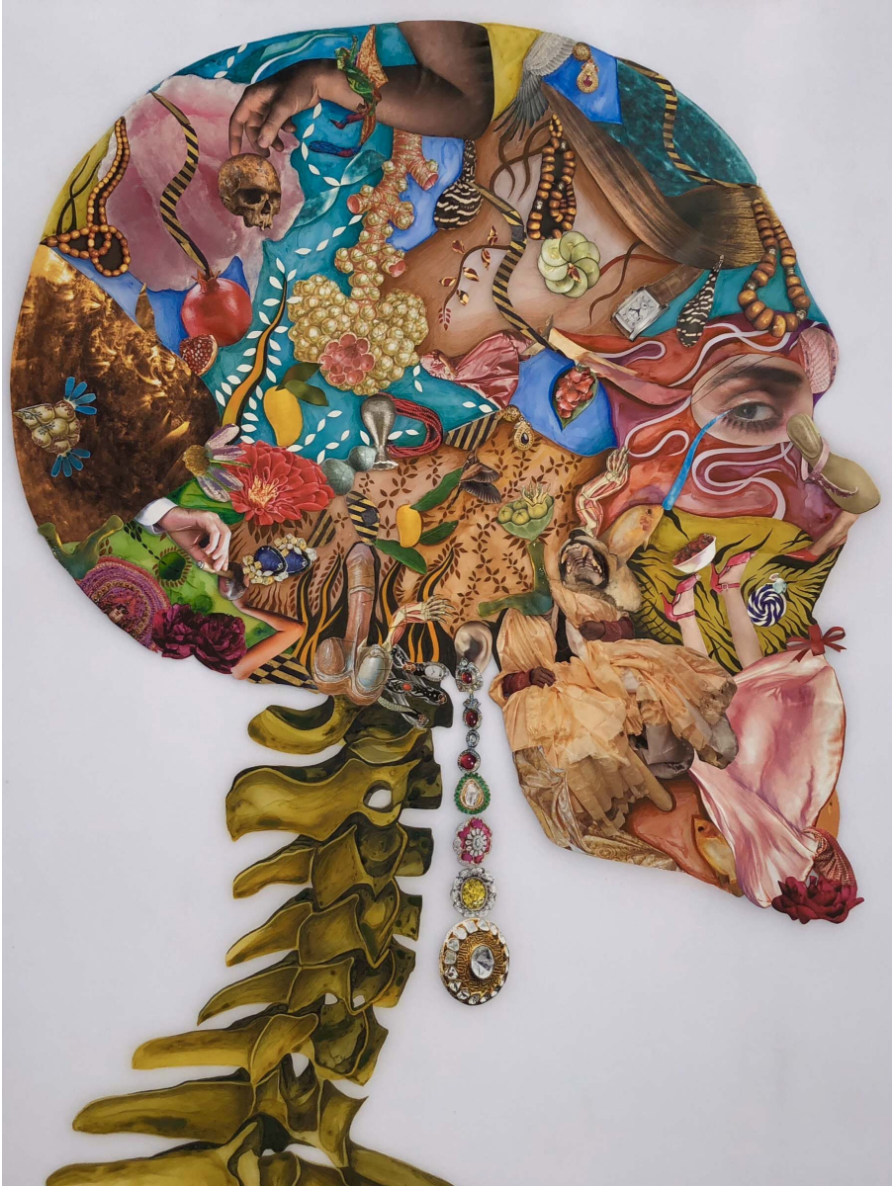


"In My Head," an artwork by Haya Zaidi, in on sale at PfPR fundraiser from May 1 through May 22, 2020. (Photo courtesy: PfPR)

“Our new dystopian reality is making it difficult for a lot of artists to make art... The fundraiser serves as a reminder of the many ways in which creativity can be leveraged to affect positive social change,” she said.

With the idea in hand, Qayum said she soon got in touch with Zuneera Shah – a Lahore-based gender and development consultant at Consultative Group to Assist the Poor – who has been working on COVID-19 fundraising efforts. 

Shah was “immediately onboard,” drawing from her experience of field work for COVID-19 relief. 



"The Somnambulist" by Isma Gul Hasan is featured at the PfPR fundraiser. (Photo courtesy: PfPR)

“We don’t know how much we’ll raise for Pakistan, but we’re hoping to be pleasantly surprised especially since we’re offering highly-coveted artists at a much more affordable price,” she said.

One thing led to another, and soon PfPR had partnered with six leading organizations to provide relief funds to various communities across Pakistan, with all proceeds from the three-week-long event going toward the cause. 
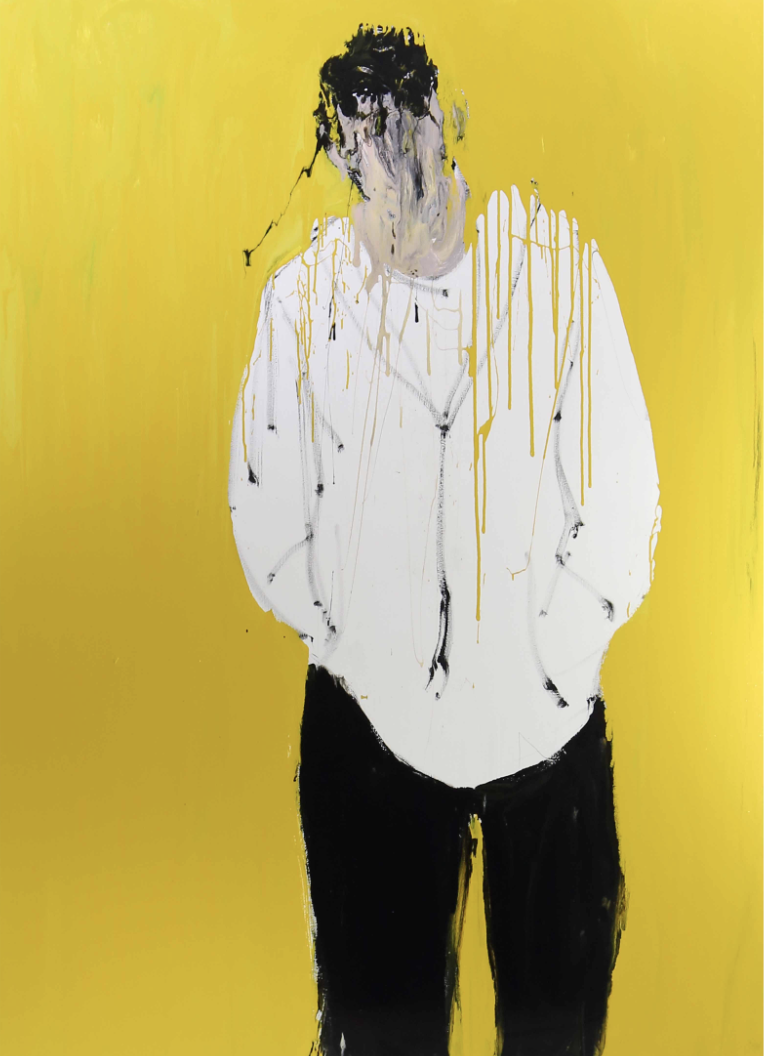


"Muneeb" by Abdullah Qureshi is on sale at the PfPR fundraiser which runs from May 1 through May 22, 2020. (Photo courtesy: PfPR)

Qayum said she didn’t have to do a lot to convince the artists to get on board with Naqvi being one of the first to sign up for the initiative.

“I’d never thought I’d get that image at a designer photoshoot. It’s a reminder that in a moment, life can change completely, so you either grasp it or it will pass you by. It’s figuratively brand new ... just like this new pandemic is a new way of our lives. The PfPR was my way of lending a helping hand,” she said.

For more details about the PfPR program, click on: https://www.printsforpandemicrelief.com/ 


Islamabad dismisses claims about paying up to 8 percent interest on foreign loans as ‘misleading’

Updated 22 February 2026
Follow

Islamabad dismisses claims about paying up to 8 percent interest on foreign loans as ‘misleading’

  • Pakistan has long relied on external loans to help bridge persistent gaps in public finances and foreign exchange reserves
  • Pakistan’s total external debt, liabilities stand at $138 billion at an overall average cost of around 4 percent, ministry says

KARACHI: Pakistan’s finance ministry on Sunday dismissed as “misleading” claims that the country is paying up to 8 percent interest on external loans, saying the overall average cost of external public debt is approximately 4 percent.

Pakistan has long relied on external loans to help bridge persistent gaps in public finances and foreign exchange reserves, driven largely by a narrow tax base, chronic trade deficits, rising debt-servicing costs and repeated balance-of-payments pressures.

Over the decades, successive governments have turned to multilateral and bilateral lenders, including the International Monetary Fund, the World Bank and the Asian Development Bank, to support budgetary needs and shore up foreign exchange reserves.

The finance ministry on Sunday issued a clarification in response to a “recent press commentary” regarding the country’s external debt position and associated interest payments, and said the figures required contextual explanation to ensure accurate understanding of Pakistan’s external debt profile.

“Pakistan’s total external debt and liabilities currently stand at $138 billion. This figure, however, encompasses a broad range of obligations, including public and publicly guaranteed debt, debt of Public Sector Enterprises (both guaranteed and non-guaranteed), bank borrowings, private-sector external debt, and intercompany liabilities to direct investors. It is therefore important to distinguish this aggregate figure from External Public (Government) Debt, which amounts to approximately $92 billion,” it said.

“Of the total External Public Debt, nearly 75 percent comprises concessional and long-term financing obtained from multilateral institutions (excluding the IMF) and bilateral development partners. Only about 7 percent of this debt consists of commercial loans, while another 7 percent relates to long-term Eurobonds. In light of this composition, the claim that Pakistan is paying interest on external loans ‘up to 8 percent’ is misleading.

The overall average cost of External Public Debt is approximately 4 percent, reflecting the predominantly concessional nature of the borrowing portfolio.”

With respect to interest payments, public external debt interest outflows increased from $1.99 billion in Fiscal Year (FY) 2022 to $3.59 billion in FY2025, representing an increase of 80.4 percent, not 84 percent as reported. In absolute terms, interest payments rose by $1.60 billion over this period, not $1.67 billion, it said.

According to the State Bank of Pakistan’s records, Pakistan’s total debt servicing payments to specific creditors during the period under reference were as follows: the IMF received $1.50 billion, of which $580 million constituted interest; Naya Pakistan Certificates payments totaled $1.56 billion, including $94 million in interest; the Asian Development Bank received $1.54 billion, including $615 million in interest; the World Bank received $1.25 billion, including $419 million in interest; and external commercial loans amounted to nearly $3 billion, of which $327 million represented interest payments.

“While interest payments have increased in absolute terms, this rise cannot be attributed solely to an expansion in the debt stock,” the ministry said. “Although the overall debt stock has increased slightly since FY2022, the additional inflows have primarily originated from concessional multilateral sources and the IMF’s Extended Fund Facility (EFF) under the ongoing IMF-supported program.”

Pakistan secured a $7 billion IMF bailout in Sept. 2024 as part of Prime Minister Shehbaz Sharif’s efforts to stabilize the South Asian economy that narrowly averted a default in 2023. The government has since been making efforts to boost trade and bring in foreign investment to consolidate recovery.

“It is also important to note that the increase in interest payments reflects prevailing global interest rate dynamics. In response to the inflation surge of 2021–22, the US Federal Reserve raised the federal funds rate from 0.75-1.00 percent in May 2022 to 5.25–5.50 percent by July 2023. Although rates have since moderated to around 3.75 percent, they remain significantly higher than 2022 levels,” the finance ministry said.

“The government remains committed to prudent debt management, transparency, and the continued strengthening of Pakistan’s macroeconomic stability,” it added.