



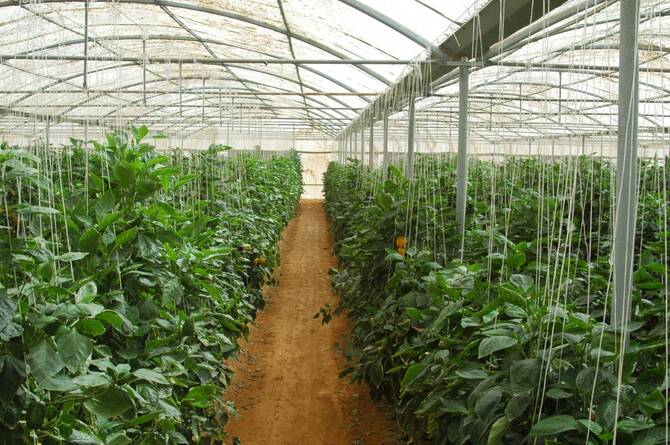

RIYADH: Hydroponics and vertical farming are gaining momentum in Saudi Arabia as sustainable solutions to boost crop productivity in small areas.
In addition, water consumption is reduced by up to 90 percent compared to traditional agriculture.
Hydroponics is a method of growing plants without soil, using mineral nutrient solutions in a water solvent, allowing roots to absorb nutrients directly from the water or an inert medium like perlite or coco coir. This leads to faster growth, less water use, and higher yields, ideal for controlled environments and small spaces.
Vertical farming is a method of growing crops in vertically stacked layers, often indoors in a controlled environment.
Farmers in the Qassim Region are using advanced hydroponic systems to grow crops in nutrient-rich water solutions, enabling precise control of environmental conditions such as temperature, humidity, and nutrient levels, the Saudi Press Agency reported.
This modern method addresses critical challenges such as food security, water scarcity, and soil degradation, supporting development and ensuring food self-sufficiency. This is significant for Saudi Arabia which faces extreme water scarcity due to its arid climate, reliance on depleting non-renewable groundwater, and high consumption, especially in agriculture, which makes it one of the world's most water-stressed nations despite near-universal access to potable water.
As Saudi Arabia is one of the driest countries in the region, water resources are scarce and climate conditions severe. The conditions cause groundwater salinization, which is a common problem affecting the Kingdom’s agricultural sector. Modern farming is a sustainable way to grow crops like vegetables, herbs, and flowers year-round by providing precise water, oxygen, and nutrient balance, often used commercially and by hobbyists.
Dr. Mohammad Faisal, a professor of plant biotechnology and environmental ecology at the King Saud University in Riyadh, told Arab News: “In a nation where every drop of water holds immense value, hydroponics stands not merely as an innovation but as a catalyst for profound agricultural transformation.
“Unlike traditional farming, hydroponic systems use only a fraction of the water, require no soil, and recycle nearly all of their inputs, making them exceptionally well suited to Saudi Arabia’s desert climate and ongoing potable water challenges.”
The professor added that the popularity of hydroponics and vertical farming were spreading rapidly throughout the Kingdom.
He said: “By harnessing advanced technologies — from solar-powered systems and climate-controlled environments to precision nutrient delivery — these farms sharply reduce water and land use while producing high-value, pesticide-light crops year-round.
“The movement is gaining momentum through strong government-backed R&D and increased private-sector investment, with major contributors such as the Public Investment Fund helping to scale modern farming solutions nationwide.”
Dr. Abdulrahman Mohammad Alhashimi, an associate professor of molecular plant physiology at King Saud University, told Arab News: “Hydroponics and vertical farming are no longer optional innovations — they are becoming essential pillars of Saudi Arabia’s future food system.
“These controlled-environment farming methods directly address two of the Kingdom’s most significant challenges: water scarcity and food security. By using up to 95 percent less water than traditional farming, hydroponic systems offer a sustainable path forward in the region’s harsh, arid climate. In contrast, vertical farming maximizes production in limited urban spaces.”
Alhashimi added that these technologies reduced dependence on unpredictable imports, shortened supply chains, and enabled year-round production of high-quality, nutrient-rich crops closer to consumers.
He said: “Their adoption is a strategic necessity for building a resilient and sustainable agricultural future. The foundation of Saudi Arabia’s food security is being built today — layer by layer.”
Hydroponics and vertical farming yield large quantities of high-quality, pesticide-free crops year-round with lower energy consumption.
Benefits include helping to develop fibrous roots for improved nutrient absorption, reducing the risk of roots rotting, and promoting the rapid maturity of plants.
Although startup costs are higher and technical expertise is required to manage nutrient balances, attractive financial returns are offered through increased productivity and water savings.
The government supports farmers with financing and guidance to develop sustainable agricultural systems, aligning with Saudi Vision 2030’s goal of fostering innovative and sustainable farming.


