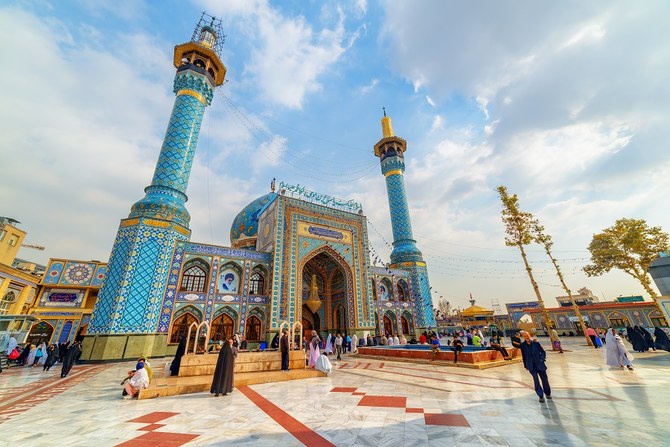
TEHRAN: Iranian President Hassan Rouhani said mosques would reopen across large parts of the country Monday, after they were closed in early March amid the Middle East’s deadliest novel coronavirus outbreak.
Rouhani said 132 counties, around one third of the country’s administrative divisions, would “reopen their mosques as of tomorrow.”
“Social distancing is more important than collective prayer,” he added, arguing that Islam considers safety obligatory, while praying in mosques is only “recommended.”
The targeted counties are “low-risk,” Rouhani said in a televised meeting of the country’s virus taskforce.
He said the committee was also mulling reopening schools by May 16 to allow for a month of classes before the summer break.
The new coronavirus has killed more than 6,150 and infected over 96,440 in Iran since it announced its first cases in mid-February.
Rouhani claimed hospital visits over potential infections were “much lower” compared to recent weeks.
Iran on Saturday reported its lowest daily toll of new infections since March 10.
Experts and officials both in Iran and abroad have cast doubts over the country’s COVID-19 figures, saying the real number of cases could be much higher than reported.
The Islamic republic has tried to contain the spread of the virus by shutting universities, cinemas, stadiums and other public spaces since March.
But it has allowed a phased reopening of its economy since April 11, arguing that the sanctions-hit country cannot afford to remain shut down.
Only “high-risk” businesses like gyms and barbershops remain closed.
“We will continue the reopenings calmly and gradually,” Rouhani said.
Yet he warned that Iran should prepare for “bad scenarios” too, saying “this situation may continue into the summer.”


![]()

Iran to reopen many mosques as lockdown eases: Rouhani
Short Url
https://arab.news/cxacj
Iran to reopen many mosques as lockdown eases: Rouhani
- Maintaining “social distancing is more important than collective prayer,” Rouhani said


Latest updates


© 2026 SAUDI RESEARCH & PUBLISHING COMPANY, All Rights Reserved And subject to Terms of Use Agreement.