From cleaning to screening, robots join fight against COVID-19 at Abu Dhabi Airport

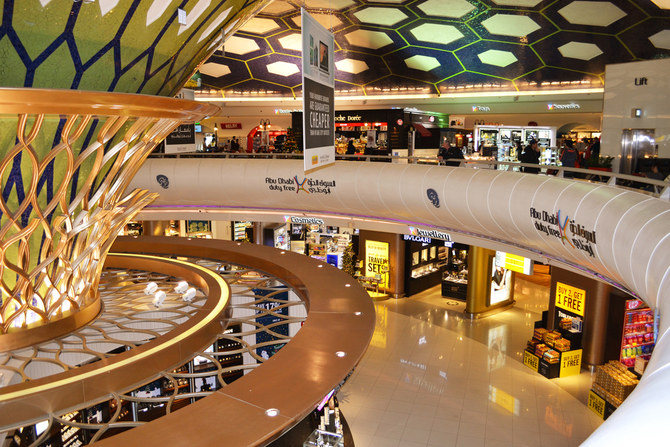
Robots are being rolled out at Abu Dhabi airport to disinfect public areas and screen passengers using infrared thermal technology during the coronavirus outbreak. (Shutterstock)
Short Url
Updated 02 May 2020
Follow

From cleaning to screening, robots join fight against COVID-19 at Abu Dhabi Airport

  • The robot will be piloted from May throughout Abu Dhabi International Airport
  • It will also be used in aircraft cabins

LONDON: Robots are being rolled out at Abu Dhabi airport to disinfect public areas and screen passengers using infrared thermal technology.

The robots will be piloted this month throughout Abu Dhabi International Airport, including in staff areas and cargo facilities. It will also be used as part of cabin cleaning processes on passenger aircraft, the company said in a statement on Saturday.

“The acute impact of the pandemic would have heightened our overall sense of awareness toward hygiene, and as a vital piece of public infrastructure, we have a clear responsibility to ensure our spaces remain clear of any virus threat,” said Shareef Hashim Al-Hashmi, CEO of Abu Dhabi Airports. “By deploying artificial intelligence, it adds another layer of protection and builds on our comprehensive response to the COVID-19 outbreak.”

Airports worldwide are rapidly deploying new technology and robotics in an attempt to curb the spread of the virus that has already killed at least 200,000 people globally while establishing new procedures for arriving passengers.

Hong Kong International Airport is currently trialing the use of sanitizing booths where passengers undergo a 40-second disinfection process and have their temperatures scanned simultaneously. Airport chiefs will decide at the end of the month whether to make it a permanent feature. Like Abu Dhabi, Hong Kong is also using autonomous cleaning robots.

The adoption of such technologies is especially urgent for the big Gulf hubs such as Dubai International Airport, which handled 86.4 million passengers in 2019, making it the world’s busiest hub for international passengers.

But getting the balance between passenger safety and airport efficiency right will be a challenge, say aviation consultants. Social distancing also creates obvious logistical difficulties, with the potential for check in queues to quickly lengthen and clog up open spaces in terminals, slowing passenger throughput and potentially creating delays.

“Some kind of health checking seems to be a likely pre-requisite for any return to ‘normal’ travel, aviation consultant John Strickland told Arab News. “However technology and simplicity will be essential. In any airport with high volumes of traffic any small extension of time in process, even seconds, could multiply up to creating delays and inability to maintain punctual and reliable schedules including the ability to offer viable connecting flights.”

Emirates last month started to conduct blood tests for departing passengers with the first ones carried out on a flight to Tunisia with the results available in 10 minutes.

It is scaling up its testing capacity so that it can transport passengers to countries that require COVID-19 test certificates. Passengers are also required to wear their own masks when at the airport and onboard aircraft.


QIA, Franklin Templeton launch $200m Qatar equity fund 

Updated 17 sec ago
Follow

QIA, Franklin Templeton launch $200m Qatar equity fund 

RIYADH: Qatar’s sovereign wealth fund has teamed up with Franklin Templeton to launch a $200 million equity fund focused on the local stock market, part of efforts to deepen liquidity and attract institutional investors to Qatar’s capital markets. 

The Qatar Investment Authority and the US asset manager said the Franklin Templeton Qatar Equity Fund will operate as a day-traded mutual fund investing in companies listed on the Qatar Stock Exchange, according to the Qatar News Agency. 

The launch comes after a PwC report earlier in February highlighted growing optimism among CEOs in Qatar, with companies increasing investment, pursuing acquisitions and expanding operations as the country pushes toward innovation-led growth. 

Mohammed Saif Al-Sowaidi, CEO of QIA, said: “With the launch of Franklin Templeton Qatar Equity Fund, QIA is further expanding our Active Asset Management Initiative to support Qatar’s financial markets.”  

He added: “As one of the largest global asset managers, Franklin Templeton brings a wealth of experience and resources to QSE and the broader Qatari economy and we look forward to working closely together on this initiative.” 

The fund aims to give investors exposure to Qatar Stock Exchange-listed equities, allowing local and international institutions to access an actively managed portfolio in the domestic market, QNA reported. 

QIA is the fund’s lead investor, contributing cash and shares, underscoring its commitment to the Qatari stock market. The reallocation of QSE-listed shares is intended to support the domestic economy and enhance market liquidity, it added. 

Franklin Templeton manages about $1.68 trillion in assets as of Dec. 31, 2025, making it one of the world’s largest investment firms. 

“Through our partnership with QIA, we aim to contribute meaningfully to the continued development of the Qatari financial ecosystem. We see this collaboration as the beginning of a long-term strategic partnership and part of a broader, multi-asset collaboration between Franklin Templeton and QIA,” said Jenny Johnson, CEO of Franklin Templeton. 

The Franklin Templeton Qatar Equity Fund represents a key step in QIA’s active asset management strategy and highlights its partnership with Franklin Templeton in supporting Qatar’s capital markets through global investment expertise.