‘It’s heartbreaking’ — COVID-19 keeps families apart during Ramadan

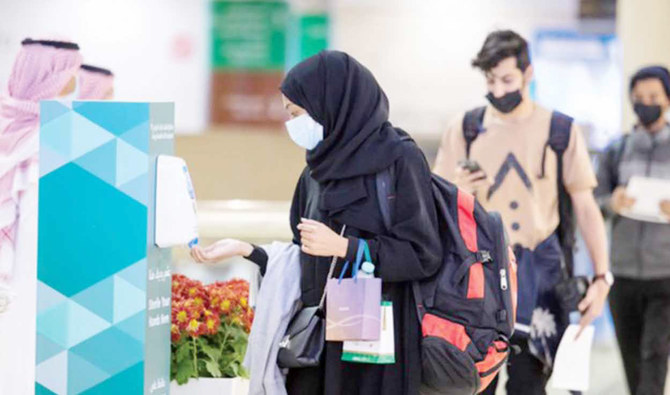
Saudi Arabia is making abundant efforts to support absent members of society by providing shelter and daily necessities. Several government agencies are coordinating to facilitate the repatriation of Saudi citizens from abroad amid the global outbreak of the coronavirus. (Supplied)
Short Url
Updated 25 April 2020
Follow

‘It’s heartbreaking’ — COVID-19 keeps families apart during Ramadan

  • Although KSA is making all efforts to support absent members, their families will not rest easy until their loved ones are back home

JEDDAH: As Muslims across the world embarked on a Ramadan like no other on Friday, many families will be unable to fully enjoy the Holy Month because a son, daughter, parent or sibling is unable to come home due to the worldwide COVID-19 lockdown.

Although the Kingdom has made abundant efforts to support absent members of society by providing shelter and daily necessities, these families will not rest easy until their loved ones are back home.
“It’s heartbreaking; my daughter is pregnant and this is our first Ramadan apart,” said Jeddah resident Amal Turkistani, whose daughter moved to the US last year with her husband, who is pursuing his Master’s degree in Miami.
The family had intended to travel to the US to spend some of Ramadan together with the newborn — due in mid-May — but that reunion has had to be put on hold.
“We’re keeping in touch frequently on a Snapchat group and we video chat all the time,” Turkistani told Arab News. “My daughter acts strong and puts a tough face on but I’m sure she’s afraid of delivering a baby all by herself.”
The family will be spending Ramadan apart, but Turkistani has provided her daughter with plenty of Ramadan advice.
“I’ve given her many recipes — samosa and soups — as well as food to avoid now that she’ll be nursing,” she said. “I asked her to stay at home and make sure everything is sanitized, and to keep her appointments to a minimum with intervals between them, and to shop and pack things early.”
Turkistani has had discussions with her daughter about returning, especially since King Salman has agreed to allow the pregnant and the elderly to enter the country, but her daughter is concerned about the possibility of pregnancy complications, about catching a disease on the plane, and about the 14-day quarantine required when entering the country.

HIGHLIGHTS

• King Salman and Crown Prince Mohammad bin Salman directed the foreign ministry to arrange the return of citizens abroad to ensure their health and amid the coronavirus pandemic. The foreign ministry has launched an electronic service to register those interested.

• The families praise the efforts the Kingdom has made to provide the best services and reassurance.

When Aziza Sayem, owner of Ugur Restaurant in Jeddah, said goodbye to her son Moayed as he boarded a plane to Cairo to film a medical program set to air in Ramadan, little did she know that they would be still be separated today because of the pandemic. By the time Moayed had finished filming, all flights in and out of Saudi Arabia had been suspended.
“I’m crying every day, hoping he comes back safe. Luckily, we have technology. We’ve been communicating through FaceTime a lot, and he’s optimistic,” she told Arab News. “He wants to come home, though, as a doctor. He said he wants to be on the frontline to serve his country and his people.”
Sayem said she is devastated that Moayed could not make it home in time for Ramadan, but stressed that she will continue to support him and stay in contact virtually.
She praised the efforts the Kingdom has made to provide estranged Saudis with the best services and reassurance. “When my son called the embassy, they went above and beyond, placing him in a 4-star hotel. He’s being fed and getting regular check-ups,” she added.
Azza Yousef, whose son is completing his final semester in engineering in Seattle, has gone through a lot in the past few weeks. “They discovered patient zero there, the first COVID-19 patient in the US, and it’s been (stressful) because he doesn’t tell me anything so I don’t worry. I find out about things on the news,” she said.
Her son finished his finals earlier this month after weeks of virtual classes and said that he is ready to come home.
“He doesn’t know what to do with his furniture and car. The situation is honestly alarming and unprecedented, that’s why we’re all trying to stay patient,” Yousef said.
She finds it hard to picture how this Ramadan will play out for the family without her son around. “I haven’t even done my usual Ramadan grocery haul,” she said. “I just can’t. My entire being is fixated on my son and making sure he’s well.”


Saudi Media Forum urges ethical coverage as crises redefine Arab journalism

Updated 5 sec ago
Follow

Saudi Media Forum urges ethical coverage as crises redefine Arab journalism

  • Raw news without context can mislead audiences and distort credibility, experts say

RIYADH: Arab media was born in crisis and shaped by conflict rather than stability, Malik Al-Rougi, general manager of Thaqafeyah Channel, said during the Saudi Media Forum in Riyadh on Wednesday.

Al-Rougi was speaking during a panel titled “Media and Crises: The Battle for Awareness and the Challenges of Responsible Coverage,” which examined how news organizations across the region navigated credibility and professional standards amid fast-moving regional developments.

“Today, when you build a media organization and invest in it for many years, a single crisis can destroy it,” he said.

Referring to recent events, Al-Rougi said that he had witnessed news channels whose credibility “collapsed overnight.”

“In journalistic and political terms, this is not a process of news production. It is a process of propaganda production,” he said. “The damage caused by such a post … is enormous for an institution in which millions, perhaps billions, have been invested.”

When a media outlet shifts from professionalism and credibility toward “propaganda,” he added, it moves away from its core role. 

Saudi media leaders, journalists, and experts gathered at the Saudi Media Forum in Riyadh to discuss credibility, ethics, and innovation. (AN photo by Huda Bashatah/Supplied)

“A crisis can work for you or against you,” Al-Rougi added. “When, in the heart of a crisis, you demonstrate high credibility and composure, you move light-years ahead. When you fail to adhere to ethical standards, you lose light-years as well.”

Abdullah Al-Assaf, professor of political media studies at Imam Muhammad bin Saud Islamic University, said that in many crises across the Arab world, agendas and directives had often prevailed over professionalism.

“Credibility was buried,” he added.

Hasan Al-Mustafa, writer and researcher at Al-Arabiya channel, said that raw information could be subject to multiple interpretations if not placed within a proper political, security, historical or geographical context.

He added that such an approach was urgently needed during periods of political and security volatility in the Middle East. 

When, in the heart of a crisis, you demonstrate high credibility and composure, you move light-years ahead. When you fail to adhere to ethical standards, you lose light-years as well.

Malik Al-Rougi Thaqafeyah, Channel general manager

“This objectivity, or this reliability, is a great responsibility,” Al-Mustafa said. “It is reflected not only in its impact on the audience, but also on the credibility of the content creator.”

Al-Mustafa warned against populism and haste in coverage, saying that they risked deepening crises rather than providing informed public perspectives.

He also said that competition with social media influencers had pushed some traditional outlets to imitate influencer-driven models instead of strengthening their own professional standards.

“Our media has been crisis-driven for decades,” he said, describing much of the region’s coverage as reactive rather than proactive.

During a separate panel titled “The Official Voice in the Digital Age: Strategies of Influence,” speakers discussed how rapid technological and social changes were reshaping the role of institutional spokespersons.

Abdulrahman Alhusain, official spokesperson of the Saudi Ministry of Commerce, said that the role was no longer limited to delivering statements or reacting to events.

“Today, the spokesperson must be the director of the scene — the director of the media narrative,” he said.

Audiences, he added, no longer accept isolated pieces of information unless they were presented within a clear narrative and structure.

“In the past, a spokesperson was expected to deliver formal presentations. Today, what is required is dialogue. The role may once required defense, but now it must involve discussion, the exchange of views, and open, candid conversation aimed at development — regardless of how harsh the criticism may be.”

He said that spokespersons must also be guided by data, digital indicators and artificial intelligence to understand public opinion before speaking.

“You must choose the right timing, the right method and the right vocabulary. You must anticipate a crisis before it happens. That is your role.”

Abdullah Aloraij, general manager of media at the Riyadh Region Municipality, said that the most important skill for a spokesperson today was the ability to analyze and monitor public discourse.

“The challenge is not in transferring words, but in transferring understanding and impact in the right way,” he said.