

Book review: ‘Fearless: Stories of Amazing Women from Pakistan’ takes readers on a visual journey

“Fearless: Stories of Amazing Women from Pakistan” is by author Amneh Shaikh-Farooqui. (Supplied)
Short Url
Updated 21 April 2020
Follow

Book review: ‘Fearless: Stories of Amazing Women from Pakistan’ takes readers on a visual journey

DHAHRAN: Amneh Shaikh-Farooqui’s book “Fearless: Stories of Amazing Women from Pakistan” chronicles the social, economic, political, and cultural achievements of 50 Pakistani women. The 112-page book – accompanied with vibrant portrait illustrations – highlights the achievements of Pakistani politicians, army generals, artists, humanitarians and philanthropists.

The book introduces Pakistani women to the world and, importantly, provides representation of South Asian women in mainstream literature. In her forward, Shaikh-Farooqui states that her own children were thrilled to read lesser-known stories of women in history. However, she found that accomplishments of women of color were missing from these narratives. With the premise “If you can’t see it, you can’t be it,” the concise book includes a page each, celebrating notable women and how they each inspired change.

The stories are not arranged thematically, however, it makes for an easy read that young adults within the diaspora will appreciate. Released in late February, Shaikh-Farooqui’s book does well at walking a middle line and does not fall into the trap of embellishing each woman’s achievements, however, the author does not fully explain how she whittled down her choice to 50 women — it’s a small detail that would have been appreciated.
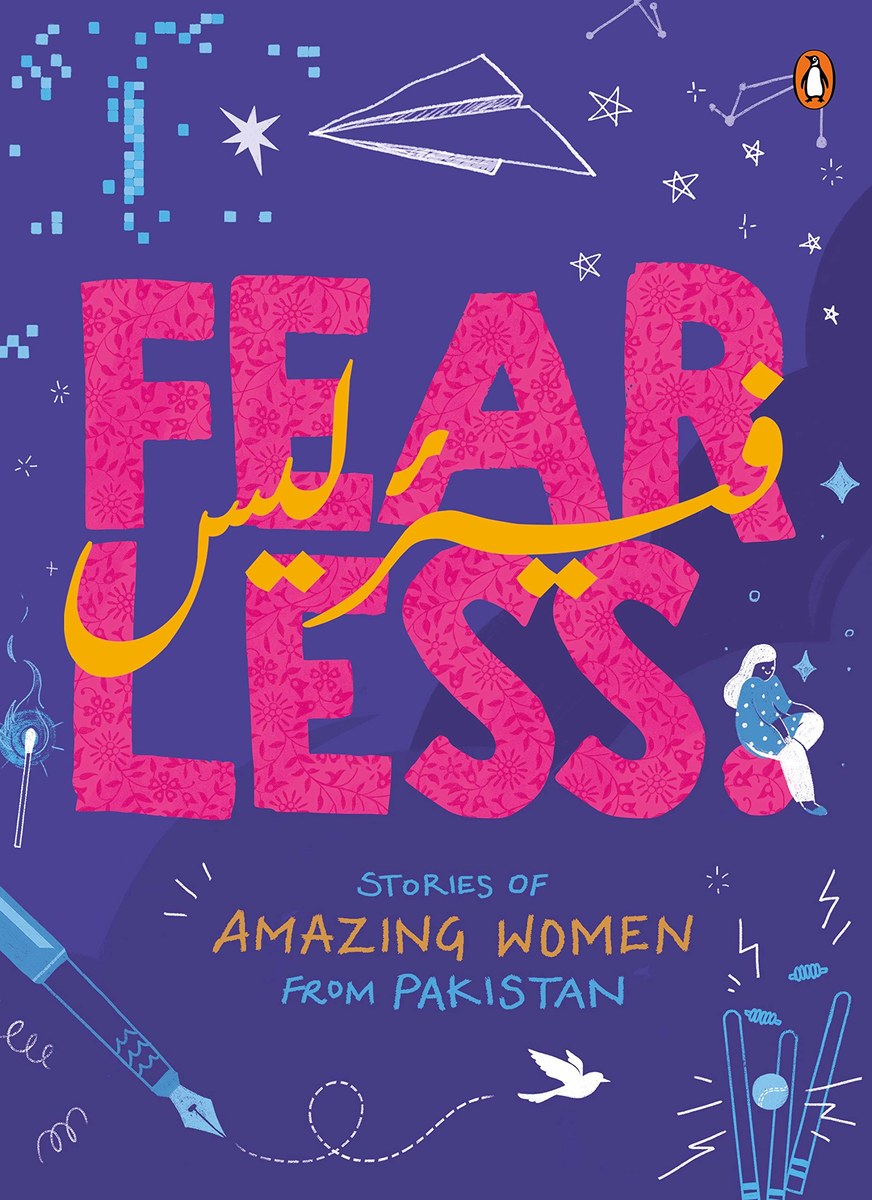


“Fearless: Stories of Amazing Women from Pakistan” is a 112-page book. (Supplied)

Alongside Malala Yousafzai and Fatima Jinnah, the book features women and stories that may be lesser-known to mainstream media, like Majida Rizvi, the first woman judge of a High Court in Pakistan. Rizvi dedicated her life to educating Pakistani women about their legal rights and as a chairperson of the National Commission for the Status of Women, fought for human and gender rights against religious conservative parties. Or actress and director, Putli Bai, known by her screen name, Shamim Ara for her strong, female protagonist roles in a series of movies like Miss Hong Kong, Miss Singapore, Miss Colombo, Lady Smuggler, and Lady Commando. “Her contribution in creating a more balanced industry, with space for nuanced characters and a broader set of roles for women, both on and off screen will not be forgotten,” opines author, Shaikh-Farooqui.

Or even the controversial Qandeel Baloch, whose videos empowered women and led to her eventual murder by her brother. Apart from individuals, the book also features activist groups like the Women’s Association Forum (WAF), a women’s rights organization and Girls at Dhabas (DAG), an initiative that highlights challenges women face in male-dominated public areas and advocates for freedom of movement.


World Bank approves $400 million to expand water, sanitation services in Pakistan’s Punjab

Updated 4 sec ago
Follow

World Bank approves $400 million to expand water, sanitation services in Pakistan’s Punjab

  • Project aims to improve access for 4.5 million people and curb waterborne diseases
  • Program to prioritize women’s participation and climate-resilient urban infrastructure

ISLAMABAD: The World Bank this week approved $400 million for a new project to expand access to safe water, sanitation and hygiene services for around 4.5 million people in Pakistan’s most populous Punjab province, aiming to curb waterborne diseases and reduce long-term public health costs.

The project, known as the Punjab Inclusive Cities Program (PICP), is the second phase of the World Bank-supported Pakistan Urban Water, Sanitation and Hygiene Services Multiphase Programmatic Approach. It will focus on rehabilitating water supply networks, sewerage systems and wastewater treatment plants, while expanding stormwater drainage infrastructure across 16 secondary cities in Punjab.

Punjab faces persistent challenges in providing safe drinking water and adequate sanitation, with many urban households relying on contaminated sources. Weak infrastructure and limited hygiene services contribute to high rates of waterborne diseases such as diarrhea, typhoid and hepatitis, which disproportionately affect children and low-income communities.

“Reducing child stunting is essential for Pakistan’s future. Through the Punjab Inclusive Cities Program, we are investing in safe water, sanitation, and hygiene services to break the cycle of malnutrition and disease that holds back so many children from reaching their full potential,” the World Bank quoted its Country Director for Pakistan, Bolormaa Amgaabazar, as saying in a statement.

“In collaboration with the Punjab Government, the program represents a significant step forward in improving urban infrastructure and strengthening local institutions, thereby laying the foundation for healthier communities and a more prosperous Pakistan.”

Child stunting, a form of chronic malnutrition that leaves children too short for their age, is often linked to repeated infections, poor sanitation and unsafe drinking water, and remains a major public health concern in Pakistan.

Beyond water and sanitation, the project will also support solid waste management systems to improve sanitary waste disposal, extending services to an additional two million people in Punjab’s urban areas. The program will strengthen the capacity of local governments, including efforts to improve revenue generation and long-term service sustainability.

“The program complements infrastructure investments with capacity building and revenue generation, helping to ensure that service delivery is well sustained,” the statement quoted Amena Raja, Senior Urban Specialist at the World Bank, as saying.

“It will also help Punjab’s cities better withstand floods and droughts, ensuring urban development is both environmentally responsible and resilient to climate change.”

The program includes a gender-focused component, prioritizing the hiring of women in decision-making roles, establishing gender-compliant service desks and supporting skills development. It also aims to mobilize private capital to support water and sanitation services in Punjab’s secondary cities.

Pakistan has been a member of the World Bank since 1950 and has received more than $48 billion in assistance since. The Bank’s current portfolio in the country comprises 54 projects with total commitments of $15.7 billion, while its private-sector arm, the International Finance Corporation, has invested about $13 billion since 1956.

Earlier this year, Pakistan and the World Bank signed a first-of-its-kind agreement for a plan to focus $20 billion in lending to the cash-strapped nation over the coming decade on development issues like the impact of climate change as well as boosting private-sector growth.