The overall number of coronavirus cases soared to 56,188 from 47,610 on Wednesday.
Updated 26 March 2020
Reuters
MADRID: MADRID: The coronavirus death toll in Spain surged to 4,089 after 655 people died within 24 hours, the health ministry said on Thursday. It was a 19 percent increase on figures released Wednesday by the authorities in Spain, which has the world’s second highest death toll from the disease after Italy. The number of confirmed cases of COVID-19 rose to 56,188, the ministry said. Despite a national lockdown imposed on March 14, which parliament on Thursday agreed to extend until April 11, both deaths and infections have continued to mount, with officials warning this week would be particularly bad.
But the rise in the number of new deaths was smaller than that recorded on Wednesday when the figure rose by 738 or 27 percent. Health authorities are hoping it will soon become clear whether the lockdown is having the desired effect. The Madrid region has suffered the brunt of the epidemic with 17,166 infections — just under a third of the total — and 2,090 deaths, or 51 percent of the national figure. Prime Minister Pedro Sanchez, whose wife is infected with the virus, has said this is the country’s most difficult moment since its 1936-39 civil war. “Only the oldest, who knew the hardships of the civil war and its aftermath, can remember collective situations that were harsher than the current one. The other generations in Spain have never, ever had to face as a collective something so hard,” he said when he imposed the state of emergency on March 14. Spain’s demographics partly explain why it has been one of the worst-affected nations. The country has one of the longest life expectancies in Europe and the pandemic has taken a high toll on its large elderly population, who are especially vulnerable to the disease.
US military boards sanctioned oil tanker in Indian Ocean
Tanker tracking website says Aquila II departed the Venezuelan coast after US forces captured then-President Nicolás Maduro
Pentagon says it 'hunted' the vessel all the way from the Caribbean to the Indian Ocean
Updated 3 sec ago
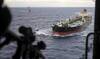
WASHINGTON: US military forces boarded a sanctioned oil tanker in the Indian Ocean after tracking the ship from the Caribbean Sea, the Pentagon said Monday. The Pentagon’s statement on social media did not say whether the ship was connected to Venezuela, which faces US sanctions on its oil and relies on a shadow fleet of falsely flagged tankers to smuggle crude into global supply chains. However, the Aquila II was one of at least 16 tankers that departed the Venezuelan coast last month after US forces captured then-President Nicolás Maduro, said Samir Madani, co-founder of TankerTrackers.com. He said his organization used satellite imagery and surface-level photos to document the ship’s movements. According to data transmitted from the ship on Monday, it is not currently laden with a cargo of crude oil. The Aquila II is a Panamanian-flagged tanker under US sanctions related to the shipment of illicit Russian oil. Owned by a company with a listed address in Hong Kong, ship tracking data shows it has spent much of the last year with its radio transponder turned off, a practice known as “running dark” commonly employed by smugglers to hide their location. US Southern Command, which oversees Latin America, said in an email that it had nothing to add to the Pentagon’s post on X. The post said the military “conducted a right-of-visit, maritime interdiction” on the ship. “The Aquila II was operating in defiance of President Trump’s established quarantine of sanctioned vessels in the Caribbean,” the Pentagon said. “It ran, and we followed.” The US did not say it had seized the ship, which the US has done previously with at least seven other sanctioned oil tankers linked to Venezuela. A Navy official, who spoke on condition of anonymity to discuss military operations, would not say what forces were used in the operation but confirmed the destroyers USS Pinckney and USS John Finn as well as the mobile base ship USS Miguel Keith were operating in the Indian Ocean. In videos the Pentagon posted to social media, uniformed forces can be seen boarding a Navy helicopter that takes off from a ship that matches the profile of the Miguel Keith. Video and photos of the tanker shot from inside a helicopter also show a Navy destroyer sailing alongside the ship. Since the US ouster of Maduro in a surprise nighttime raid on Jan. 3, the Trump administration has set out to control the production, refining and global distribution of Venezuela’s petroleum products. Officials in President Donald Trump’s Republican administration have made it clear they see seizing the tankers as a way to generate cash as they seek to rebuild Venezuela’s battered oil industry and restore its economy. Trump also has been trying to restrict the flow of oil to Cuba, which faces strict economic sanctions by the US and relies heavily on oil shipments from allies like Mexico, Russia and Venezuela. Since the Venezuela operation, Trump has said no more Venezuelan oil will go to Cuba and that the Cuban government is ready to fall. Trump also recently signed an executive order that would impose a tariff on any goods from countries that sell or provide oil to Cuba, primarily pressuring Mexico because it has acted as an oil lifeline for Cuba.