

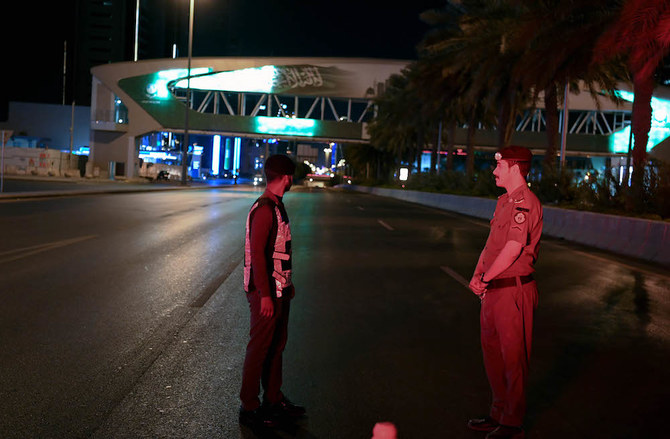

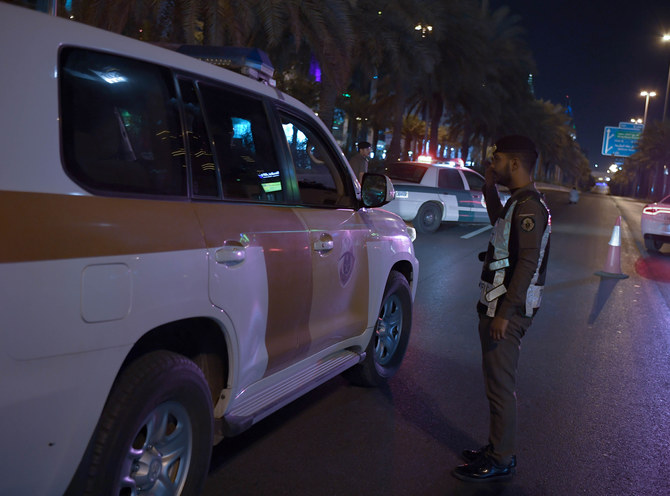


RIYADH/JEDDAH: Saudi streets emptied on Monday night as the Kingdom imposed a 7 p.m.-6 a.m. curfew in the latest measure to curb the spread of the coronavirus.
There are strictly limited exceptions to the 21-day curfew, such as health staff, utility workers, transport, food deliveries and media. Pharmacies, supermarkets and restaurants would offer delivery services, Commerce Ministry spokesman Abdulrahman Al-Hussein said.
Security forces would enforce the curfew and “military authorities may be called upon” if needed, said Interior Ministry spokesman Talal Al-Shalhoub. Anyone who breaks the curfew may be fined SR10,000 ($2,666), and repeat offenders face 20 days in prison.
In Riyadh and Jeddah the main highways and side roads that are usually full of traffic in the evening were empty apart from the occasional police patrol.
An hour before the curfew came into effect, supermarkets and pharmacies in the capital were busy with customers trying to do their final bits of shopping before the clock struck 7 p.m.
Within an hour of the curfew taking effect, King Fahd Road, one of Riyadh’s busiest highways, was almost free of cars.
In Jeddah, residents appeared to be adhering to the new rules and keeping off the streets in a show of solidarity and social responsibility.
Many Saudis welcomed the new restrictions on Monday as a relief from social pressure to defy the pandemic threat and join family gatherings, which have deep roots in Saudi culture.
“I’ve been staying home and only leaving to get groceries, but I’m hoping this will discourage other people from going out,” Sarah Al-Sibai, from Riyadh, told Arab News.
“I can’t believe some people are still having parties and gatherings with an actual pandemic happening outside. Hopefully, this will force people to take the issue more seriously.”
--------
PHOTOS: Saudi Arabia’s cities fall quiet during coronavirus curfew
--------
The Kingdom reported 51 new coronavirus cases on Monday, raising the total to 562 — the highest among the Gulf states, where more than 1,800 people have been infected and four have died.
The UAE confirmed 45 new cases, bringing the total to 198, with two deaths linked to the virus. All passenger and transit flights have been halted for two weeks, although cargo operations continue. Shopping malls will close from Wednesday, but pharmacies, supermarkets and wholesale produce providers may continue to operate, and delivery services are exempt. Dubai closed food establishments from Monday.
The UAE urged people to stay at home but has not suspended work in either public or private sectors. The central bank, other ministries and government departments have asked staff to work remotely.
Iran reported another 127 deaths, bringing the toll to 1,812 from 23,049 confirmed cases.
It is the center of the outbreak in the Middle East, and has faced widespread criticism for not imposing quarantine measures early enough.
In Jordan, where there are 127 confirmed cases of the COVID-19 disease and a round-the-clock curfew, authorities began allowing free home deliveries of medicines, bread and water, and bakeries may reopen from Tuesday.
Officials hope to prevent a repeat of the panic buying in supermarkets before the curfew was imposed on Saturday, and observers said the measures would help avert civil unrest.
Legal aid director Samar Muhareb told Arab News: “All of a sudden you would find problems of people with aching teeth, or smoking addicts who have run out of cigarettes, and this might turn normally peaceful people into beasts if these issues are
not dealt with.”


