Controversy in Lebanon as Israeli agent is flown to US

1 / 2
President Michel Aoun and Prime Minister Hassan Diab at a Cabinet meeting. (AFP)
2 / 2
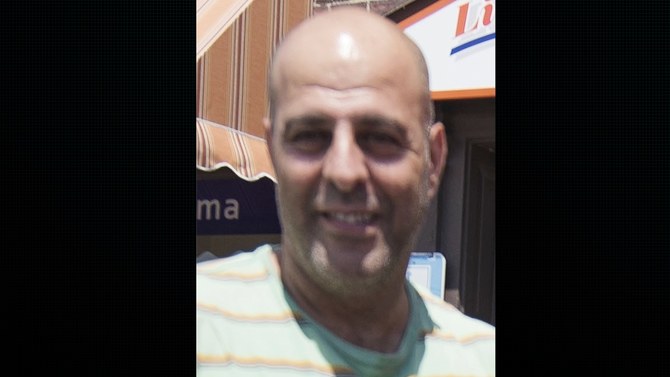
Amer Fakhoury was freed from a prison in Lebanon on March 19, 2020. (File/AP)
Short Url
Updated 21 March 2020
Follow

Controversy in Lebanon as Israeli agent is flown to US

  • Amer Fakhoury was ordered released Thursday by a judge in Lebanon and flown out of the country on an American military aircraft
  • Lebanon's Foreign Minister Nasif Hitti sought an explanation from Ambassador Dorothy Shea for the circumstances of Fakhoury’s exit

BEIRUT: Foreign Minister Nassif Hitti on Friday summoned the US Ambassador to Lebanon Dorothy Shea over the transportation of Israeli agent Amer Al-Fakhoury from the US Embassy in Awkar to the US.
 Hitti’s office said that the minister listened to Shea give “an explanation about the circumstances of Amer Al-Fakhoury being transferred abroad from the US Embassy.”
 A US military helicopter landed at the embassy on Thursday before leaving and flying out to sea.
 US citizen Al-Fakhoury had taken refuge in the embassy on Monday, after Lebanon’s military court dropped charges of “killing and torturing detainees at Khiam prison in the South during the Israeli occupation before the year 2000” against him.
The court said that charges against him were dropped because the statute of limitations had expired, which meant that 20 years had passed since the crimes took place without anyone filing a complaint against him.
The helicopter was able to fly in due to an agreement signed by the US and Lebanon in 1982, allowing US planes to “enter Lebanese airspace and land on its territory without revealing the nature of the mission.”
Al-Fakhoury was arrested in September 2019 at Beirut airport while returning from the US after he had fled to Israel when the occupation forces withdrew from Southern Lebanon.
 He was recognized and spent months at one of Lebanon’s hospitals during his arrest, since he suffers from advanced cancer.

SPEEDREAD

US citizen Al-Fakhoury had taken refuge in the embassy,, after Lebanon’s military court dropped charges of ‘killing and torturing detainees at Khiam prison in the South during the Israeli occupation before the year 2000’ against him.

Activists accused Hezbollah of being “an accomplice of the Free Patriotic Movement (FPM) to release Al-Fakhoury.”
This necessitated the appearance of Hezbollah Secretary-General Hassan Nasrallah on TV on Friday night to clarify its position.
The head of the court that released Al-Fakhoury, Brig. Gen. Hussein Abdallah, announced his resignation on Friday morning.
 “Out of respect for my oath and military honor, I am resigning from heading the military court, where the application of the law equals the release of an agent, the pain of a captive and the betraying of a judge,” he said.
Prime Minister Hassan Diab tweeted: “The crime of being an informant for the Israeli enemy cannot be forgotten. The rights of martyrs and liberated prisoners do not fade in heaven’s justice by the passage of time.”


Syrian Democratic ​Forces withdraws from east of Aleppo

Updated 17 January 2026
Follow

Syrian Democratic ​Forces withdraws from east of Aleppo

RIYADH: Syrian Democratic Forces have withdrawn from positions east of Aleppo, according to SDF head Mazloum Abdi.

He announced Friday that SDF will withdraw from east ⁠of ‌Aleppo at ‍7 a.m. ‍local time on Saturday and redeploy them to areas ⁠east of the Euphrates, citing calls from friendly countries and ‌mediators.

Hours earlier, a US military designation had visited Deir Hafer and met with SDF officials in an apparent attempt to tamp down tensions.

The US has good relations with both sides and has urged calm. A spokesperson for the US military did not immediately respond to a request for comment.

Shortly before Abdi’s announcement, interim President Ahmed Al-Sharaa had announced issuance of a decree strengthening Kurdish rights.

A wave of displacement

Earlier in the day, hundreds of people carrying their belongings arrived in government-held areas in northern Syria ahead of the anticipated offensive by Syrian troops on territory held by Kurdish-led fighters.

Many of the civilians who fled were seen using side roads to reach government-held areas because the main highway was blocked at a checkpoint in the town of Deir Hafer controlled by the SDF.

The Syrian army said late Wednesday that civilians would be able to evacuate through the “humanitarian corridor” from 9 a.m. to 5 p.m. Thursday and then extended the evacuation period another day, saying the SDF had stopped civilians from leaving.

There had been limited exchanges of fire between the two sides in the area before that.

Men, women and children arrived on the government side of the line in cars and pickup trucks that were packed with bags of clothes, mattresses and other belongings. They were met by local officials who directed them to shelters.

* with input from Reuters, AP