ISLAMABAD: The government on Thursday refused to review its decision requiring all international passengers arriving in the country to present a health certificate confirming a negative coronavirus test, despite impassioned appeals by citizens stranded abroad.
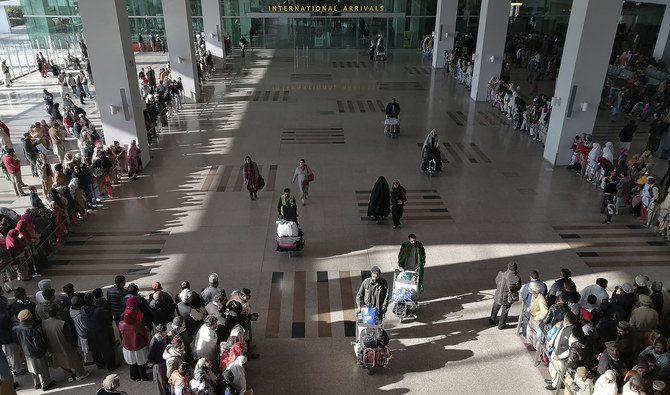
In a bid to curb “imported” cases of COVID-19 disease, Islamabad on Tuesday made it mandatory for all passengers flying to Pakistan to produce a copy of coronavirus test results obtained 24 hours before boarding. The measure will come in effect March 21 and all airlines are required to comply with it.
Pakistan has been struggling to fight the pandemic by introducing a raft of precautionary measures, including the establishment of large quarantine centers, screening of all domestic and international passengers and testing persons who have virus symptoms. The number of confirmed coronavirus cases has reached 377 as of Thursday, with two fatalities reported.
“We are well aware of the concerns of Pakistanis stuck in other countries, but we won’t review our decision (on the mandatory test),” Abdul Sattar Khokhar, senior joint secretary at the Aviation Division, told Arab News on Thursday.
“The purpose of making this test compulsory is to bar imported cases of coronavirus from Pakistan,” he said.
A majority of those who tested positive in the country have a travel history to neighboring Iran and other countries where the outbreak has been severe.
Pakistanis stuck in the United Arab Emirates (UAE) and the United Kingdom have been calling on the government to relax the test requirements so that they could board their flights home.
“The NHS is testing only those who have symptoms for coronavirus,” Mujahid Akbar, a Pakistani stranded in London, told Arab News over the phone, referring to the National Health Service (NHS), the UK’s publicly funded health care system.
“I am running out of money and won’t be able to stay here from next week,” he said.
Pakistanis in the UAE are also unclear where they should obtain the required health certificate from.
“I am due to travel by the end of the month and this rule has left me confused,” Iram Khan, a Pakistani resident in Dubai, told Arab News on Wednesday. “None of us in the family have any symptoms, so how will we be tested? How will we get the certificate?”
The government, however, maintains the measure is necessary to contain the spread of the virus.
“A passenger may not show symptoms at the time of boarding a flight, but in fact may be a virus carrier,” Khokhar said. “We are not ready to take any chances.”


![]()

Pakistan keeps COVID-19 test mandatory for international passengers
Short Url
https://arab.news/mv5t5
Pakistan keeps COVID-19 test mandatory for international passengers
- Government says won’t ‘take any chances’ amid the pandemic
- COVID-19 test requirement for international travelers comes in effect March 21
Latest updates





Recommended


© 2026 SAUDI RESEARCH & PUBLISHING COMPANY, All Rights Reserved And subject to Terms of Use Agreement.