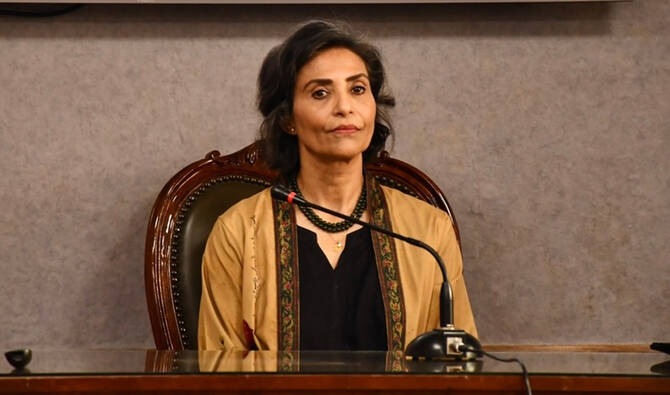

ISLAMABAD: Pakistan’s Federal Ombudsperson for Protection Against Harassment (FOSPAH) has welcomed a recent judgment by the Islamabad High Court (IHC) that significantly advances the recognition of matrimonial property rights in Pakistan.
Women’s matrimonial property rights in Pakistan have largely remained underdeveloped due to the absence of a comprehensive legal framework that explicitly recognizes shared ownership of assets acquired during marriage.
In most cases, property is registered in the name of the earning spouse, typically the husband, leaving women with limited legal claims despite their substantial non-financial contributions such as caregiving and household management.
In a landmark judgment this week, the IHC ruled that all assets acquired during the subsistence of a marriage, movable or immovable and regardless of the title holder, constitute “matrimonial property” and are subject to equitable distribution between spouses.
“By affirming that a woman’s contribution to a marriage is not confined to financial input alone, the Court has underscored the legal value of non-financial contributions, including caregiving, household management, and support to the family unit,” the federal ombudsperson’s office said.
“This marks an important shift toward a more equitable understanding of marriage as a partnership.”
The IHC ruling came in response to a writ petition filed by Amara Waqas, a former officer of the Pakistan Air Force, who challenged previous court orders regarding the recovery of her dowry and personal belongings, according to Pakistani media reports.
While a trial court had granted her 30pc of the alternate value of her dowry, an appellate court had later set that relief aside entirely, citing a lack of “tangible evidence” such as receipts or parent testimony. The IHC set aside both the previous judgments, noting that the lower courts failed to appreciate the specific circumstances of working women.
“The [IHC] judgment builds upon the earlier directions issued by Hon’ble Justice Jawad Hassan of the Lahore High Court in Mst. Saima Shafi v. Additional District Judge & others (WP 526/2021), where the need for reform in the matrimonial property regime was clearly identified,” the FOSPAH statement read.
“FOSPAH reaffirms its commitment to advancing reforms that ensure women’s contributions within marriage are duly recognized and protected and that matrimonial property laws evolve to reflect principles of equity, dignity, and justice.”