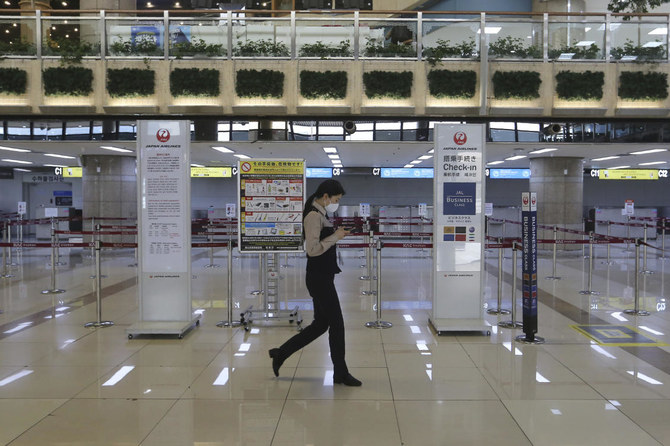
SYDNEY: Airport passenger traffic in the Asia-Pacific region is expected to take a 24 percent hit in the first quarter from the coronavirus, leading to a $3 billion decline in airport revenue and placing pressure on growth projects, an industry group said on Monday.
Airports Council International (ACI) Asia-Pacific said the cancelation of flights had led to lower airline landing and parking charges, a decline in passenger and security charges and a drop in retail spending that was hurting airport operators.
“Unlike airlines, who can choose to cancel flights or relocate their aircraft to other markets to reduce operating costs, airport operators manage immovable assets that cannot be closed down,” Stefano Baronci, Director General of ACI Asia-Pacific said in a statement.
“They are faced with immediate cash flow pressures with limited ability to reduce fixed costs and few resources to fund capacity expansion efforts for longer-term future growth,” he said.
The International Air Transport Association (IATA), which represents airlines, last week called for rules governing airport slots to be suspended immediately in light of the disruption to flight schedules caused by the coronavirus epidemic that first broke out in China in December.
Takeoff and landing slot rules mean airlines must fill at least 80 percent of their slots in any given season, or risk losing their allocation next time round.
ACI Asia-Pacific said it was sympathetic with the airlines’ needs to avoid flying empty planes simply to retain airport slots, but it said it wanted an evidence based, market-by-market review rather than blanket permission to cut flights without the risk of losing slots.
It said the IATA proposal would give airlines the freedom to cancel flights to and from congested airports not necessarily linked to the coronavirus outbreak, jeopardizing the ability for countries to stay connected with the world, which in turn would have knock-on effects on their economies.
IATA last week said the coronavirus epidemic could rob passenger airlines of up to $113 billion in revenue this year.


![]()

Coronavirus: Airport passenger traffic in Asia-Pacific to post first-quarter decline
Short Url
https://arab.news/5vkgb
Coronavirus: Airport passenger traffic in Asia-Pacific to post first-quarter decline
- Coronavirus outbreak to cause a $3 billion decline in airport revenue, place pressure on growth projects
- IATA last week said the coronavirus epidemic could rob passenger airlines of up to $113 billion in revenue this year


Latest updates


© 2026 SAUDI RESEARCH & PUBLISHING COMPANY, All Rights Reserved And subject to Terms of Use Agreement.