JERUSALEM: Murad Mahmoud’s 14-year-old son has been detained by Israeli police in his East Jerusalem neighborhood three times in the last two years. His 10-year-old has been interrogated by police in combat gear. These days, he keeps all six of his children inside most of the time, fearing even worse.
“I won’t even let them go to the corner store,” he says. “I’m not just afraid they’ll be arrested, I’m afraid they’ll lose an eye or get shot in the head."
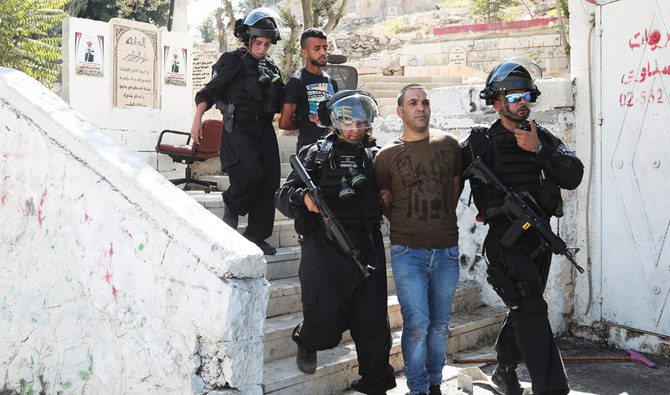
Nearly every day for the last nine months Israeli police have stormed into the Palestinian neighborhood of Issawiya in East Jerusalem in a campaign they say is needed to maintain law and order.
Rights groups say that in addition to searching houses and issuing fines, they have detained hundreds of people — some as young as 10 — on suspicion of stone-throwing.
The operations frequently ignite clashes, with local youths throwing rocks and firebombs, which police say justifies their heightened presence.
But residents and human rights groups say the raids themselves seem intended to provoke confrontations and have created an atmosphere of terror, with parents afraid to let their children play outside.
Last month, a 9-year-old boy was shot in the face by police, losing an eye in an incident authorities say they are still investigating.
It is unclear what prompted the crackdown, but many residents feel police are making an example out of Issawiya so that Israel can cement its control over East Jerusalem, which it seized in the 1967 war and later annexed.
East Jerusalem Palestinians have Israeli residency, but few have accepted citizenship, either because they do not recognize Israeli control or because of the long and complicated application process. That has left many feeling vulnerable.
“From May of last year until today, every day they occupy Issawiya all over again,” said Amin Barakat, an optometrist and a member of the neighborhood council.
Issawiya tumbles down a hillside behind Israel’s Hebrew University, just a few miles from the city center. But like other Arab neighborhoods in East Jerusalem it is overcrowded and poorly served, a legacy of decades of Israeli policies favoring Jewish areas of the city, including East Jerusalem settlements. Under President Donald Trump’s Mideast initiative, which strongly favors Israel and was rejected by the Palestinians, Issawiya would remain part of Israel’s capital.
The intensive raids began last May, but the situation escalated the following month, when a 20-year-old was shot and killed by police, who said he approached to within a few meters (yards) and launched fireworks at them.
Rights groups say the raids go far beyond the targeting of individual suspects and amount to collective punishment of the neighborhood’s 20,000 residents.
Ir Amim, an Israeli group that advocates for equal rights in Jerusalem and has closely followed developments in Issawiya, said the operations are “unprecedented in scope and scale,” amounting to a “violent disruption of daily life.”
In addition to sweeping arrest raids, police have set up flying checkpoints that strangle traffic and issued arbitrary fines for minor violations of local ordinances, it said.


![]()

Palestinians in East Jerusalem neighborhood living in constant fear
Short Url
https://arab.news/r87dc
Palestinians in East Jerusalem neighborhood living in constant fear
- Rights groups say the raids go far beyond the targeting of individual suspects and amount to collective punishment of the neighborhood’s 20,000 residents


Latest updates


© 2026 SAUDI RESEARCH & PUBLISHING COMPANY, All Rights Reserved And subject to Terms of Use Agreement.