

Saudi Arabia’s Ithra reveals 2020 events calendar

1 / 4
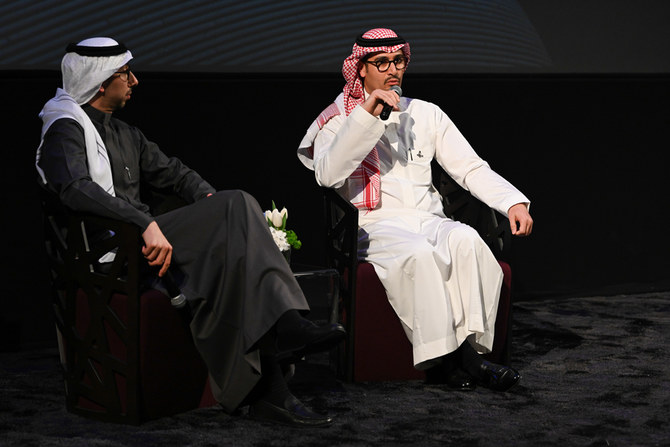
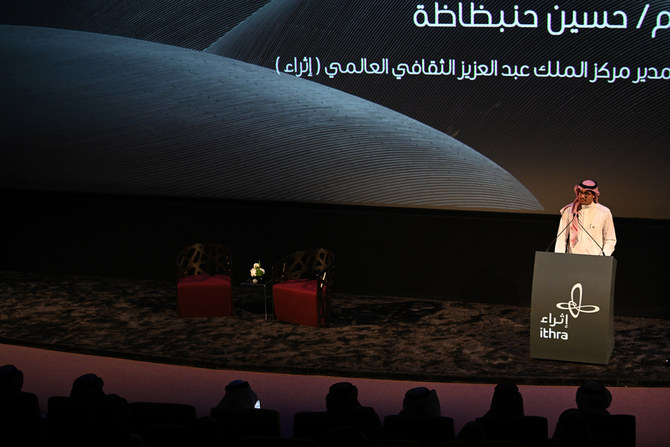
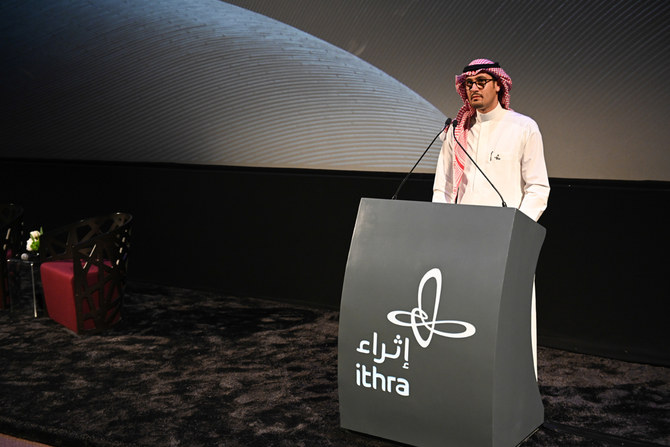
Ithra Director Hussain Hanbazazah said, ‘The start of this decade is particularly exciting for Ithra as we gear up to deliver a great slate of new programs and events in 2020 for our audiences.’ (Supplied)
2 / 4
Ithra Director Hussain Hanbazazah said, ‘The start of this decade is particularly exciting for Ithra as we gear up to deliver a great slate of new programs and events in 2020 for our audiences.’ (Supplied)
3 / 4
Ithra Director Hussain Hanbazazah said, ‘The start of this decade is particularly exciting for Ithra as we gear up to deliver a great slate of new programs and events in 2020 for our audiences.’ (Supplied)
4 / 4
Ithra Director Hussain Hanbazazah said, ‘The start of this decade is particularly exciting for Ithra as we gear up to deliver a great slate of new programs and events in 2020 for our audiences.’ (Supplied)
Short Url
Updated 21 February 2020
Follow

Saudi Arabia’s Ithra reveals 2020 events calendar

  • Ithra Director Hussain Hanbazazah: ‘We are pleased to bring back favorites like our annual Tanween festival, in addition to new enriching programming’
  • Hussain Hanbazazah: ‘Impact has consistently been at the forefront of everything we deliver at Ithra, as we continue to broaden horizons, share knowledge and nurture potential’

DHAHRAN: The King Abdulaziz Center for World Culture (Ithra) on Thursday launched its plan for 2020, highlighting new programs as well as old favorites getting an encore.

Ithra was inaugurated by King Salman on Dec. 1, 2017, and was developed by Saudi Aramco. The striking building was designed by the Norwegian architectural firm Snohetta, which also designed the award-winning Bibliotheca Alexandrina and the Oslo Opera House.

Its mission is to make an impact on human development by inspiring a passion for knowledge, creativity, and cross-cultural engagement.

“The start of this decade is particularly exciting for Ithra as we gear up to deliver a great slate of new programs and events in 2020 for our audiences,” said Ithra director Hussain Hanbazazah. “We are pleased to bring back favorites like our annual Tanween festival, in addition to new enriching programming as well as our other popular seasonal events.” 

He said the team was ready to face the year with optimism, enthusiasm and a fresh perspective. They were working to deliver the best possible offerings, including cutting-edge theater, insightful exhibitions, culturally significant events and plenty of creative activities, he added. “Impact has consistently been at the forefront of everything we deliver at Ithra, as we continue on our dedication to broaden horizons, share knowledge and nurture potential.”

The launch of a new Twitter account, @VisitIthra, was also announced at the launch. It will document everything related to the center’s ongoing and upcoming activities.

Ithra also shared visitor numbers from the previous year. More than a million people visited the center in 2019 from more than 100 cities around the world, and 3,000 people contributed 250,000 hours of volunteer work. The center provided two million hours of teaching and education.

This year there will be over 40 plays from 13 different countries staged at Ithra. The center also aims to support local cinema with 23 films next year.

As Saudi Arabia diversifies its economy under the Vision 2030 reform plan, Ithra has reinforced its offerings with five key pillars: Creativity, culture, knowledge, art and community. 

Last month saw the inauguration of the Ithra Content Commissioning Program, an opportunity for local creatives, freelancers and small businesses to develop new content, as well as the first Ithra Cultural Days festival that celebrated Vietnamese culture. Vietnam Cultural Days was a huge success, with over 45,000 visitors enjoying the festivities and experiencing authentic food, art, activities and performances.

From March onward, the schedule features programs, events, and activities that combine entertainment and education. The Saudi Film Festival will also celebrate its sixth edition in partnership with Ithra.

The year will culminate with Ithra’s flagship creativity season Tanween, which is in its third edition. It will have a new theme, workshops and international guests.

Last year Tanween featured 232 cultural, artistic and scientific events that ranged from art exhibitions, theatrical performances, workshops and seminars about the concept of playing as a tool that brings together education and recreation.


Saudi House kicks off Davos with push on Vision 2030, AI platform and ‘humanizing’ tourism

At Saudi House, ministers and executives set out how the Kingdom sees the next phase of its transformation. (Supplied)
Updated 20 January 2026
Follow

Saudi House kicks off Davos with push on Vision 2030, AI platform and ‘humanizing’ tourism

  • Saudi ministers dominate pre-summit spotlight at Saudi pavilion, touting Vision 2030’s next phase and human capital as key to global edge
  • Ministry of Economy and Planning announced the SUSTAIN Platform which aims to accelerate AI-enabled, cross-sector collaboration for sustainable development

DAVOS: For regulars at the World Economic Forum, Monday in Davos is usually a chance to ease into the week, a time to reconnect, plan meetings and prepare for the intense schedule ahead.

This year, Saudi Arabia moved quickly to fill that lull, taking center stage with a packed program of panels ahead of Tuesday’s official opening.

At the Saudi House — the Kingdom’s official pavilion on the Promenade, returning after its debut as a standalone venue at the 2025 WEF Annual Meeting — Saudi ministers and global executives set out how the Kingdom sees the next phase of its transformation.

Monday’s speakers at the Saudi House included Minister of Finance Mohammed Al-Jadaan, Minister of Investment Khalid Al-Falih, Minister of Tourism Ahmed Al-Khateeb, and President and Vice Chairman of Meta Dina Powell McCormick. (Supplied)

Established by the Ministry of Economy and Planning, the venue is pitched as a platform for international thought leaders to tackle the challenges, opportunities and solutions shaping the global economy.

Opening a session on the Kingdom’s role at this year’s Forum and the next phase of Vision 2030 — now in its 10th year and roughly two-thirds complete — Princess Reema bint Bandar, Saudi Arabia’s ambassador to the US, said human capital “is the actual driver if you want a competitive, modern economy.”

She described one of the biggest achievements of the past decade as the emergence of a highly qualified cohort of young Saudis who could work anywhere in the world but “choose to come home, choose to build at home and choose to deliver at home,” calling this “the biggest symbol of the success of Vision 2030.”

Who can give you optimum access to opportunities while addressing risks? I contend that Saudi Arabia has been able to provide that formula.

Khalid Al-Falih, Saudi minister of investment

On the same panel, Minister of Finance Mohammed Aljadaan said this success is rooted in a “behavioral change” that has strengthened the Kingdom’s credibility with both international partners and its own citizens.

“Credibility comes from being very pragmatic, making sure that you maintain your fiscal policy discipline, but at the same time refocus your resources where it matters,” he said, warning that “markets will call your bluff if you’re not serious.”

The Saudi House, a cross-ministerial initiative led by the Ministry of Economy and Planning, is intended to underscore the Kingdom’s “commitment to global cooperation” by offering “a platform where visionary ideas are shared and shaped,” while showcasing opportunities and lessons from its “unprecedented national transformation.”

Lubna Olayan, Chair of the Corporate Board, Olayan Group

Echoing earlier comments to Arab News, Economy and Planning Minister Faisal Alibrahim said the Kingdom’s role as an anchor of stability has helped unlock its potential, stressing that while the objective is to decouple from reliance on a single commodity, “2030 is not the finishing line.”

Khalid Al-Falih, Saudi minister of investment, said Saudi Arabia has been able to enable access to opportunities while addressing major risks, arguing that few countries can match the Kingdom’s overall mix.

“No country has all of those to 100 percent,” he said. “But who can give you the mix that gives you optimum access to opportunities while addressing all of those risks?

Dr. Bedour Alrayes, Deputy CEO, Human Capability Development Program, Saudi Arabia

“I contend that Saudi Arabia has been able to provide that formula and the proof is in the pudding,” noting that local investment has doubled in recent years to reach levels comparable with India and China.

While societal transformation dominated the morning discussions, the afternoon turned to technology, tourism, sport and culture, four strategic sectors expected to spearhead Vision 2030’s next phase.

The Ministry of Economy and Planning used the day to announce the SUSTAIN Platform, due to launch in 2026, which aims to accelerate AI-enabled, cross-sector collaboration for sustainable development.

The ministry said SUSTAIN will translate the Kingdom’s public and private-sector coordination mandate into a practical national tool to help government entities, businesses, investors, academia and civil society identify credible partners, form trusted coalitions and move initiatives “from planning to implementation more efficiently,” addressing a global challenge where fragmented partnerships often slow delivery and blunt impact.

“We are in a moment in time where technology may well impact the face of humanity,” said Dina Powell McCormick, recently appointed president and vice chairman of Meta, welcoming the Kingdom’s “desire” to partner with technology companies and its embrace of innovation.

Minister of Tourism Ahmed Alkhateeb, discussing how technology is being deployed in his sector, underlined that “in travel and tourism, people are very important. We learn about other people’s culture through interacting with people. We digitalize the unnecessary and humanize the necessary.”

He added that while technological transformation is a priority, “we don’t want to replace this big workforce with technology. I think we need to protect them in Saudi Arabia, where we’re being a model. I’m an advocate of keeping the people.”

Throughout the week, Saudi House will host more than 20 sessions, including over 10 accredited by the WEF, across six themes: Bold Vision, Insights for Impact, People and Human Capability, Quality of Life, Investment and Collaboration, and Welcoming the World.

The pavilion will also launch “NextOn,” a new series of influential and educational talks featuring leading global voices.