NEW DELHI: Authorities in Indian-controlled Kashmir have registered a case against unidentified Internet users who employed virtual private networks, or VPNs, to circumvent a social media ban in the disputed region, police said Tuesday, in an apparent effort to stop their use.
Police said they misused social media “to propagate a secessionist ideology and promote unlawful activities.”
“Hundreds of suspected misusers have been identified and are being probed,” said Tahir Ashraf, who heads the police cyber division in Srinagar, the region’s main city.
Police said in a statement Monday that they have seized “a lot of incriminating material,” adding that the accused could be charged under the Unlawful Activities (Prevention) Act, which also allows the government to designate individuals as “terrorists.”
Police officials questioned several users about their social media posts. However, no formal arrests have been made.
Inspector-General Vijay Kumar appealed to the general public not to use social media via VPNs.
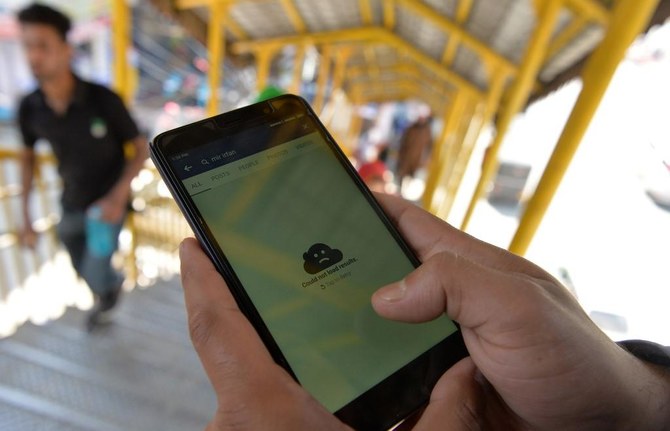
Kashmiris are evading censorship of the Internet and social media by using VPNs, which are widely used globally to access restricted websites, after authorities in January allowed the restive region’s 7 million people to access government-approved websites, six months after cutting off the Internet entirely.
In August last year, India stripped Kashmir of its semi-autonomy and statehood and imposed a total communications blackout. Authorities heralded the recent restoration of limited Internet access as a step toward normalcy, but are continuing a ban on popular social media platforms such as Facebook, WhatsApp and Twitter.
Police officer Ashraf said “misuse of social media has caused widespread disinformation and fake news.” It was unclear whether authorities would clamp down on general social media users over the ban on use of social media sites.
Since the Internet ban was partially lifted on Jan. 25, some Kashmiris have shared access to banned sites through VPNs and taken to the web to denounce the government’s actions in the region.
Critics say the tight Internet restrictions are “far worse censorship than anywhere in the world” and could spearhead a new level of government control over information allowing it to further restrict freedoms in Kashmir.
“Everything is policed here. There’s no privacy in our lives,” said Ikram Ahmed, a university student. “Now we will have people in jails for mere use of social media.”
The portion of the divided Kashmir region that India controls is one of the most militarized places in the world.
Kashmiri rebels have fought for decades for its independence or unification with Pakistan, which administers the other part of Muslim-majority Kashmir.
Archrivals India and Pakistan have fought two wars over the territory, both claiming it in its entirety.


![]()

Indian police open case against Kashmir social media users
Short Url
https://arab.news/4q9f4
Indian police open case against Kashmir social media users
- Police say Internet users misuse social media ‘to propagate a secessionist ideology and promote unlawful activities’
- Ban on popular social media platforms such as Facebook, WhatsApp and Twitter remains in Kashmir


Latest updates


Recommended


© 2026 SAUDI RESEARCH & PUBLISHING COMPANY, All Rights Reserved And subject to Terms of Use Agreement.