Cybersecurity confidence key to Saudi economic acceleration

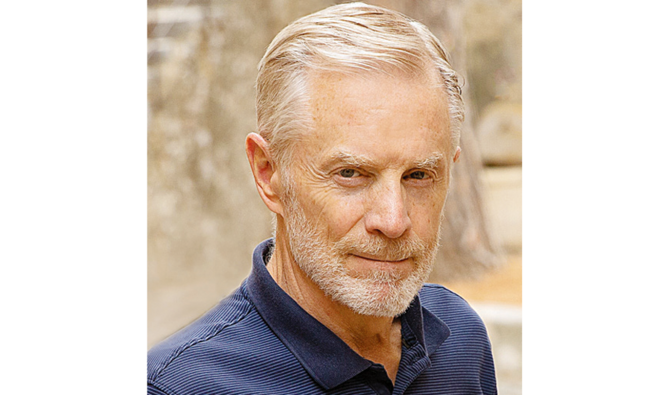
Andy Purdy, Huawei’s chief security officer.
Short Url
Updated 15 February 2020
Follow

Cybersecurity confidence key to Saudi economic acceleration

Advocating for uniform standards that support cybersecurity risk mitigation, Huawei joined top government, business, and academic leaders in Saudi Arabia last week at the Global Cybersecurity Forum in Riyadh.

Andy Purdy, Huawei’s chief security officer in the US, was in the Kingdom to stress the importance of a cooperative approach to cybersecurity risk mitigation in which governments, telecom service providers, and technology vendors collaborate on industry guidelines — those that protect consumers and which also harness the economic potential of digital transformation.

According to Huawei, the topic is particularly timely as the roll-out of 5G services continues in the Kingdom. Industries are already starting to benefit from the incredible leaps in bandwidth and network speeds provided by 5G.

“In today’s digital era, high-level decisions about security principles must be supported by both public and private sector stakeholders. That cooperation is the only way to extend identity and location-data privacy, to strengthen identity management of connected devices, and to align user authentication standards within a smart city environment,” said Purdy. “The challenge is that there are simply more stakeholders involved in these decisions than ever before. But it is a challenge the world can overcome.” 

Purdy also acknowledged the efforts of government bodies in Saudi Arabia to improve their cybersecurity capabilities and seek international cooperation. Saudi Arabia was, for example, ranked 13th globally and first in the Arab world in the UN’s Global Cybersecurity Index in 2018.

Addressing questions about Huawei’s own cybersecurity credentials, Purdy emphasized that cybersecurity is a global issue for all countries, governments, and companies.

It is one of the reasons why Huawei has launched many Joint Innovation Centers in Saudi Arabia and the wider Middle East, working with telecom operators, ministries, and enterprise partners to build secure solutions that promote digital transformation.

“We firmly believe that any future security principles should be based on verifiable facts and an objective approach. Today’s cybersecurity issues are largely technical ones at their core, and need to be addressed through technical means,” he added.


ALJ Motors, Toyota conclude Phase 2 of hydrogen mobility pilot

Updated 18 sec ago
Follow

ALJ Motors, Toyota conclude Phase 2 of hydrogen mobility pilot

Abdul Latif Jameel Motors, the authorized distributor of Toyota vehicles in Saudi Arabia, together with Toyota Motor Corporation and Toyota Tsusho Corporation, has completed the second phase of the hydrogen mobility pilot in collaboration with the Engineering College at Princess Nourah bint Abdulrahman University and supporting entities at the university’s campus.
The pilot ran from Jan. 26 to 28, in alignment with the MoU signed between PNU and the Ministry of Energy for the implementation and deployment of hydrogen fuel cell mobility pilot projects. The program’s opening day ceremony featured prominent government, academia, and industry figures, who gathered to reaffirm the long-term importance of hydrogen solutions in Saudi Arabia.
The first phase, completed last September, focused on feasibility and initial testing, while the second focused on scalability, operational expansion, and diversification of hydrogen-powered mobility and stationary solutions within the university environment.
In addition to the previously deployed Toyota Mirai fuel cell electric vehicles, the pilot included the Caetano H2.City Gold hydrogen fuel cell bus, the Toyota hydrogen fuel cell forklift, and the GEH2 stationary hydrogen generator, all powered by Toyota’s hydrogen fuel cell technology. Together, these additions support a broader assessment of hydrogen technology across multiple uses.
Mazin Ghazi Jameel, managing director of marketing operations, Toyota, Abdul Latif Jameel Motors, said: “The second phase of this hydrogen pilot represents a strategic step forward in advancing hydrogen mobility and stationary solutions in the Kingdom. By expanding the scope of hydrogen-powered transport and stationary applications at Princess Nourah bint Abdulrahman University, we are moving beyond exploration toward scalability, gaining practical insights into how this technology can deliver long-term value at scale while supporting Saudi Vision 2030’s sustainability objectives.”
Nobuyuki Takemura, chief representative of the Middle East regional office, Toyota Motor Corporation, said: “Toyota is proud to work alongside the Kingdom of Saudi Arabia and our valued partners to advance hydrogen mobility. Through practical pilots such as this, we are strengthening real-world understanding of hydrogen applications, engaging students directly and inspiring the next generation to shape the future of clean transport. This reflects Toyota’s multi-pathway approach to carbon neutrality, grounded in the belief that progress is accelerated when innovation is tested in real environments.”
Saud Alsultan, deputy general manager of Toyota Tsusho Corporation, Saudi Arabia, added: “This second phase marks an important milestone in translating hydrogen mobility from pilot testing into scalable real-world applications. By expanding beyond passenger vehicles to include buses and stationary solutions, we are gaining valuable insights into how hydrogen can support integrated mobility ecosystems and contribute meaningfully to Saudi Arabia’s clean energy and sustainability ambitions.”
The initiative builds on Abdul Latif Jameel Motors and Toyota’s growing portfolio of Saudi hydrogen mobility and research projects. This includes the Jeddah hydrogen taxi pilot, the Makkah Caetano H2.City Gold bus trials, and a region-specific fuel cell research collaboration with King Abdullah University of Science and Technology.
The conclusion of both phases reflects Abdul Latif Jameel Motors, Toyota Motor Corporation, and Toyota Tsusho Corporation’s long-term commitment to be part of the Kingdom’s sustainability journey in mobility and beyond through a diversified, market-responsive approach.