

Startup of the Week: App takes guesswork out of online clothes shopping

1 / 7
The app’s team benefited from mentorship and funding from the Taqadam program. (AN photos by Huda Bashatah)
2 / 7
AN photos by Huda Bashatah
3 / 7
AN photos by Huda Bashatah
4 / 7
AN photos by Huda Bashatah
5 / 7
AN photos by Huda Bashatah
6 / 7
AN photos by Huda Bashatah
7 / 7
AN photos by Huda Bashatah
Short Url
Updated 12 February 2020
Follow

Startup of the Week: App takes guesswork out of online clothes shopping

  • Miqyas, an app which has a tape measure snuggled in its logo, wants to take the guesswork out of online clothes shopping by giving customers and retailers the tools they need for better sizing

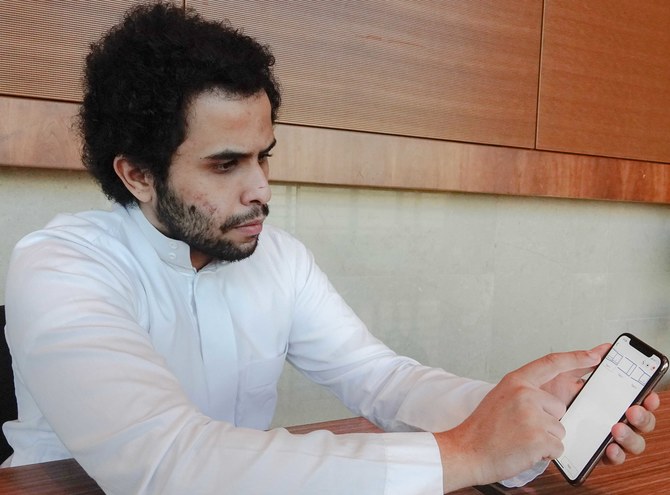
Miqyas CEO Abdulla Almazroa loves online shopping. “It’s so convenient,” he told an audience last September at an event hosted by King Abdullah University of Science and Technology’s (KAUST) startup accelerator Taqadam.
“So many options that get delivered right to your doorstep. Although it’s convenient, there’s a problem. The clothes we get just don’t fit. So the return button is clicked. What bothers me even more ... thobes, abayas and custom-made garments, don’t even think about buying those online.”
Custom-made garment stores were unable to take advantage of the fast-growing fashion e-commerce market, he added, while retailers of ready-made clothes were paying the price for free returns.

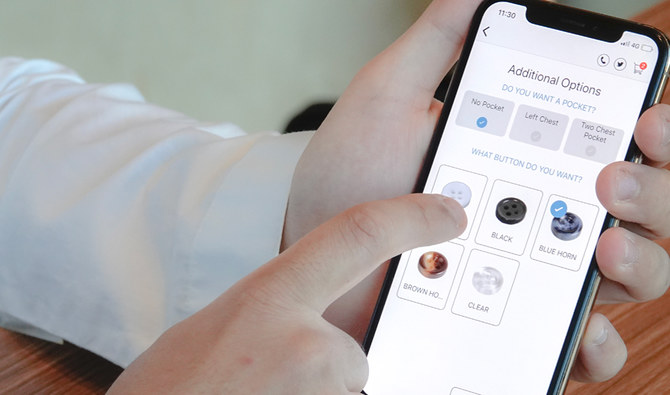
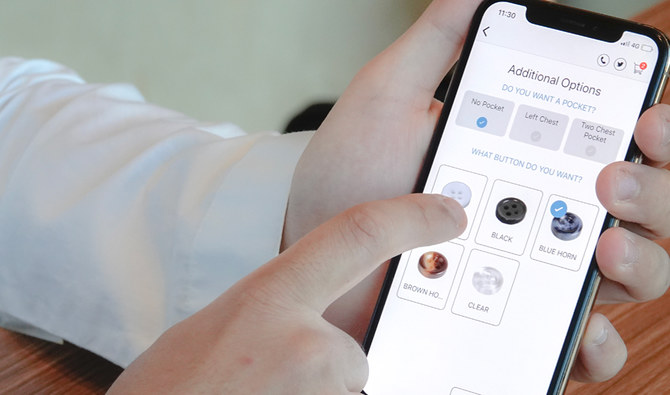
Miqyas, an app which has a tape measure snuggled in its logo, wants to take the guesswork out of online clothes shopping by giving customers and retailers the tools they need for better sizing. The app’s team benefited from mentorship and funding from the Taqadam program.Almazroa channeled his frustration with online shopping to inspire the startup’s work. “I saw the gap in the thobe market,” he told Arab News. “There is no technology to measure customers and sell thobes online. We have achieved very high accuracy for our products, over 98 percent, which we are very proud of. This also means that our customers are going to have very high-quality products that guarantee them the right sizes.”
Miqyas has two products, both developed in-house.
SizeIt is an add-on for any e-commerce platform that removes the hassle of dealing with size charts. Users answer a few questions and receive a size recommendation that fits them whatever the brand. CustomFit helps people to get their perfect size every time by taking photos of their body.
“The end-user takes two pictures of their body, from the front and the side,” the app’s co-founder Fares Maimani told Arab News. “Then our software utilizes computer vision, machine learning, and big data to get an accurate 3D model of their body. This model is used to generate human body measurements. In the beginning, it was really difficult for us to find a business model that worked best for us, so we would come up with something and then it would fail and we would try again until we figured this model out.” Maimani said that the support from Taqadam had helped to jump-start the business and allowed them to work in the Saudi startup sphere.
The Taqadam accelerator program, which was launched in 2016 in partnership with the Saudi British Bank, has successfully graduated dozens of startups and awarded more than $2 million in funding.
In line with Saudi Arabia’s objectives of supporting new ventures, the program focuses on preparing new entrepreneurs for the challenges ahead, offering over six months of business training and mentorship in various industries, including e-commerce, health care and technology.
It gives Saudi students, staff and recent graduates the support to start a successful tech-based company through mentoring and training.


Saudi Arabia, Estonia strengthen cyber defense cooperation

Updated 09 February 2026
Follow

Saudi Arabia, Estonia strengthen cyber defense cooperation

  • Renowned for its leadership in digital governance, Estonia sees cybersecurity as central to its partnership potential with Saudi Arabia, building on years of regional engagement through its technology firms

RIYADH: Estonia aims to deepen defense, cybersecurity, and artificial intelligence cooperation with Saudi Arabia as both nations look to advance technology‑driven defense and cybersecurity capabilities.

Hanno Pevkur, Estonia’s minister of defense, told Arab News at the World Defense Show in Riyadh on Monday that Estonia’s defense industry is eager to contribute to the Kingdom’s fast‑growing defense ecosystem.

“In the modern world, cooperation built on trust and technology is the best defense,” he said. “It is important for us to be here because we clearly see there is a possibility to increase cooperation, not only bilaterally between Saudi Arabia and Estonia, but across the region.”

At Estonia’s pavilion, a cooperation agreement was signed between an Estonian company and a Saudi firm during the show, he noted.

Pevkur also said Estonia’s defense sector has expanded rapidly in recent years, driven by technological innovation and partnership.

“Our defense industry is growing very rapidly, and we continue to see strong momentum,” he said.

He said Estonia’s strengths lie in digital and smart‑system integration rather than large‑scale weapons production.

“We will not build airplanes or tanks, but what we can do is integrate robotics, automation and drones to make existing systems smarter,” he said.

The minister said effective defense collaboration must link businesses and governments to achieve meaningful results.

“When we want to have real cooperation, we need it on all levels,” he said. “The biggest client for any defense company is the government, so we must treat this as one ecosystem where the public and private sectors work hand in hand.”

Renowned for its leadership in digital governance, Estonia sees cybersecurity as central to its partnership potential with Saudi Arabia, building on years of regional engagement through its technology firms.

Pevkur said several Estonian companies, including Nortal, have already assisted Gulf governments in developing open IT and digital‑service systems.

“As the most digitalized nation in the world, almost every service in Estonia can be done online, except getting married,” he said. “But with such digitalization, we also need strong cyberdefense.”

He said data protection and digital resilience are treated as matters of national sovereignty in Tallinn, the capital of Estonia.

“Data is what we own. When someone steals that data, it becomes a serious threat,” he added. “That is why cyberdefense is not just about technology, it is about trust, sovereignty and protection.”

Pevkur said Saudi Arabia’s advances in AI offer promising opportunities for collaboration.

“I know that Saudi Arabia is doing great work when it comes to AI,” he said. “For us, as a small country with limited human resources, AI is essential not just for defense but for everyday life.”

Pevkur added that Estonia has launched a national AI strategy to promote responsible development and closer coordination between government and industry. One Estonian company, he said, has developed a system that allows a single operator to control hundreds of drones through AI.

“It is quite easy to put a weapon into the hands of a robot, but we also need to define who is accountable for its actions,” he said.

“The big question for the future is whether we can allow a war to be fought entirely by AI, or if humans must always make the final ethical decisions.”

He said in his conclusion that governments must reach a common understanding on how AI will be used and regulated on the battlefield.