
JERUSALEM: Despite the inclement weather in Jerusalem, for the second week in a row tens of thousands of Palestinians came out for pre-dawn prayers at Al-Aqsa Mosque, Islam’s third holiest site, on Friday and remained at the site until noon prayers.
Arab Israeli citizens said police turned their buses away to prevent them from reaching Jerusalem’s holy places.
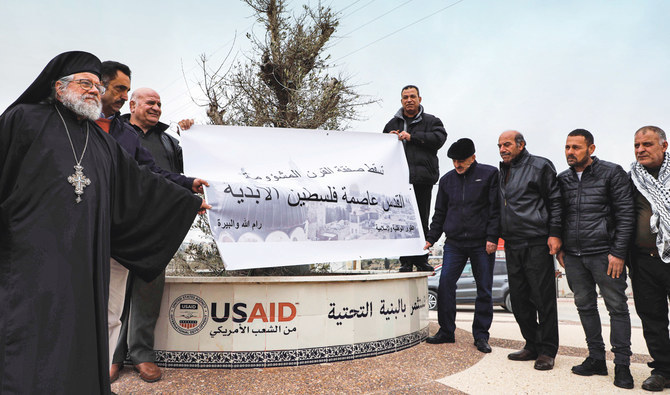
Palestinians have been protesting the Israeli security forces’ heavy-handed tactics in putting down Palestinian protests against the US/Israeli peace plan that was announced at the White House on Jan. 28. Four Palestinians, including one policeman, have been killed since Wednesday — three in the northern West Bank city of Jenin and one in Jerusalem.
Talal Abu Afifeh, head of the Jerusalem Intellectual Forum from the Shufat refugee camp in Jerusalem, told Arab News: “People came out to pray at the mosque and to declare their opposition to the American/Isreali plan. There are protests throughout the occupied territories against this plan that is aimed at liquidating the Palestinian cause, denying our rights and encroaching on our religious holy sites.”
Israel Police spokesman Miki Rosenfeld told Arab News that the site — which Jews refer to as the Temple Mount — was “open as normal for Friday prayers.”
While Rosenfeld said that he was not familiar with reports that buses carrying Palestinian citizens from the Galilee were turned back, he did explain: “There were heightened security measures in the old city of Jerusalem in order to prevent any incidents from occurring after the two terrorist attacks that took place in Jerusalem over the last 24 hours.”
FASTFACT
Palestinians have been protesting the Israeli security forces’ heavy-handed tactics in putting down Palestinian protests against the US/Israeli peace plan that was announced at the White House on Jan. 28.
Pro-Netanyahu daily Israel Today called on Israeli security forces to “deal with firmness yet with wisdom” against Palestinian demonstrators and to avoid collective punishment “in order to prevent another Palestinian Intifada from taking place.”
In Jordan, dozens of activists protested outside the US Embassy in Amman in opposition to the American plan — hailed by the US as the “deal of the century.”
Despite heavy rain, protesters responded to a call by the national alliance to attend a protest titled “I am angry for Palestine and I defend Jordan.” The protesters carried an effigy of US President Donald Trump and called the US a “country of terror.”
Jordan’s leading Member of Parliament Saleh Armoti said, “We oppose the negativity of the Arab League and Islamic countries who have financed this deal, and we condemn the leader of Sudan who has met with Netanyahu at this difficult period.”
Armoti added that the US Embassy in Amman has become a “den of spies” and called on the Jordanian government not to accredit the new American ambassador to Jordan.
In the industrial city of Zarqa, protesters burned American and Israeli flags and chanted, “The people want to liberate Palestine.”
Former US Ambassador to Israel Martin Indyk — currently a member of the New York Council on Foreign Relations— tweeted that the escalation in violence is a direct result of the US plan. “The death toll of Trump’s Deal of the Century is beginning to rise,” he wrote. “Trump needs to press both sides to exercise restraint. I fear instead he’ll pour more fuel on the fire his plan has lit.”
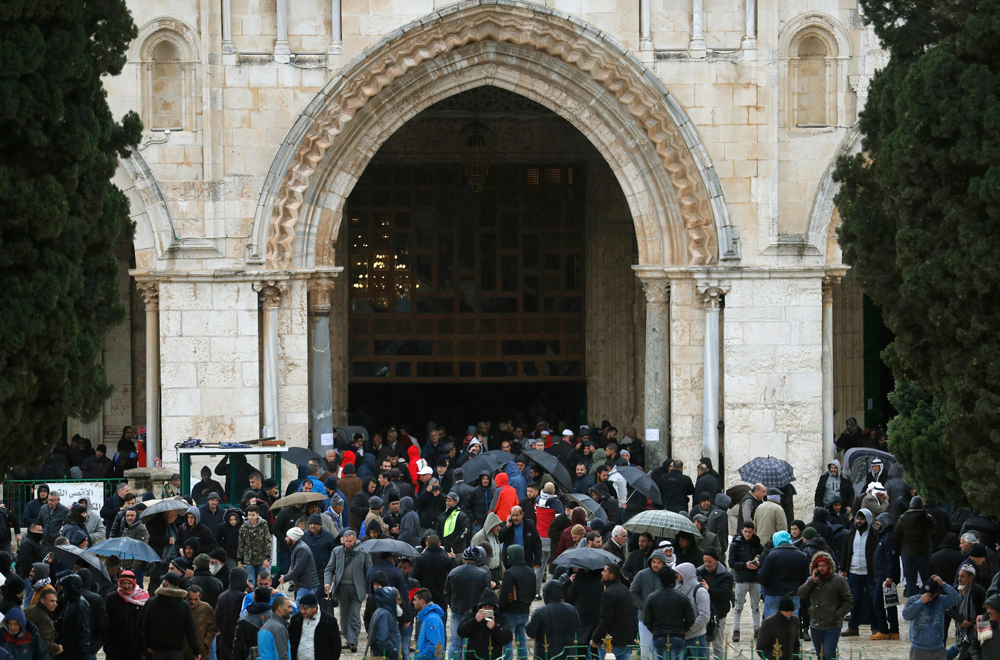
Palestinians gather at the Al-Aqsa mosque compound in the Old City of Jerusalem, on February 7, 2020. (AF)