


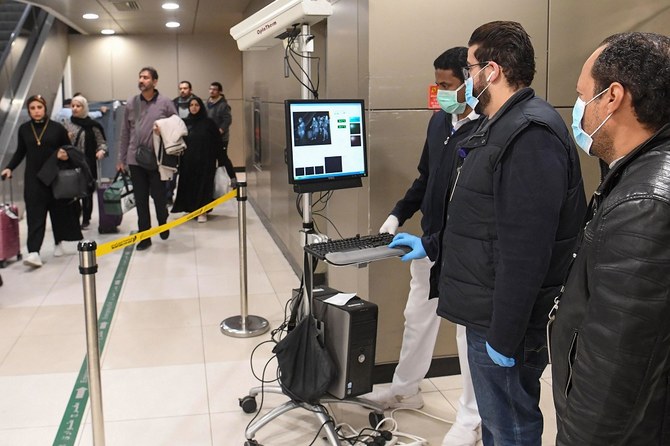

DUBAI: The UAE Ministry of Health and Prevention confirmed Wednesday that four members of the same Chinese family in the Gulf state have been infected with coronavirus, and with an Emirati doctor saying the first to fall ill only showed symptoms after over a week on vacation.
Dr. Hussein al-Rand, an assistant undersecretary at the UAE's Ministry of Health and Prevention, said there was no reason to panic over virus. However, he acknowledged Emirati officials now were tracing the family's steps since landing in this federation of seven sheikhdoms that includes Dubai and Abu Dhabi.
“Their condition is stable, they are awake, they are all receiving all the measures,” al-Rand said. “I would say to the public: Please, don't be panicked. The health condition within the United Arab Emirates is safe.”
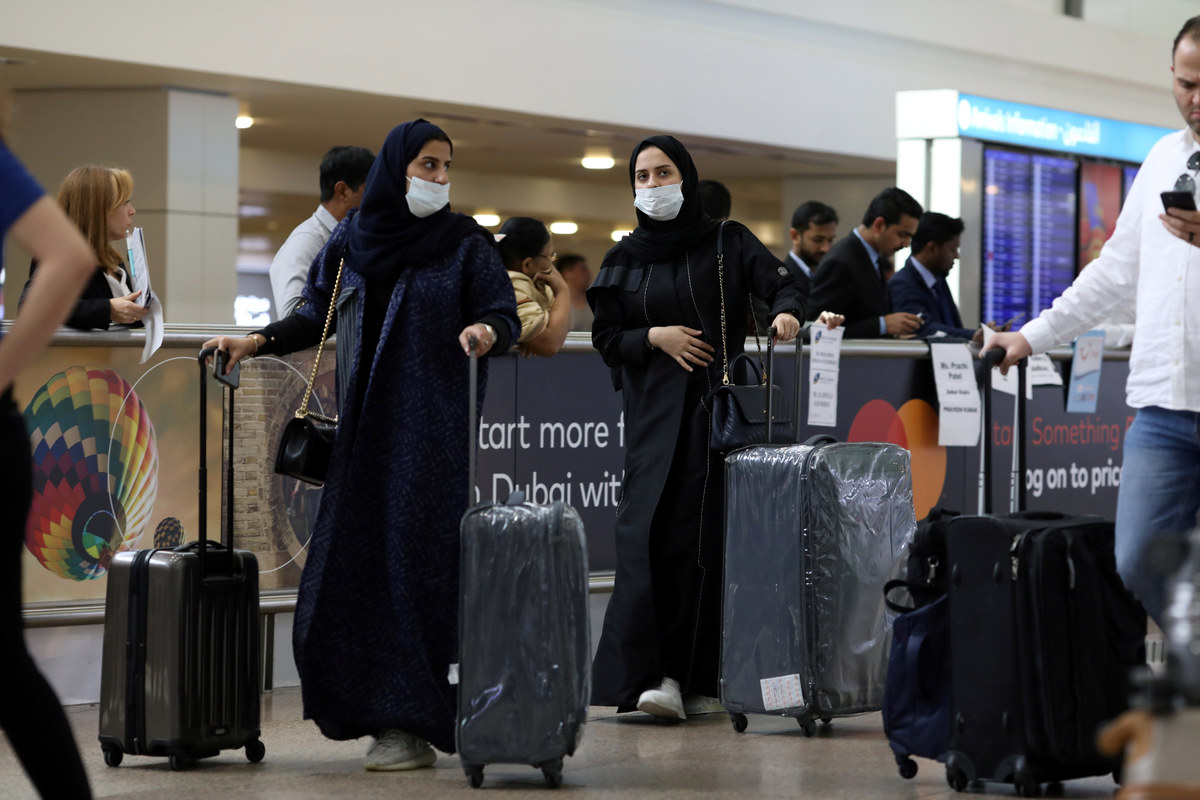
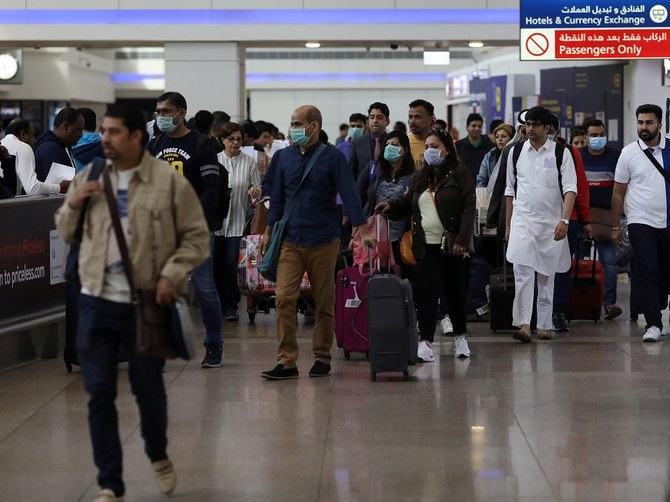
Travellers wear masks as they arrive at the Dubai International Airport in Dubai. (Reuters)
Among those sick in the family are a grandmother, her daughter, the daughter's husband and the couple's 9-year-old daughter, al-Rand said.
Chinese family of 4 infectedwith new coronavirus in UAE
All of them are in stable condition and contained according to the internationally approved precautions#mohap_uae#coronavirus pic.twitter.com/M6P7IUj2jU
— وزارة الصحة ووقاية المجتمع الإماراتية - MOHAP UAE (@mohapuae) January 29, 2020
The family from Wuhan, the epicenter of the viral outbreak, entered the UAE on Jan. 16, al-Rand said.
Al-Rand declined to name the airline the family flew on and the airport at which they arrived.
Al-Rand also declined to say which cities they visited during their vacation.
Authorities at Abu Dhabi's airport and Dubai International Airport, the world's busiest for international travel, began screening passengers and crew from incoming China flights on Jan. 23.
That same day, Jan. 23, the grandmother among the family fell ill and sought medical care, Al-Rand said.
Public awareness about the virus had spread widely and doctors tested the grandmother for the new coronavirus and got a positive result. Authorities admitted the other three shortly after and they too tested positive.
By Wednesday the number of infected reached 5,974 cases in China alone, surpassing the number of infections during the Severe Acute Respiratory Syndrome (SARS) outbreak in 2003, at 5,327.
The general health situation is not a cause of conecrn
The first case of coronavirus was diagnosed in Chinese citizens from Wuhan city, China. Meanwhile, the health condition of those infected is stable and under medical observation. pic.twitter.com/1w7sGu1tIH
— وزارة الصحة ووقاية المجتمع الإماراتية - MOHAP UAE (@mohapuae) January 29, 2020
But some experts believed the Wuhan virus figures could still be under-reported, making it far more contagious that SARS.
It is not clear when the family arrived in the UAE, or what airline or airport they came through.
Meanwhile Kuwait asked its nationals not to travel to Shanghai, according to the state news agency KUNA.
In a statement Emirates confirmed that all its passengers arriving from China, including flights from Beijing, Shanghai and Guangzhou, were being screened by the Dubai health authorities.
“We are in close contact with all relevant UAE and Chinese regulatory authorities, and are complying with their directives and guidance. We are also closely monitoring and implementing the guidance of the World Health Organisation, which currently does not advise any restrictions on travel.
“Our crew members are highly trained and will follow standard operating procedures to manage any suspected cases on board. For more information on passenger screening, please contact the Ministry of Health.”
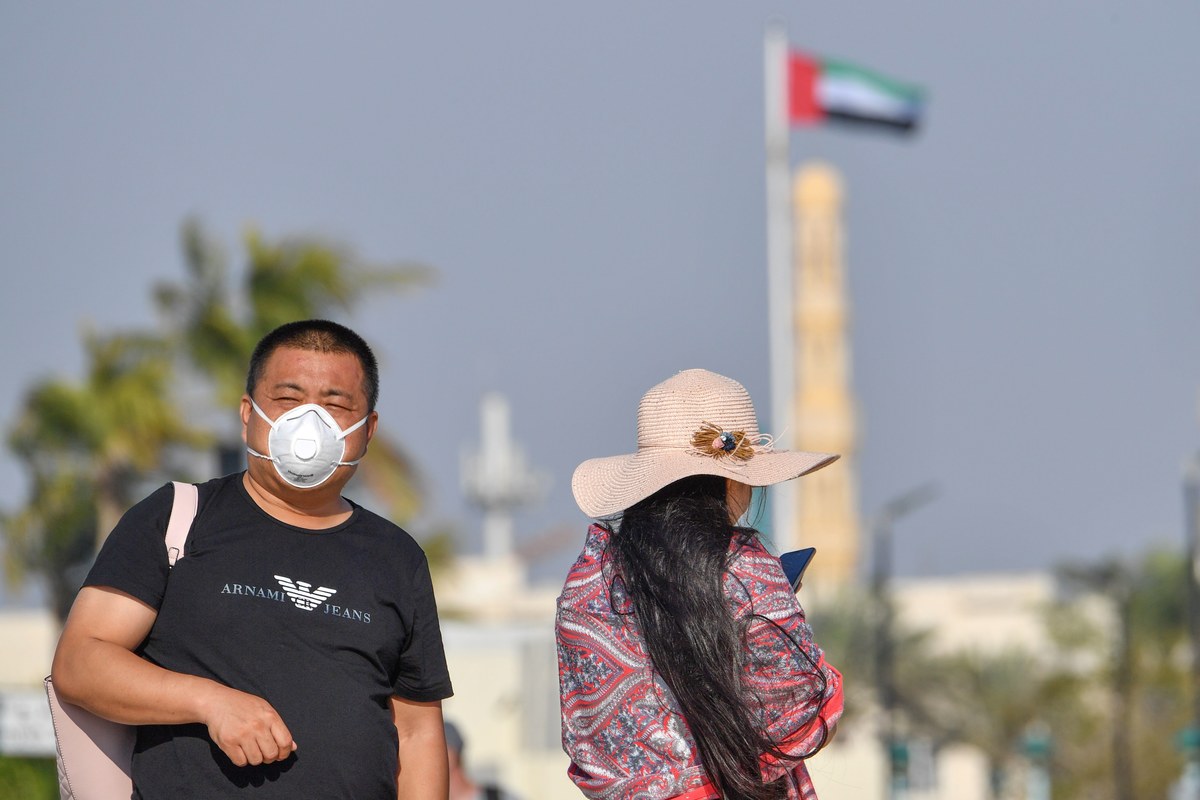
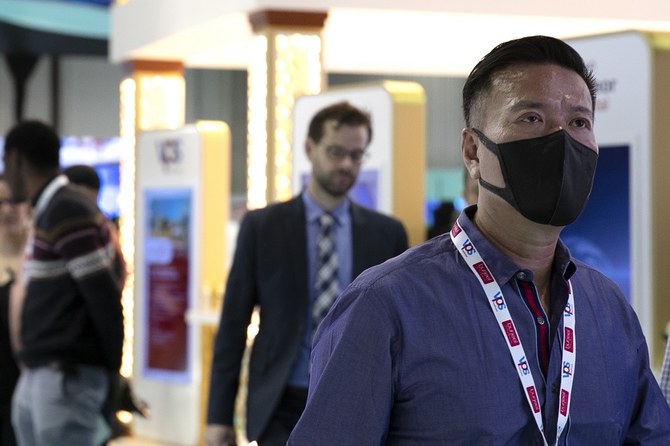
A visitor wears a surgical mask while touring Dubai on Wednesday, January 29 2020. (AFP)
Meanwhile local press reports suggest that the sale of face masks has risen significantly, with some pharmacists currently out of stock.


