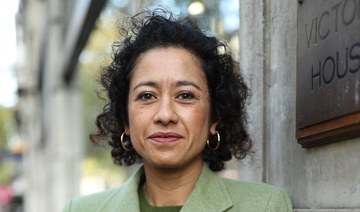

LONDON: The BBC is facing accusations of anti-Semitism over a primetime report on the 75th anniversary of the Holocaust that referred to Israel’s treatment of the Palestinians.
Journalist Orla Guerin — who has worked at the BBC since 1995 and is one of its most senior correspondents — made the reference at the end of her report from Yad Vashem, the World Holocaust Remembrance Center in Jerusalem.
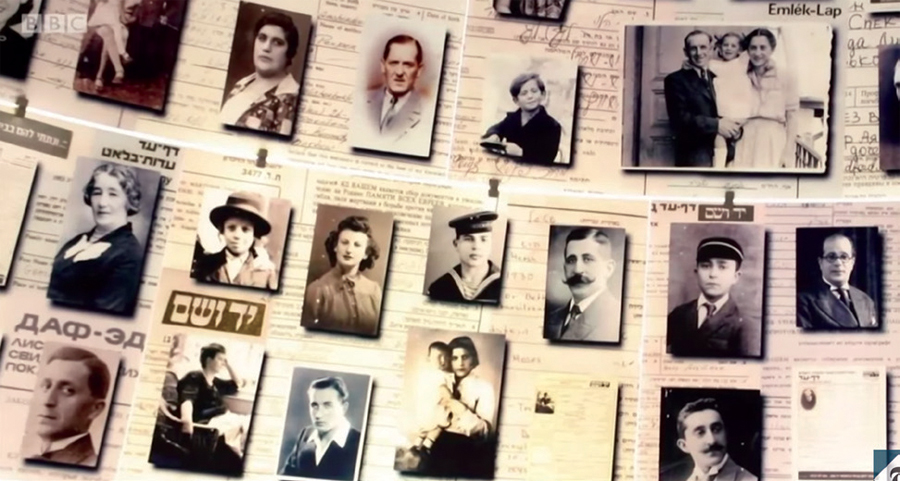
“In Yad Vashem’s Hall of Names, images of the dead. Young soldiers troop in to share in the binding tragedy of the Jewish people,” she said.
“The state of Israel is now a regional power. For decades, it has occupied Palestinian territories. But some here will always see their nation through the prism of persecution and survival.”
Some former BBC journalists and Jewish charities have condemned the remarks as anti-Semitic.
Danny Cohen, former BBC director of television, said the broadcast was “unnecessary, insensitive and particularly ugly in the days before Holocaust Memorial Day.”
Gideon Falter, chief executive of the Campaign Against Anti-Semitism (CAA), said in a statementthat the BBC had used a segment on the Holocaust “as a vehicle to desecrate” its memory “with her hatred of the Jewish state.”

But a former senior BBC correspondent, speaking on condition of anonymity, told Arab News: “It’s a tough subject to navigate, and no matter what you say about Israel, it’s going to upset somebody. People will always be upset if you try to link what’s going on in Palestine with the Holocaust. It’s somewhere you can’t go.”
The BBC “would’ve internally acknowledged that this could’ve been an issue, and they’ve chosen to run with it anyway,” he added.
“This would’ve been discussed before the film went out, because it’s a big point that she made.”
He said these pre-emptive discussions might explain the BBC’s stance in the face of criticism.
“This would’ve been looked at by lots of different people in the food chain, so she’s not on her own — this would’ve gone up to various different bosses. They would’ve signed it off,” he added.
The BBC has defended the broadcast. “The brief reference in our Holocaust report to Israel’s position today did not imply any comparison between the two, and nor would we want one to be drawn from our coverage,” said a spokeswoman.
In reaction to the accusations of anti-Semitism that Guerin has faced, the former senior BBC correspondent said: “Maybe it’s anti-Semitic, or maybe she’s making a point and you don’t like the point.”
The CAA has alleged that Guerin drew comparisons between Israel and the policies of the Nazis, but others have noted that there was no such comparison.
Filmmaker Gary Sinyor wrote in the Jewish Chronicle that “she’s not comparing the Holocaust with the Palestinians.”
He said Guerin made a juxtaposition between the view that some Israelis see their country through the prism of “persecution and survival” while it continues to oppress the Palestinians.
She produced a report “that reiterated the truth of the Holocaust, that addressed rising anti-Semitism, that movingly depicted a survivor from Belsen (concentration camp), that showed Israeli soldiers learning about the tragedy of their fellow Jews, that took up the last four-and-a-half minutes of the BBC’s main news bulletin the day before the actual memorial service, surely we can live that,” Sinyor added.“In fact, we should be grateful.”
Arab News contacted the CAA and asked what justification it had for the view that Guerin has a “hatred of the Jewish state.”
The CAA’s press officer said Falter’s accusation was proven by “20 years of her work,” before asking Arab News to contact them via email. No further comment was received.