LONDON: Arab economies need to break down barriers and start to work together if they are to stand any chance of creating the millions of jobs they need to grow, the World Economic Forum in Davos heard.
Regional economies are estimated to have grown by just 1 percent for 2019 as a weaker oil price, geopolitical threats and the impact of global trade wars have hurt output.
But a panel of Middle East business leaders and ministers called for more efforts to break down barriers and slash red tape in order to create the sort of economic growth needed for meaningful job creation.
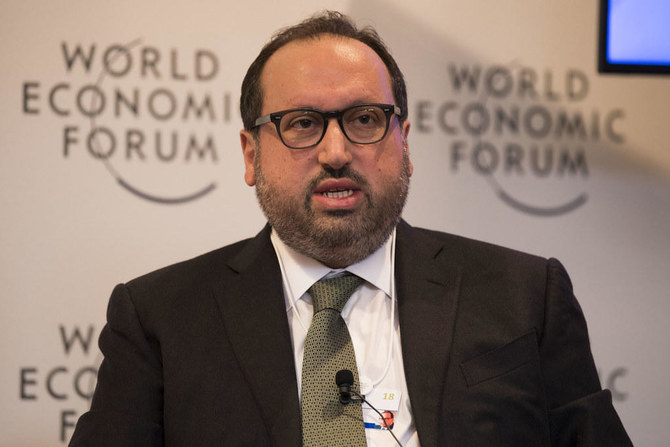
“We forget sometimes employment is a result of economic growth — you can’t create jobs without economic growth,” said Alain Bejjani, the CEO of Majid Al Futtaim Holding, the Dubai-based retail conglomerate that operates malls across the Middle East.
He said that most global growth was creates through regional trading blocs but that this model had not yet worked successfully in the Middle East.
“If you look at the ASEAN region as an example — it has 56 percent of its trade happening within the region. I think you’ll be surprised when I tell you that only 16 percent of the trade in the MENAP region is within the region. If you take oil out it is less than 5 percent. So in reality this region doesn’t work together. It works with the world but not with each other.”
Bureaucratic processes have also stymied growth according to Majid Jafar, the CEO of UAE-based Crescent Petroleum.
“Registering a company can take more than a year in some countries,” he said. “So how can we make that quicker? Look at what is standing in the way and how can we improve it.”
The Middle East and Central Asia is expected to record 2.8 percent growth in 2020, the IMF said on Monday. That was slightly lower than its October outlook and reflecting the latest move by the OPEC+ group of oil producers to extend supply cuts. It expects the region to pick up speed in 2021 with growth of 3.2 percent.


![]()

Arab states work with the world but not with each other, Davos hears
Short Url
https://arab.news/z9med
Arab states work with the world but not with each other, Davos hears
- Majid Al Futtaim CEO Alain Bejjani: I think you’ll be surprised when I tell you that only 16 percent of the trade in the MENAP region is within the region
- Alain Bejjani: We forget sometimes employment is a result of economic growth — you can’t create jobs without economic growth


Latest updates



© 2026 SAUDI RESEARCH & PUBLISHING COMPANY, All Rights Reserved And subject to Terms of Use Agreement.