

South Korea summons Iran envoy over diplomatic threat

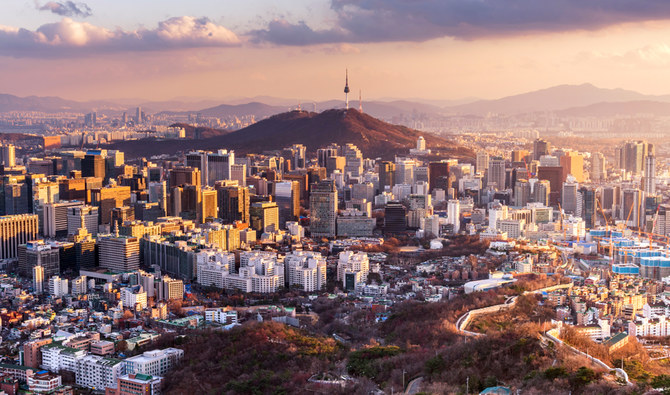
South Korea on Saturday summoned Iran’s ambassador after he implied bilateral ties could suffer if Seoul dispatched naval forces to the Strait of Hormuz. (Shutterstock)
Short Url
Updated 12 January 2020
Follow

South Korea summons Iran envoy over diplomatic threat

  • US wants Seoul to join maritime security effort in Strait of Hormuz

SEOUL: South Korea on Saturday summoned Iran’s ambassador after he implied bilateral ties could suffer if Seoul dispatched naval forces to the Strait of Hormuz.

Ambassador Badmchi Shabestari, in an interview last week with Seoul daily newspaper Joongang Ilbo, made the remarks at a time of heightened tension in the international community following the assassination of a top Iranian military general.

He suggested a possible deployment of South Korean naval forces to the waterway could affect bilateral ties.

“If another country conducts military activities within the Strait of Hormuz, we will not remain inactive,” Shabestari was reported as saying. “Iran and Korea share a history that dates back 1,000 years to the Silla Dynasty and this moment is the biggest crisis in our history.”

South Korea’s Foreign Ministry lodged a protest over his remarks. 

“We called in the ambassador to deliver our concerns of bilateral relations between both governments after the ambassador reportedly talked of the severing of the ties,” a ministry official told reporters. “We listened sufficiently to the ambassador’s explanations.”

According to the official, the Iranian envoy denied directly mentioning the possible severing of diplomatic ties while expressing his concern that Seoul’s participation in a US-led coalition campaign in the Strait of Hormuz could hurt bilateral relations.

The US has been pressuring South Korea to join its maritime security campaign in the waters off Iran.

US Ambassador to South Korea Harry Harris expressed hope that South Korea would send forces to the strait, especially because the majority of its oil imports were shipped through there. “I believe, especially as a former naval officer, that it is in the interest of all nations to support freedom of the seas and freedom of navigation on the high seas,” Harris told South Korean broadcaster KBS last Tuesday, “and I believe that Korea, who gets so much of your energy from the Middle East, this is a particularly important concept for the Republic (of Korea).”

South Korea is considering sending its Cheonghae Unit, an anti-piracy naval team operating in the Gulf of Aden, to the strait at the request of the US government. 

But the assassination of Iranian Maj. Gen. Qassem Suleimani has led to concerns that dispatching forces could backfire.

If another country conducts military activities within the Strait of Hormuz, we will not remain inactive.

Badmchi Shabestari, Iran’s ambassador in Seoul

South Korean Foreign Minister Kang Kyung-hwa indicated her caution at a parliamentary session.

“I think the stance of the United States and ours cannot always be the same in political analysis and when considering bilateral ties with Middle East countries,” Kang told lawmakers on Thursday, adding that the government had yet to reach a conclusion about safeguarding the strait.

Deploying the Cheonghae Unit would be a useful measure to patch up ties with the US government over the thorny issue of defense cost-sharing.

Seoul and Washington have been tussling over how to share the cost of stationing US soldiers in South Korea. 

The US is said to have called for a 10-percent hike from 2019, when South Korea paid about $870 million. That figure already represents an 8 percent increase from the previous year.

“If the US demands we send troops to the Strait of Hormuz, there is little option to avoid it,” Jung Sang-ryul, a professor at the Institute of Middle Eastern Affairs at Myungji University, told Arab News. “The rub is the timing of the dispatch. A troop dispatch at this moment is risky.”

Some believe that South Korea might send the Cheonghae Unit to the strait but not as part of a US coalition, taking its cue from Japan’s naval deployment plan.

Japan’s cabinet approved a plan to send forces to waters around the strait on an intelligence-gathering mission, but the Japanese warship is expected to operate separately from US-led operations in the area.

Since 2009, the Cheonghae Unit has operated from a 4,500-ton KDX-II destroyer on a rotation basis. The unit has escorted more than 21,000 ships and conducted more than 20 operations to combat piracy off Somalia.


Thousands in Kosovo march against war crimes trials on 18th anniversary of independence declaration

Updated 2 sec ago
Follow

Thousands in Kosovo march against war crimes trials on 18th anniversary of independence declaration

  • Protesters, many wrapped in red and black Albanian flags, braved cold and snowy weather in the capital, Pristina, to voice their opposition to the proceedings in The Hague
  • PM Albin Kurti added that ‘the KLA-led war was pure, liberation (struggle) and an anti-colonial war ... a just struggle of an occupied and oppressed people under apartheid’
PRISTINA, Kosovo: An air of defiance marked Kosovo’s independence celebrations on Tuesday as thousands of people joined a march in support of former fighters who are facing trial at a Netherlands-based court for alleged war crimes during a 1998-1999 separatist war from Serbia.
Protesters, many wrapped in red and black Albanian flags, braved cold and snowy weather in the capital, Pristina, to voice their opposition to the proceedings in The Hague against former president and rebel leader Hashim Thaci and three others accused of atrocities during and after the conflict that killed some 13,000 people.
Earlier on Tuesday, Kosovo’s security forces paraded in Pristina as part of the independence ceremonies, and Parliament held a special session.
The war started in 1998 when the rebel Kosovo Liberation Army launched its struggle for independence and Serbia responded with a brutal crackdown. The war ended after NATO bombed Serbia for 78 days in 1999, eventually forcing it to pull out its troops from the territory.
Serbia still does not recognize the 2008 declaration of independence of Kosovo and this has been a source of persistent tension in the volatile Balkan region. As both Kosovo and Serbia seek European Union membership, they have been told they must normalize ties before joining.
Prosecutors at the Kosovo Specialist Chambers in The Hague — which formally is part of Kosovo’s judicial system although seated abroad — have asked for a maximum 45-year prison sentence for Thaci and the other defendants. Thaci also faces a separate trial on charges of intimidating witnesses that will begin later this month.
Officials and protesters in Kosovo have criticized the proceedings as political and designed to strike a false balance with Serbia whose political and military leaders previously had been tried and convicted of war crimes in Kosovo by a separate UN court.
Protesters at Tuesday’s march held banners reading “History cannot be rewritten” and “Freedom for the liberators.” They arranged metal fences around a landmark independence monument and placed a sign reading ”Kosovo in Prison” on top of it.
President Vjosa Osmani said in a statement that “truth cannot be changed by attempts to rewrite history or to tarnish and devalue the struggle of Kosovo’s people for freedom.”
Prime Minister Albin Kurti added that “the KLA-led war was pure, liberation (struggle) and an anti-colonial war ... a just struggle of an occupied and oppressed people under apartheid.”
In Belgrade, a Serbian government liaison office for Kosovo described the independence declaration 18 years ago as a “flagrant violation of international law.” The statement alleged “systematic terror” and persecution against minority Serbs in Kosovo.
The United States and most EU countries are among more than 100 nations that have recognized Kosovo’s independence while Russia and China have backed Serbia’s claim on the territory.
Thaci resigned from office in 2020 to defend himself against the 10 charges of crimes against humanity and war crimes.
The court and an associated prosecutor’s office were created after a 2011 report by the Council of Europe, a human rights body, following allegations that KLA fighters trafficked human organs taken from prisoners and killed Serbs and fellow ethnic Albanians. The organ harvesting allegations haven’t been included in indictments issued by the court.