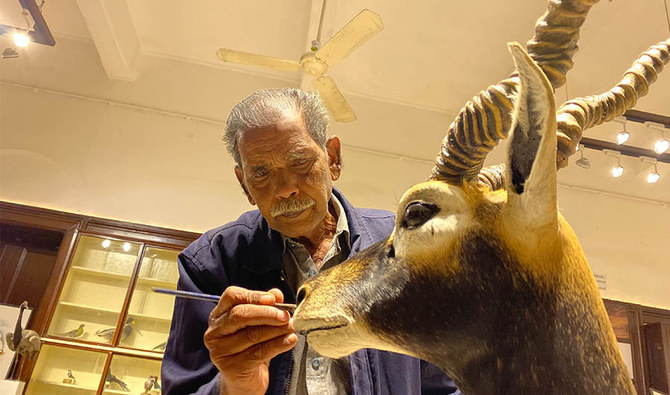

KARACHI: Taxidermy is much more than stuffing the skin of an animal with chopped wheat stalks. It requires dedication and love, says Muhammad Irfan, a 63-year-old master taxidermist. “Look at this deer and fawn, I have shown a mother feeding her child while keeping a vigilant eye out for the predator. I saw it once in National Geographic,” he told Arab News.
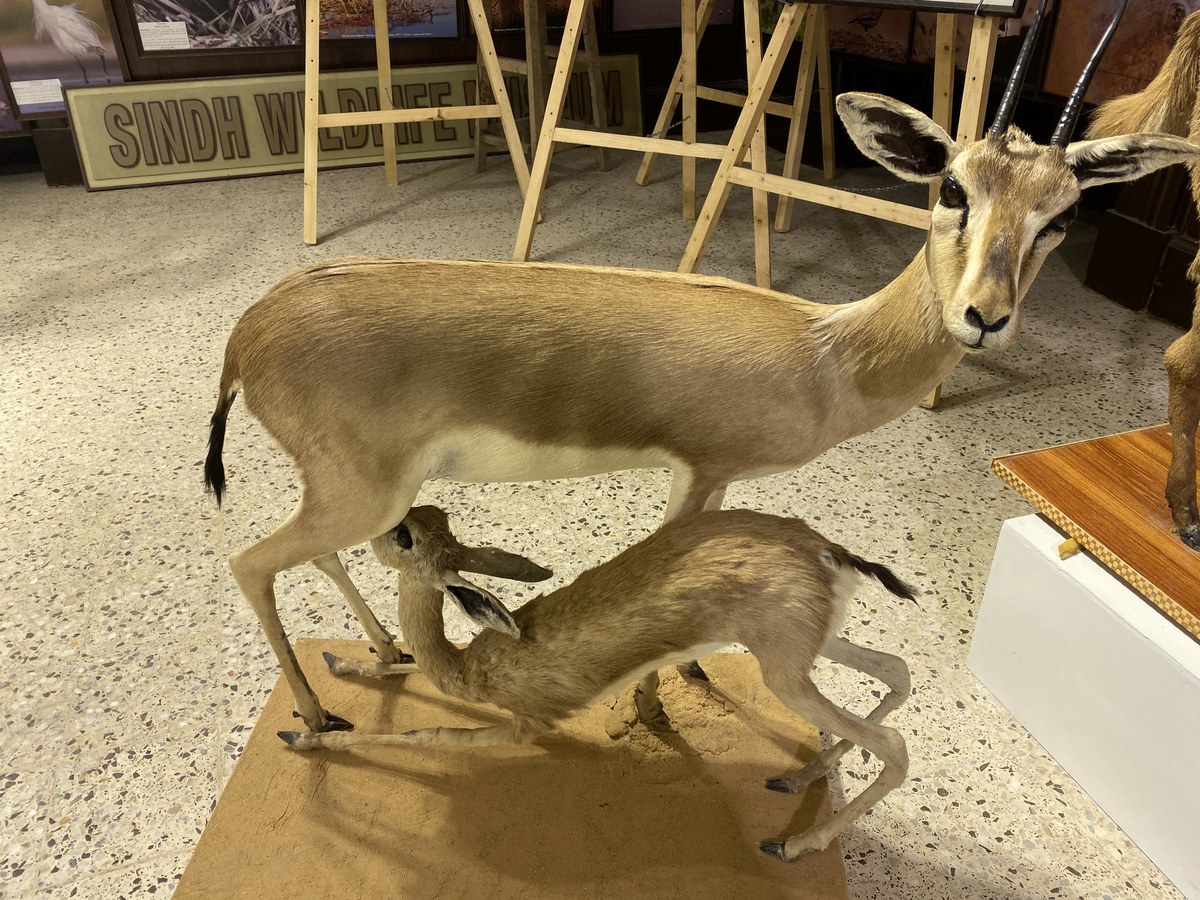
A deer with her fawn is displayed at the Sindh Wildlife Museum in Karachi, Jan. 1, 2020. (AN Photo)
The taxidermy mount was filled with thermocol sheets, while for the deer's face its original bones were used. They were boiled and cleaned, and the animal will now remain intact for around 50 years. “To mount a deer takes at least 45 days, and if it’s done with the same technique commercially, the taxidermist would charge at least Rs80,000,” Irfan said.
He was 15 when he developed a love for the art and was 36 when he joined the Sindh Wildlife Department in 1983. While his teacher, Anais, taught him the basics of taxidermy, it was his love for the art which made him it's master.
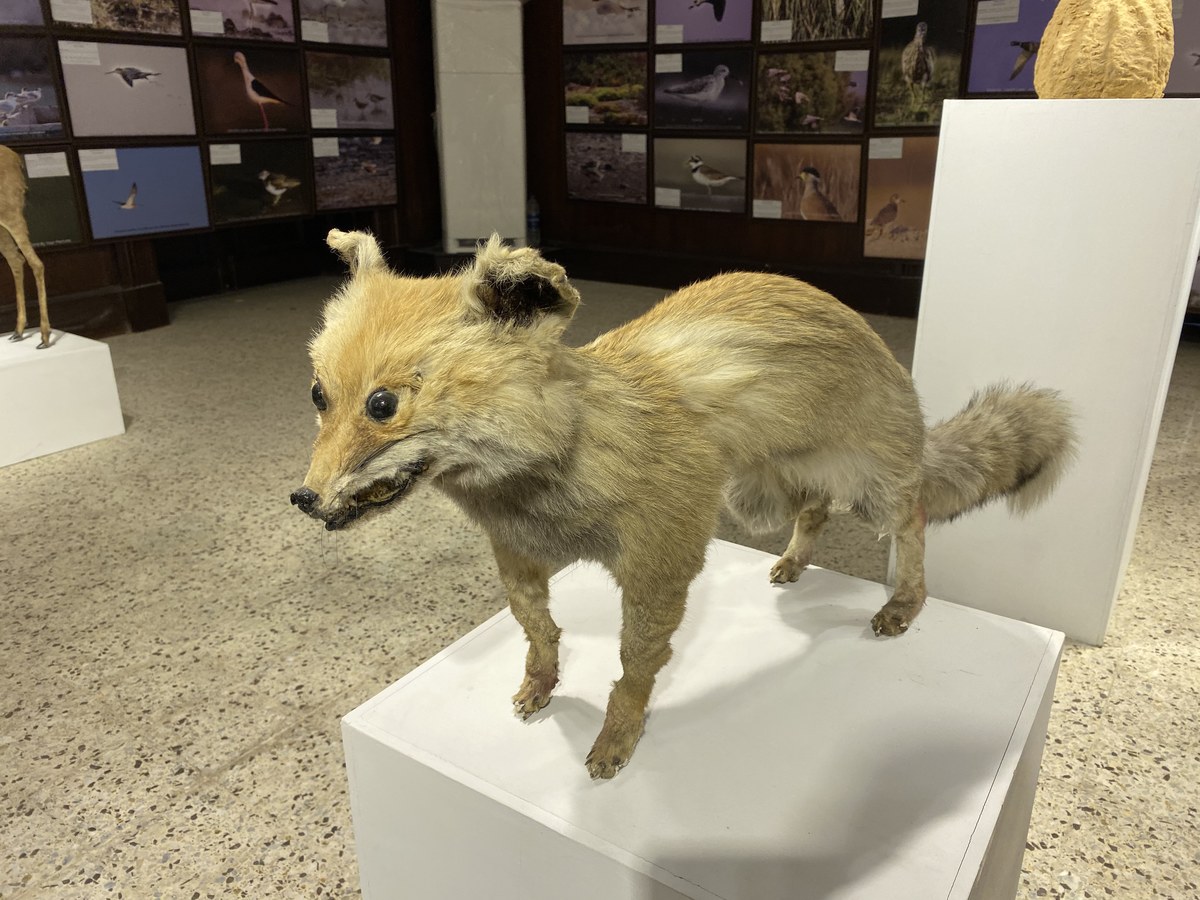
A fox is displayed at the Sindh Wildlife Museum in Karachi, Jan. 1, 2020. (AN Photo)
“I was reading books on taxidermy, looking at pictures, and then I tried to follow. When I failed, I tried again. Finally, I learned how to mount an animal like it is being done aboard,” he said.
Irfan himself had never received a formal education, but he believes taxidermy “should be taught in art schools across the country.” Currently, there is little opportunity to learn it, as some of the few Pakistani experts have already left the country and the art is dying.
Javed Mahar, the Sindh Wildlife Department's chief, said Irfan retired in 2016, but his services were still needed because a new museum exhibition will soon be opened.
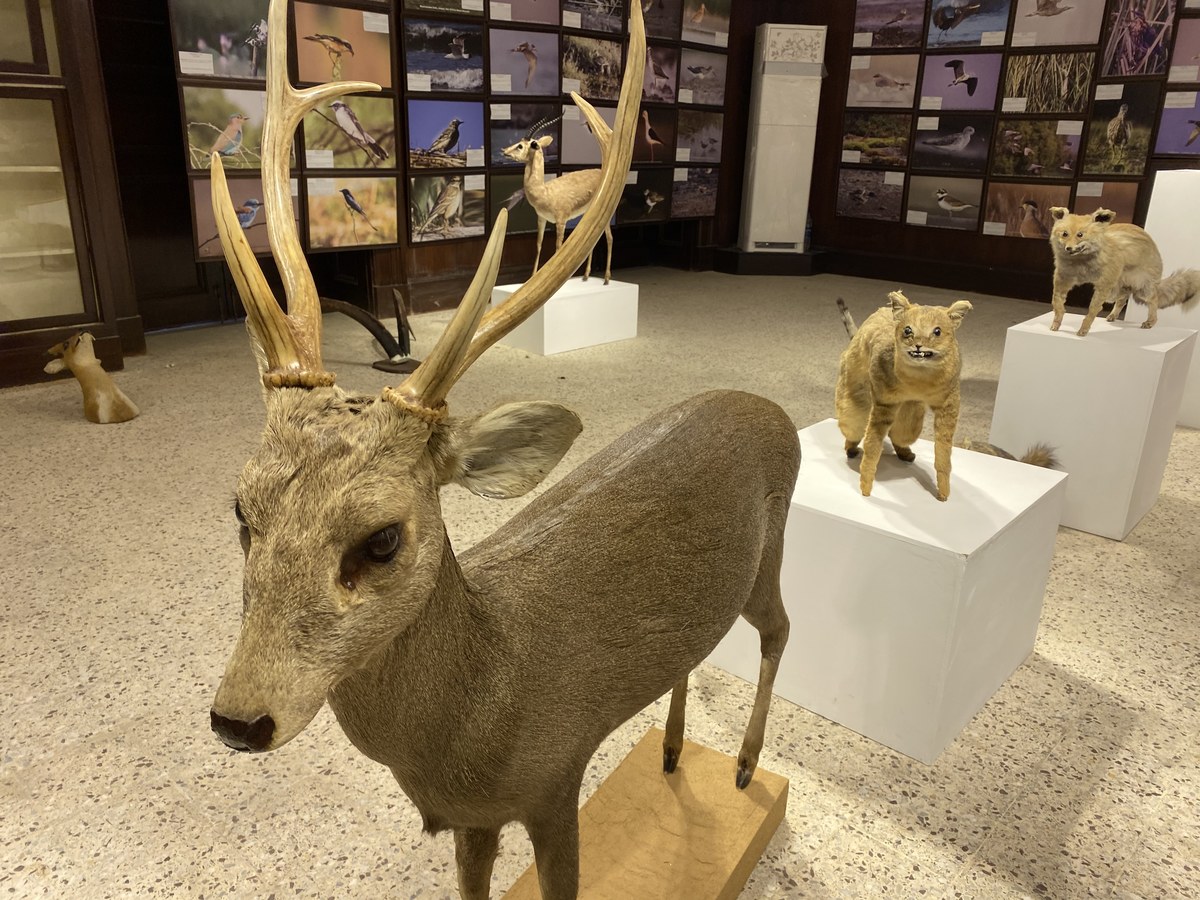
Taxidermy mounts are on display at the Sindh Wildlife Museum in Karachi, Jan. 1, 2020. (AN Photo)
“The reason we engaged Irfan after his retirement was because he is a master of the art and because we had no alternatives. There is no expert of his level at least in this province,” Mahar told Arab News.
Irfan knows his worth. “I can challenge anyone in Pakistan. If they (can) do (taxidermy) like me, I will stop it.”
The Sindh Wildlife Museum, situated in the British-era Freemasons Lodge Building in Karachi, was established in the early 1980s, but over the years it has fallen into neglect. Works to restore its collection started several years ago and now are almost complete.
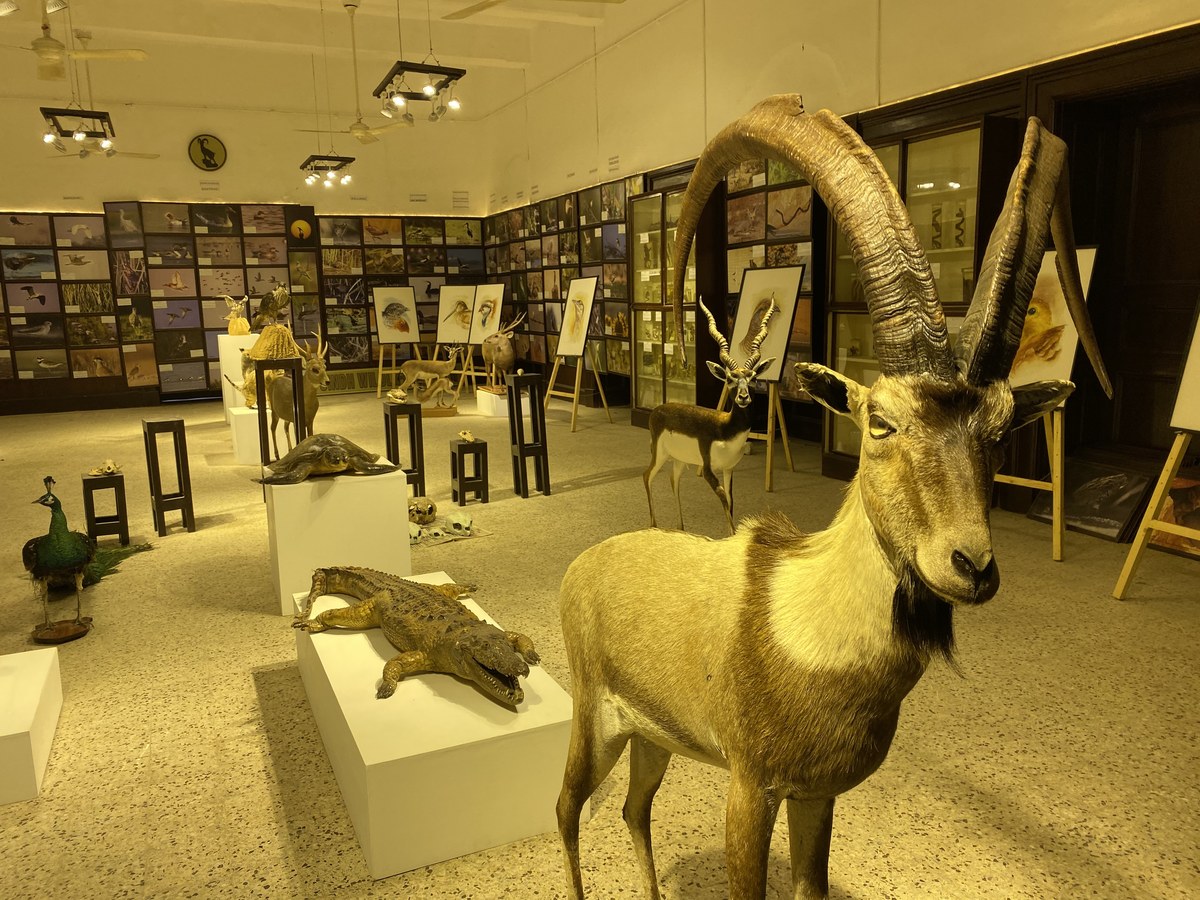
The Sindh ibex is on display at the Sindh Wildlife Museum in Karachi, Jan. 1, 2020. (AN Photo)
The museum, Mahar said, will display some 75 species of the province's wildlife. Thirty of them will represent 322 birds found in Sindh, 25 will represent its 107 reptiles, and 20 the province's 82 mammals.
While the process of reviving dead animals is long and expensive, “with heroes like Irfan, we will soon open our museum, which will offer recreation as well as knowledge to kids, students, and researchers,” Mahar said.
Although by law the museum is permitted to kill for the sake of its collection, it adopts a no-kill policy. All mounts are made from dead animals.
While the exhibition immortalizes them, it will also save the name of the man who brought them back to life.
“I have earned nothing monetarily, but when I pass away my name will be remembered,” Irfan said.