

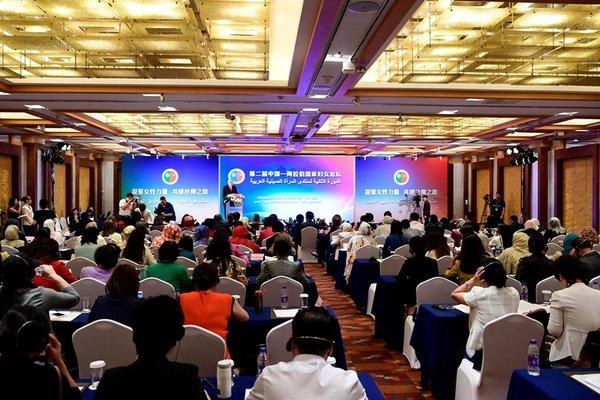

RIYADH: The Ministry of Labor and Social Development will hold the third session of the Arab-Chinese Women’s Forum on Dec. 19 at Princess Nourah Bint Abdul Rahman University in Riyadh.
The ministry is hosting the “Woman and working on a creative and sustainable future” session in cooperation with the Kingdom’s Family Affairs Council.
The forum includes lectures, workshops and discussion seminars that include topics such as non-profit sector initiatives and women’s empowerment, women and investment, the position of women in Arab and Chinese cultures, building women’s capabilities in digitization and technology, and prospects for partnership between Arab and Chinese women.
The forum aims to discuss the role of the non-profit sector in supporting women in the professional, social, health and economic fields.
It also aims to discuss women’s role in the economy and investment, and the exchange of trade expertise through a review of methods to enhance the investment environment and business opportunities for women.
The forum will discuss the position of women in Arab and Chinese cultures in terms of similarities, differences and shared values, reviewing the best training and educational programs in economics and technology, and finding points of meeting between Arab and Chinese women.
Hala bint Mazyad Al-Twaijri, secretary-general of the Family Affairs Council, said that the forum contributed to supporting the role of women. The Kingdom’s hosting of the forum was a reflection of the care given to Saudi women by the Kingdom’s leadership, reflected in decisions supporting their participation in societal development according to the Kingdom’s Vision 2030.
The forum will be under the patronage of the Minister of Labor and Social Development Ahmed Al-Rajhi. It will be attended by Inas bint Suleiman Al-Issa, director of Princess Nourah Bint Abdul Rahman University, Al-Twaijri, secretary-general of the Family Affairs Council, and representatives of the League of Arab States, the All-China Women’s Federation, the Council of Arab Businesswomen and the Arab-African Conference for Businesswomen.


