HONG KONG: Hong Kong leader Carrie Lam on Tuesday ruled out further concessions to the city’s pro-democracy movement ahead of her weekend visit to Beijing, despite a landslide election defeat for the government and a peaceful mass march.
The movement, which marked its six-month anniversary on Monday, was initially sparked by a now-abandoned attempt to allow extraditions to mainland China but has since morphed into a popular revolt against Beijing’s rule.
In a rare lull in police-protester clashes, around 800,000 people marched peacefully through the city’s streets Sunday, urging the government to respond to their five demands — which include an independent inquiry into the police, an amnesty for those arrested, and fully free elections.
An end to violence is something the city’s pro-Beijing leadership has insisted must be a precursor to meaningful dialogue — but in her weekly press conference on Tuesday, Lam refused to accept protesters’ demands further to the extradition bill’s withdrawal.
“If a particular demand requires us to deviate from the law... I could not agree to accept those demands simply for the purpose of reaching people’s aspirations.”
Lam argued that an amnesty for those arrested — more than 6,000 people since June, 40 percent of them students — would violate the spirit of the rule of law.
“How can we completely ignore the rule of law just to fulfill the demands ... So we have no way to make the response, but we are still willing to examine the social problems reflected by this incident in hope of relieving residents’ grievance,” she added.
Lam said would give a “full account” of what has happened in the city when she goes to Beijing on Saturday for her regular duty visit, which typically involves a meeting with President Xi Jinping.
In late November, the city’s pro-democracy camp won a landslide victory in local elections, which critics described as a referendum for the movement, but Lam and her government remained unrattled.
The movement has upended the semi-autonomous Chinese hub’s reputation for stability and blanketed its streets with unprecedented scenes of political violence.
Despite a lull in clashes in the past two weeks, tension bubbled under the surface as police defused two improvised mail bombs discovered near a school and seized firearms including a pistol during overnight raids.


![]()

Hong Kong leader Carrie Lam rules out protest concessions ahead of Beijing visit
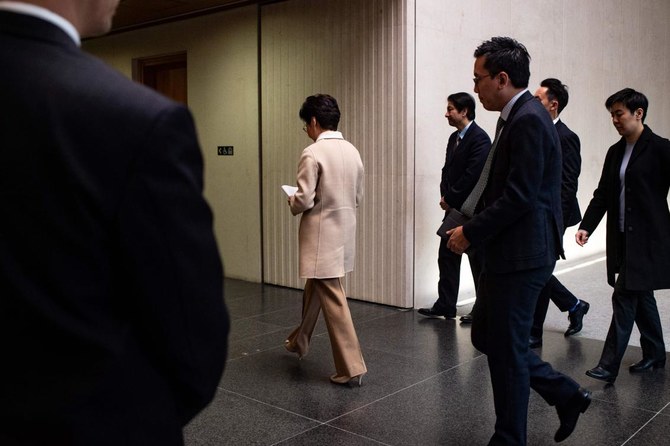
Hong Kong leader Carrie Lam rules out protest concessions ahead of Beijing visit
- In a rare lull in police-protester clashes, around 800,000 people marched peacefully through the city’s streets Sunday
- ‘How can we completely ignore the rule of law just to fulfill the demands’


Latest updates


© 2026 SAUDI RESEARCH & PUBLISHING COMPANY, All Rights Reserved And subject to Terms of Use Agreement.