



Governments around the world will need to re-examine their country’s progress in the area of gender equality and female empowerment as the world prepares to mark the 25th anniversary of the Beijing Declaration in 2020.
The document, which was issued during the fourth World Conference on Women in Beijing in September 1995 and subsequently gained the endorsement of 189 governments, is regarded as a historic blueprint for advancing women’s rights.
The Beijing Declaration and Platform for Action was intended to remove systemic barriers that have held women back from equal participation in all areas of life.
In the intervening period, many countries have taken encouraging steps to level the playing field for women. More women have access to education than ever before, women are more likely to hold leadership roles, and there are higher reported rates of women’s political participation.
In some countries, women now make up a substantial part of the labor force and numerous governments have been investing in programs aimed at empowering women.
Even so, the latest data show that overall progress in the field of gender equality is “simply not enough,” according to Anita Bhatia, deputy executive director at UN Women, USA — an independent non-profit organization that supports UN programs for women.
Popular movements such as “Time’s Up” and “Me Too” have “lulled (the world) into complacency about the progress of women’s rights,” she said.
Taking part in a panel discussion on the gender gap at the recent World Tolerance Summit in Dubai, Bhatia noted that the Beijing conference popularized the phrase, “Women’s rights are human rights.” As a defining framework for change, the Platform for Action made comprehensive commitments under 12 critical areas of concern.
The document also drew attention to the “girl-child” for the first time, in addition to issues including female education and child marriage. It was meant to be a catalyst for a bigger conversation, but activists feel progress has been uneven at best.
“Today, 130 million girls still do not have access to schooling,” Bhatia said. “Twelve million are married annually before the age of 18, and only 25 percent of the world’s parliamentarians are women.”
Moving on to the issue of gender parity in government, she noted that only six percent of heads of state in the world are women, and only 13 countries have gender-equal cabinets.
“There is something wrong with this picture,” Bhatia said. “There are 193 member states in the UN, so why is it that in 2019 we have less than 15 countries in the world with equal cabinets, especially when 50 percent of the human race is made up of women?”
Bhatia said women’s rights in some countries have witnessed “regression” as “illiberal democracies” try to suppress women’s movements and freedom of speech. “We are seeing a real rollback of rights — particularly sexual and reproductive rights,” she said. “As far as gender equality is concerned, we are running to stay in the same place.”
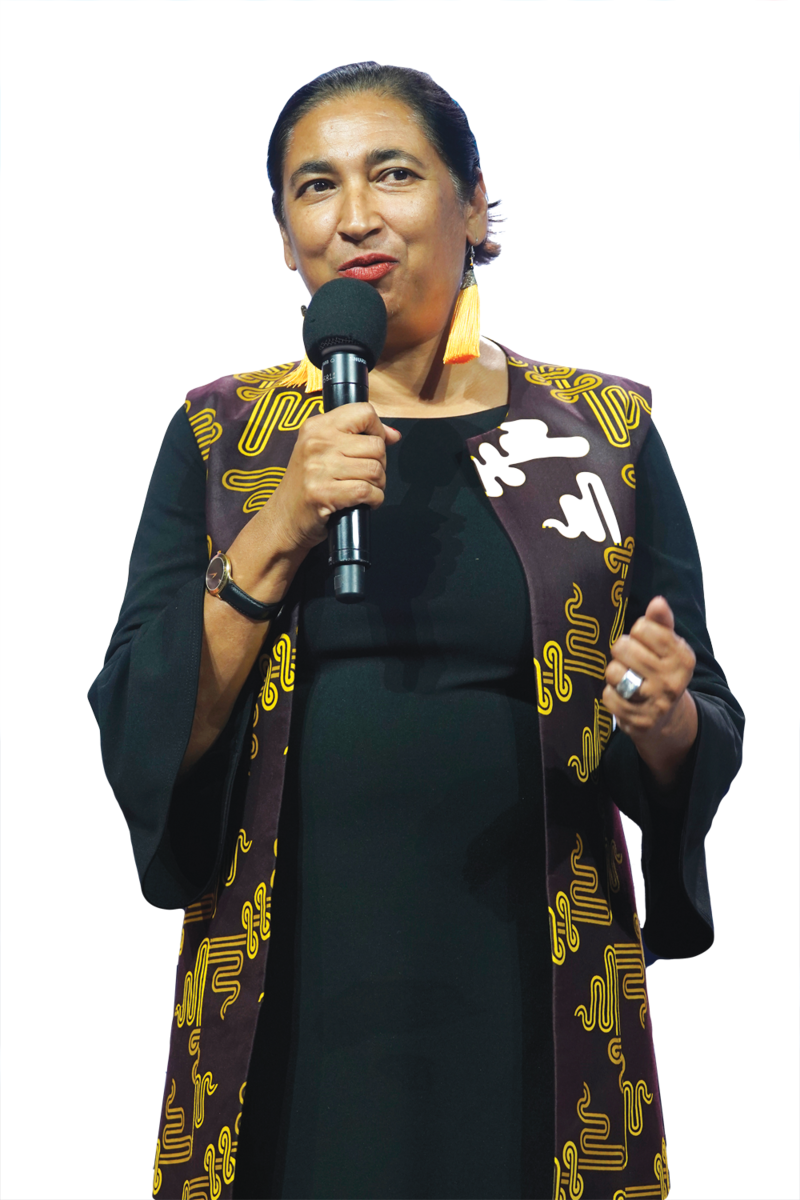
Anita Bhatia, deputy executive director for UN Women, at the 2019 Concordia Annual Summit. (AFP)
Bhatia’s views are echoed by Rana Nawas, host of the podcast “When Women Win,” which bills itself as the place “where boss ladies from the world share their inspirational stories and practical tools to help professional women to get ahead.”
Nawas said she is “disappointed” by the results of the conversation on women’s rights over the past two decades, especially in the corporate world. At the World Tolerance Summit, she pointed out that while 50 percent of the bottom layer of the labor-force “pyramid” consists of women, they only make up five percent of the top layer.
World Bank data suggest that the percentage of women participating in the workforce globally has declined from 51 percent in 1990 to 47.6 percent in 2019. And according to a World Economic Forum report, 12 of the 15 countries in the world with the lowest rate of female participation in the workforce are in the Middle East and North Africa (MENA) region.
Today, more men named “John” run large companies than the number of women heading companies altogether, Nawas said, adding that only five percent of Fortune 500 companies are run by women.
Nawas left the corporate world 17 years ago to follow her passion for women’s rights advocacy. Today, besides being the host of “When Women Win,” she advises multinational corporations on formulating diversity and inclusion strategies.
“Companies that are good at diversity and inclusion get better financial results,” Nawas claimed. “They report 57 percent more team collaboration, are 19 percent better at retaining employees, 45 percent more likely to improve market share, and over 70 percent more likely to succeed in new markets.”
Nawas cited adequate maternity and paternity leave, flexible work policies and more part-time options as possible solutions to common challenges that women face when trying to climb the corporate ladder.
As far as education is concerned, the situation for women is somewhat different, she said. “More women are graduating than ever before, with the number of women graduates outnumbering males.”
However, that success is not being seen across all subjects. Studies show that only 19 percent of computer-science graduates across the world today are women — half the number reported in 1985.
Fortunately, the outlook in that particular area is much brighter in the GCC, Nawas said. “In the UAE, 77 percent of computer-science graduates are female, while 55 percent of STEM graduates in Saudi Arabia are female.”
The bigger challenge for the Gulf is getting women to enter the workforce, not just higher education. Studies show that women make up just 26 percent of the labor force in the MENA region — “less than half the global average.”
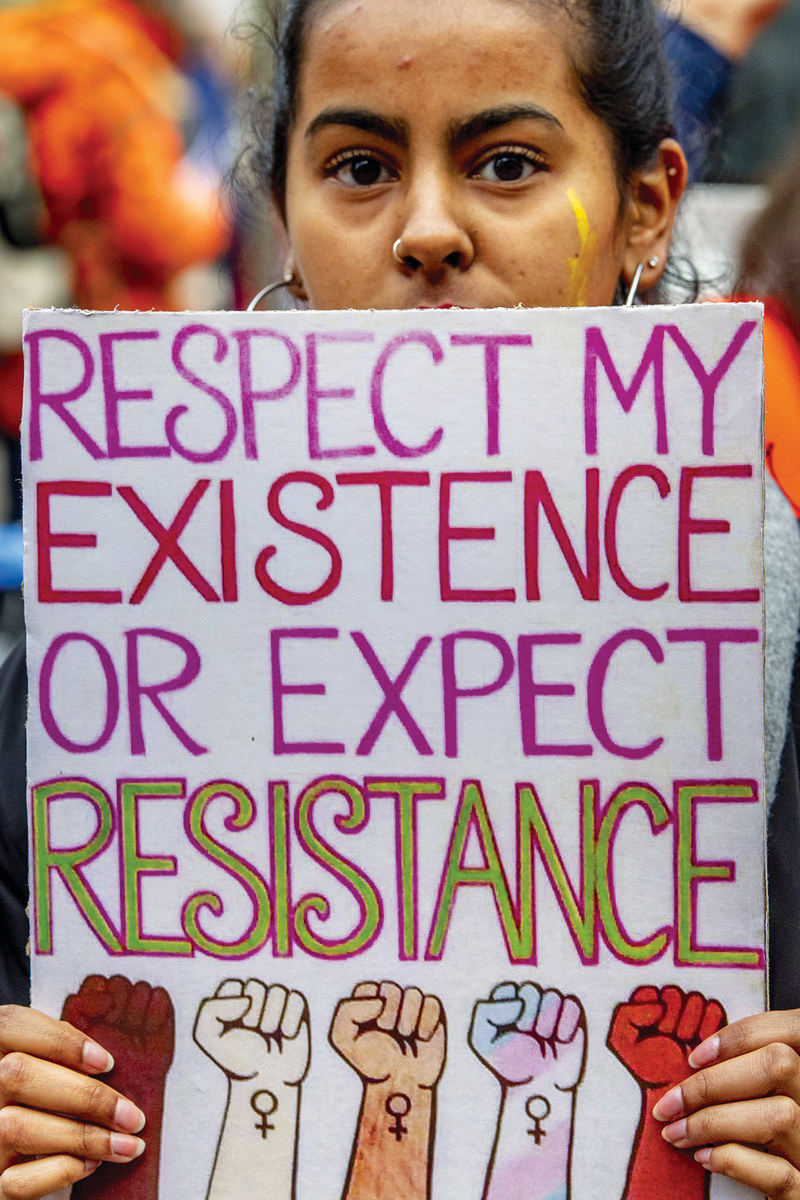
The 2019 “Women’s March” in Amsterdam featured calls for equality for women and other minorities in society. (AFP)
Nawas suggested “cultural barriers” are a major factor, citing a UN study that showed that while 75 percent of Egyptian women believe they should have the same right as their husband to work outside the home after marriage, only 31 percent of men agreed.
Another study that Nawas cited, conducted by The Brookings Institution in Jordan, found that the views of the country’s men on women working are more conservative than that of their fathers.
“The role of government in our region is especially important to overcome these cultural barriers — and that is where legislation comes in to play a role in the resetting of the culture,” she said.
For her part, Bhatia singled out “Generation Equality” — a campaign launched on the occasion of the 25th anniversary of the Beijing Declaration — for praise. Organized by UN Women and the governments of Mexico and France, “Generation Equality” aims to accelerate the pace of progress towards the goal of “equal rights for an equal future.”
Issues that will be tackled include sexual harassment, equal pay, equal sharing of unpaid care and domestic work, and equal participation in economic and political life.
“We also have to look at new issues that were introduced with the Fourth Industrial Revolution and the digital revolution, to see how they are impacting women and girls around the world today,” Bhatia said.
Looking to the future, she said activists can seize the initiative again when the UN Commission on the Status of Women (UNCSW) convenes in March 2020, followed by the UN General Assembly in September.
While activists agree that the Beijing Platform for Action remains a powerful source of guidance and inspiration nearly 25 years on, Bhatia — and many others — believes the collective will to achieve gender equality needs a renewed sense of urgency.


