ISLAMABAD: The federal government has constituted a three-member committee to negotiate with the opposition and draft legislation for the extension in the army chief’s tenure.
The committee, comprising Foreign Minister Shah Mahmood Qureshi, Defense Minister Pervaiz Khattak, and Minister for Planning Asad Omar, will also debate the new legislation in the parliament.
“We will introduce constitutional reforms with the help of the opposition,” Khattak said while talking to media in Peshawar on Sunday.
The Supreme Court suspended the government’s notification of August 19 that gave a three-year tenure extension to army chief Gen Qamar Javed Bajwa, citing procedural flaws on November 26.
The court gave a temporary six-month extension to the retiring army chief whose tenure ended on November 28, instructing the government to draft the requisite legislation within this period.
Pakistan’s civilian governments have granted extension in service to only two army chiefs – General Ashfaq Parvez Kayani and General Qamar Javed Bajwa – for their ‘meritorious services’ and this instilled a new strength in the force for their popularity in the rank and file, defense analysts said on Sunday.
Gen. Kayani was granted a three year service extension in 2010 after completion of his initial three year term in the office by the then Prime Minister Yousaf Raza Gilani in a bid to continue military operations against militants in the country’s tribal areas bordering Afghanistan. He retired in November 2013 after completion of six years in the office.
Prime Minister Imran Khan granted three year service extension to Gen Bajwa for “regional security environment,” but it didn’t go as smooth after the apex court took suo moto notice of the action.
“This is for the first time that service extension to an army chief has been thoroughly discussed in the apex court, and this will hopefully plug legal loopholes now after the legislation,” Lt General (retd.) Amjad Shoaib told Arab News.
Giving a background to the matter, he said that President Zulfikar Ali Bhutto constituted a high-powered committee after 1971 war with India to reorganize the command structure of the armed forces including the army, navy and air force.
“The committee had fixed the services chief’s tenure to three years and corps commanders to four years,” Gen Shoaib said, “this has been followed religiously up till now, though no written rules exist for it.”
About reaction in the army on extension in service, he said that a couple of ‘senior most generals’ aspiring to be the next army chief might feel bad, but “as per tradition and discipline of the force, they never express their feelings openly.”
“The strength of this army is discipline and loyalty to the command. This is unwritten and the whole training of the army revolves around this motto,” he said.
Pakistan army’s first native commander-in-chief General Ayub Khan remained in the office from 1951 to 1958. General Zia-ul-Haq (1976-1988) and General Pervez Musharraf (1998-2007) remained as the army chief’s for twelve and nine years respectively but, being the martial law administrators, had extended their tenures in the office themselves.
Concurring with General Amjad Shoiab, Dr. Hasan Askari Rizvi, a renowned political scientist and defense analyst, said the army chief’s service extension would augur well for both the institution and the country.
“Both the government and the opposition parties are willing to extend the army chief’s tenure, and a legislation regarding it will have a smooth sailing in the parliament,” he told Arab News.


![]()
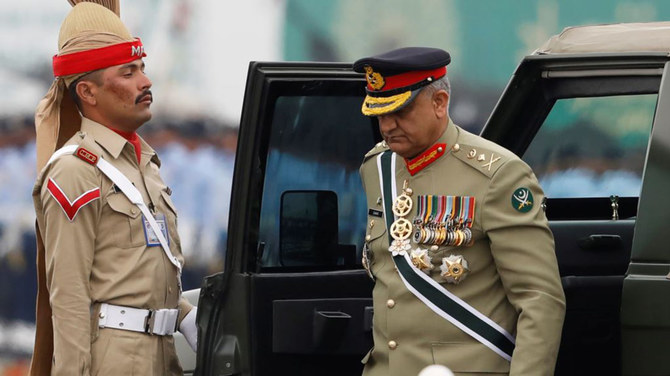
Government forms three-member committee for army chief's tenure legislation
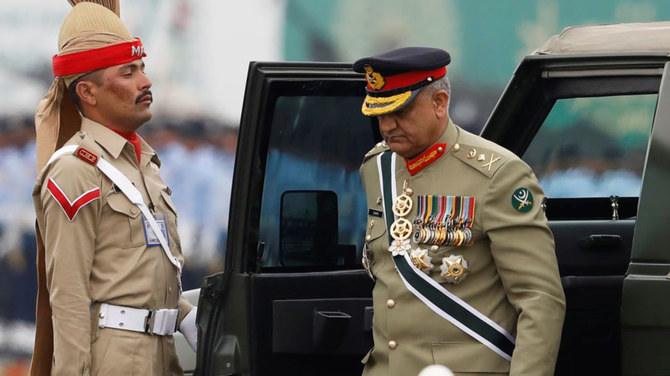
Government forms three-member committee for army chief's tenure legislation
- Supreme Court gave the government six months to draft legislation for extension in an army chief’s tenure
- Army chief’s service extension would augur well for both the military and the country, defense analyst says
Latest updates


© 2026 SAUDI RESEARCH & PUBLISHING COMPANY, All Rights Reserved And subject to Terms of Use Agreement.