ISLAMABAD: Islamabad and the UAE have agreed to explore new avenues for the indigenization of the defense industries in both countries, Zobaida Jalal, Pakistan’s federal minister for defense production told Arab News on Friday.
“My meeting with Sheikh Muhammad bin Zayed Al-Nahyan, the crown prince of Abu Dhabi, and other meetings in UAE were beneficial as these reestablished our old ties with our tried and trusted friends,” Jalal said in a phone interview, adding that she hoped “we will be able to sign some MoUs or agreements soon to strengthen our collaboration.”
During the meeting on Nov. 25 with the Crown Prince — which was attended by UAE minister of state for defence affairs Muhammad bin Ahmad Al Bowardi — Jalal said that the two sides exchanged views on several bilateral, regional and international issues.
“Pakistan and the UAE stressed the commitment of the leadership of the two countries for an enhanced bilateral relationship,” Jalal said, before praising the UAE for working toward maintaining regional peace and security.
Jalal cited the Dubai Air Show (DAS) as one of the prime examples of this fact. As one of the biggest events in the aviation sector, she said it provides the ideal platform for aviation tycoons to showcase their products and provide “opportunities for interactions at the governmental-cum-political level.”
“We have sold Mushshak and Super Mushshak, along with spares, to countries like Turkey, Oman, Qatar, Iran, Nigeria and South Africa. Moreover, proposals have been submitted to UAE, Kuwait Iran, Iraq, Zimbabwe and Qatar and responses are awaited,” Jalal said.
Work is underway to provide 52 Super Mushshak (SMK) aircraft to Turkey in the next five years, in addition to providing 10 SMKs and 3 JF-17 aircraft to Nigeria, 10 SMKs to Azerbaijan, eight SMKs to Qatar, eight Mushshaks to Oman, six Mushshaks to Syria and 25 Mushshaks to Iran.
In response to a question by Arab News, the Pakistan Air Force’s media wing said that the Pakistan Aeronautical Complex (PAC) has been participating in the Dubai Air Show since 2003.
“In the current chapter of DAS-2019, PAC participated in the event as an exhibitor with 01 SMK Super Mushshak aircraft on static park and establishment of an indoor stall to showcase its frontline products including the JF-17 Thunder aircraft. During the event, number of meetings were conducted with the visiting delegates, potential customers and business entitles at the indoor stall and static area,” the statement said.
The annual DAS attracts leading manufacturers from the aviation industry such as Rolls-Royce, Lockheed Martin, Pratt & Whitney, General Electric, Dassault, Saab, Boeing, and Airbus.
The 2019 event was by far the biggest DAS, attracting 1,300 exhibitors with 165 aircrafts on display.

Pakistan and UAE agree to explore defense cooperation
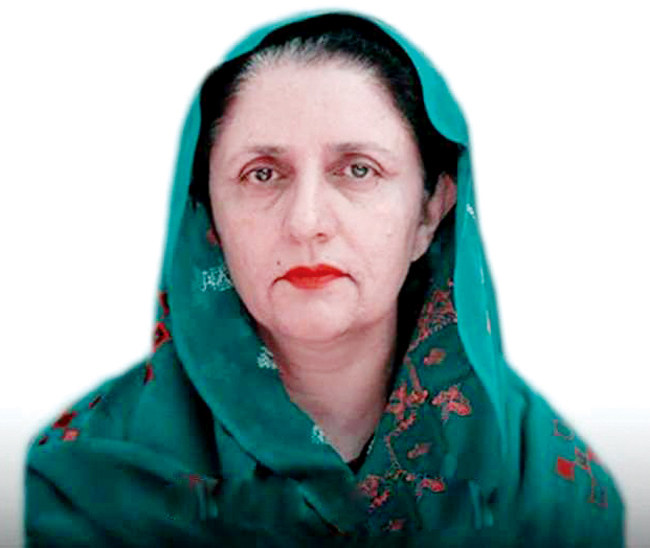
- Top official says Dubai Air Show opened several doors for collaboration
Progress for Ukraine talks in Paris uncertain with US focus shifting to Venezuela
- Ukraine’s allies are meeting in Paris to discuss security guarantees after a potential ceasefire with Russia. The Trump administration’s focus on Venezuela could complicate progress
- France and the UK lead efforts to strengthen post-ceasefire defenses for Ukraine, possibly with European forces
PARIS: Ukraine’s allies are meeting Tuesday in Paris for key talks that could help determine the country’s security after a potential ceasefire with Russia. But prospects for progress are uncertain with the Trump administration’s focus shifting to Venezuela.
Before the US capture of Venezuelan leader Nicolás Maduro, French President Emmanuel Macron had expressed optimism about the latest gathering of so-called “coalition of the willing” nations. For months, they have been exploring how to deter any future Russian aggression should it agree to stop fighting Ukraine.
In a Dec. 31 address, Macron said that allies would “make concrete commitments” at the summit “to protect Ukraine and ensure a just and lasting peace.”
Macron’s office said Tuesday’s meeting will gather an unprecedented number of officials attending in person, with 35 participants including 27 heads of state and government. The US will be represented by President Donald Trump’s envoys, Steve Witkoff and Jared Kushner.
Macron’s office said the US delegation was initially set to be led by Secretary of State Marco Rubio, who changed his plans for reasons related to the military intervention in Venezuela.
Participants seek concrete outcomes on five key priorities once fighting ends: ways to monitor a ceasefire; support for Ukraine’s armed forces; deployment of a multinational force on land, at sea and in the air; commitments in case there’s another Russian aggression; and long-term defense cooperation with Ukraine.
But whether that’s still achievable Tuesday isn’t so clear now, as Trump deals with the aftermath of his decision to effect leadership change in Venezuela.
Ukraine seeks firm guarantees from Washington of military and other support seen as crucial to securing similar commitments from other allies. Kyiv has been wary of any ceasefire that it fears could provide time for Russia to regroup and attack again.
Recent progress in talks
Before the US military operation targeting Maduro, Witkoff had indicated progress in talks about protecting and reassuring Ukraine.
In a Dec. 31 post, Witkoff tweeted that “productive” discussions with him, Rubio, and Kushner on the US side and, on the other, national security advisers of Britain, France, Germany and Ukraine had focused on “strengthening security guarantees and developing effective deconfliction mechanisms to help end the war and ensure it does not restart.”
France, which with the United Kingdom has coordinated the monthslong, multination effort to shore up a ceasefire, has only given broad-brush details about the plan’s scope. It says Ukraine’s first line of defense against a Russian resumption of war would be the Ukrainian military and that the coalition intends to strengthen it with training, weaponry and other support.
Macron has also spoken of European forces potentially being deployed away from Ukraine’s front lines to help deter future Russian aggression.
Important details unfinalized
Ukraine’s President Volodymyr Zelensky said during the weekend that potential European troop deployments still face hurdles, important details remain unfinalized, and “not everyone is ready” to commit forces.
He noted that many countries would need approval from parliament even if leaders agreed to military support for Ukraine. But he recognized that support could come in forms other than troops, such as “through weapons, technologies and intelligence.”
Zelensky said that post-ceasefire deployments in Ukraine by Britain and France, Western Europe’s only nuclear-armed nations, would be “essential” because some other coalition members ”cannot provide military assistance in the form of troops, but they do provide support through sanctions, financial assistance, humanitarian aid and so on.”
“Speaking frankly as president, even the very existence of the coalition depends on whether certain countries are ready to step up their presence,” Zelensky said. “If they are not ready at all, then it is not really a ‘coalition of the willing.’”


