


BAGHDAD: After armed men raided the home of Hussein Adel Al-Madani and his wife Sara Talib last year, the Iraqi activists spent months of self-imposed exile in Turkey, changed address upon returning home and ceased participating in protests, according to two friends of the couple.
But a day after anti-government demonstrations erupted in Baghdad in October, unidentified gunmen believed by activists to be working on behalf of Iran-backed militia shot the couple dead in their home in the southern city of Basra, said the friends and two security sources familiar with the incident. Sara was several months pregnant.
“It was a message. No matter who you are, how peacefully you object — if you go out and demonstrate, you’ll be threatened, locked up, or killed,” said one of the friends, an activist who gave the name Abbas, an alias, for fear of reprisal from armed groups.
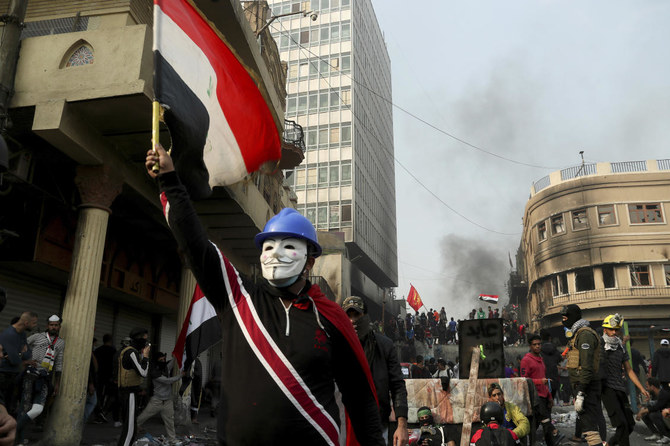
Reuters interviews with five officials and more than half a dozen Iraqi rights activists depict a pattern of mass arrests, intimidation and torture, and in some cases targeted killings of Iraqi protesters.
On Friday, Iraqi Prime Minister Adel Abdul Mahdi announced his resignation following weeks of protests calling for the removal of a government viewed as corrupt and the powerful Iran-backed paramilitary groups that support it. Iraqis say the resignation alone will not curb the power of corrupt officials or armed groups.
At least six activists have been shot dead in or near their homes over the past year in what appear to be targeted assassinations, according to activists and one government official. The official and the activists said they believed Iran-backed militia were behind the deaths because those killed had been openly critical of the militias and had also received threats based on their anti-government and anti-Iranian activism.
The number of targeted killings and details of intimidation tactics used in the crackdown have not previously been reported. Several activists say it amounts to what they view as a campaign intended to silence dissidents and is causing them to abandon protests or consider fleeing the country.
An Iranian official, who spoke on the condition of anonymity, said accusations of killings and threats by militias Tehran supports were “baseless.”
Ahmed Al-Asadi, a spokesman for the state umbrella grouping of paramilitary factions that include the biggest Iran-backed militias, could not be reached for comment. The body has previously denied any involvement in killing protesters and activists.
Iraqi government spokesman Saad Al-Hadithi declined to comment on the assassination of activists.
Iraqi authorities say they have arrested and released some 2,500 protesters, with another 240 detained on criminal charges. More than 400 people have been killed since October during the biggest challenge to Iraq’s Shiite Muslim-dominated, Iran-backed political class that emerged after a 2003 US-led invasion which toppled dictator Saddam Hussein.
The protesters, many under the age of 30, represent a cross-section of society clamouring for an overhaul of the post-2003 political system, which they say has plundered the state’s resources including abundant oil and pushed ordinary people into poverty. They have become increasingly critical of Iran’s dominant role in the country.
According to two Iraqi security officials, it is not uncommon for those detained to be beaten, electrocuted and forced to sign pledges not to demonstrate or speak to media. Heads of Iraqi security services have given their forces operating in Iraq the green light to detain “anyone they suspect of being a security threat or involved in inciting unrest,” one of the Iraqi security officials said.
The Iraq government spokesman, Al-Hadithi, denied that those detained had been tortured or subjected to violence, adding that the Justice Ministry and Supreme Judicial Council were overseeing the questioning of those arrested. He denied that security services or the military were detaining peaceful protesters.
If activists do have evidence of torture, it should be investigated, said Abdul Karim Khalaf, a government military and security spokesman. But, he added, “we have not had any confirmation of this happening.”
Iraqi authorities say some protesters have tried to incite violence after properties in Baghdad and the headquarters of several Iran-aligned parties in southern cities were burned. More than a dozen members of the security forces have been killed and scores injured in the unrest, authorities add.
Demonstrators on Thursday torched the Iranian consulate in the southern holy city of Najaf, the strongest expression yet of the anti-Iranian sentiment of Iraqi protesters as the gulf widens between a largely Iran-aligned ruling elite and an increasingly desperate Iraqi majority with few opportunities and minimal state support.
“POWERFUL MILITIA”
Hussein Adel Al-Madani and his wife, aged 25 and 24, respectively, were among protesters who openly opposed the influence of Iran-backed militias that were made formally part of the armed forces after they helped the government defeat Daesh in 2017.
Abbas, a close friend and former housemate of Al-Madani, said the couple were among the first to protest last year in the southern city of Basra, and Sara was among the first women out on the streets.
“But they had to stop. Gunmen raided their home late in 2018 and asked them to write down names of other protesters,” he said, adding that the couple were accused of helping to burn and destroy Iran’s Basra consulate.
“They decided to leave for Turkey until things calmed down.”
The couple returned to Basra days before the latest wave of protests began on Oct. 1, the two security sources familiar with the incident said. Armed men broke into the home on Oct. 2, fatally shooting Al-Madani twice in the chest and once in the head, and his wife once in the head, they said.
The security sources did not say who they believed killed the couple. An investigation into the deaths was being treated as a targeted killing by an unidentified armed group, they said. But they didn’t rule out other motives such as an honor killing by family members belonging to a militia who disapproved of their marriage.
“Investigators are working on the basis it was an organized armed group because it’s two victims who were activists and had been threatened,” one of the two sources said.
The government official, asked whether Iran-backed militiamen had killed the couple to silence them, said: “A powerful militia threatened them, they fled and when they returned were killed. Everyone knows who did it, but doesn’t dare say.” He didn’t specify which group.
Other protesters have died in circumstances that activists and some government officials say point the finger squarely at Iran-backed groups because the protesters had spoken out against them, but which are still under investigation.
Gunmen driving unmarked cars killed two other outspoken activists in November using silenced pistols in separate incidents in Baghdad and southern Amara, the two security officials said.
In the Baghdad incident, Adnan Rustum, 41, was shot dead returning from an anti-government protest in his neighborhood, which is dominated by one Iran-backed militia. Asked about whether Iran-backed militia were responsible, two local police sources said Rustum’s role in the protests was the reason he was killed but didn’t elaborate.
The Iraqi parliament’s human rights committee has demanded the government investigate “assassinations and kidnappings” of activists and bloggers, including Rustum’s death.
As previously reported by Reuters, Iran-backed militias deployed snipers on Baghdad rooftops during anti-government protests in October, according to two Iraqi security officials.
BEATEN, ELECTROCUTED
Four of the activists Reuters spoke to said they were arrested in the past year and two of those said they detained and beaten in recent weeks. They asked that their names not be published for fear of being targeted by security forces or militias.
One of those protesters described being arrested shortly after leaving a demonstration, beaten and electrocuted during 10 days of detention.
“They asked me to give names and addresses of other protesters, which I did,” said the 26-year old man.
“I refused to confess to attacking police and damaging property but signed a document promising not to demonstrate again, and not to talk to press. They said they’d kill me if I did.” He denied involvement in any attacks or vandalism.
The man said he was released, wrapped in a blanket and left outside his home in Baghdad after relatives pleaded for his freedom with contacts they knew in security forces and one paramilitary group. Reuters could not independently verify his account.
“Those detained and released are only released on bail. Charges are not dropped so they face re-arrest and trial,” said Hassan Wahab from Baghdad-based human rights group Amal Association.
“Many people are fleeing, either heading to Irbil (the capital of Iraq’s semi-autonomous Kurdish region) or abroad,” Wahab said.


