Pakistan participates in OIC golden jubilee celebrations

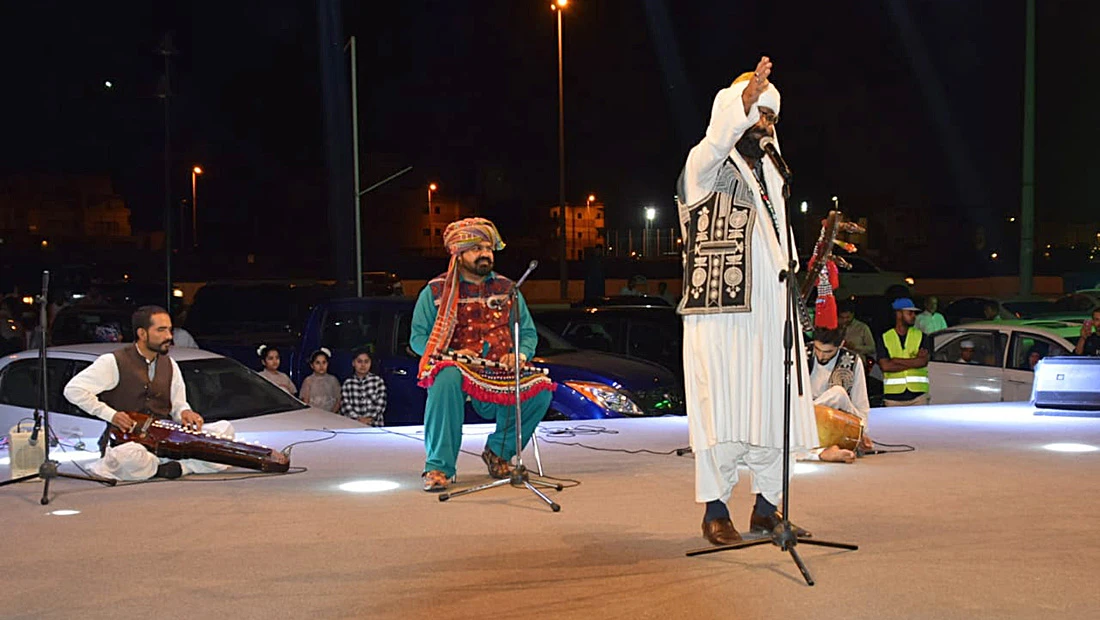
Pakistani folk artists captivated people in Jeddah during the golden jubilee celebrations of the Organization of Islamic Cooperation that began on November 26 and ended on Nov. 28, 2019. (AN Photo)
Updated 29 November 2019
Follow

Pakistan participates in OIC golden jubilee celebrations

  • PM’s adviser on information and broadcasting represented the country in the inaugural session
  • Two Pakistani folk artists captivated the audience with their dance and performance

JEDDAH: Pakistan enthusiastically participated in the golden jubilee celebrations of the Organization of Islamic Cooperation (OIC), said an official statement released by the country’s Consulate General in Jeddah on Friday.
Pakistani folk artists, Akhtar Chanal Zahri and Akbar Khamiso Khan, traveled to Saudi Arabia in connection with the celebrations and performed with musicians from other parts of the Muslim world.
The celebrations lasted for four days from November 25 to 28. The inaugural session was held on Monday in which Special Adviser to Prime Minister on Information and Broadcasting Firdous Ashiq Awan represented the country.
Later, from November 26 to 28, the celebrations were open for public, and a large number of people came to see the performances of folk artists from across the Muslim world.
On the last day of celebration, a large number of students from the Pakistan International School, Jeddah, attended the cultural evening along with their parents.
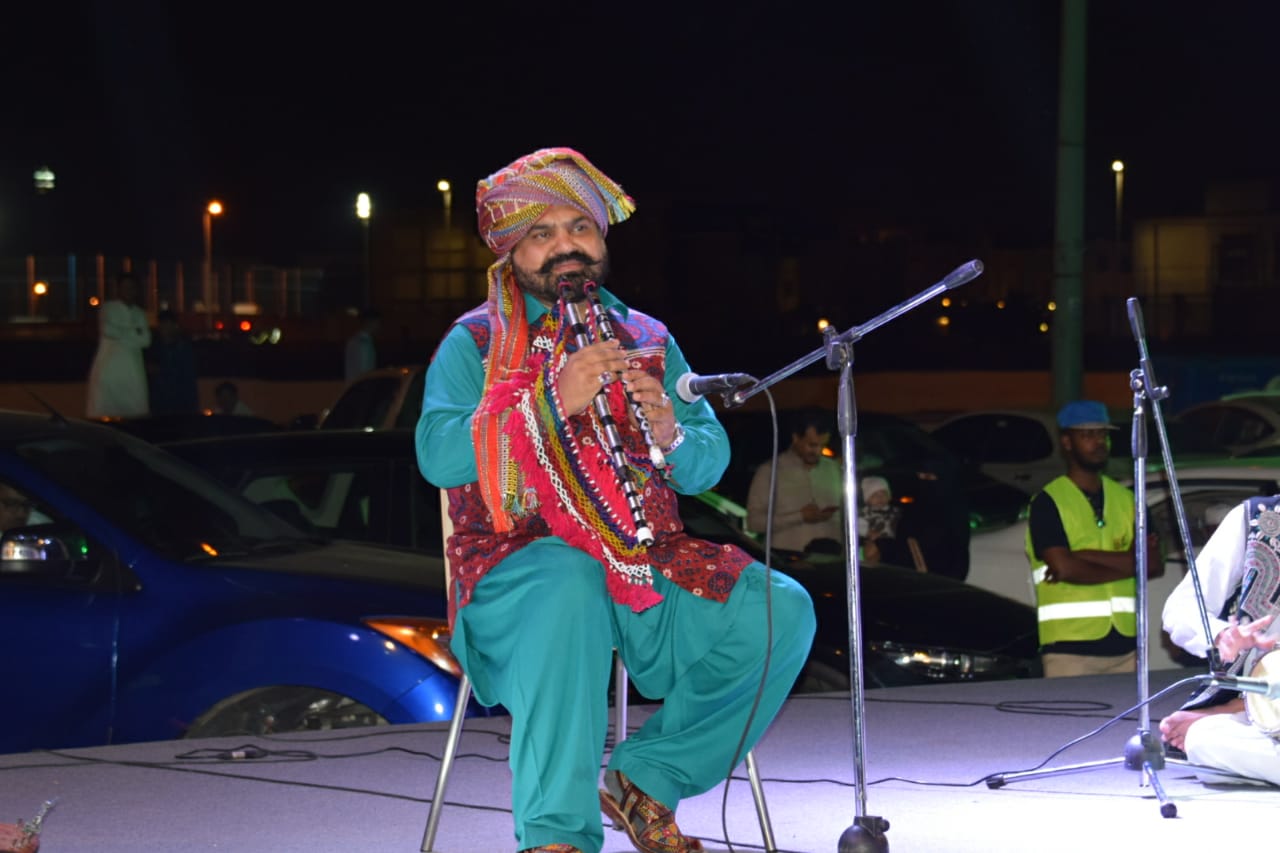


Pakistani folk artists captivated people in Jeddah during the golden jubilee celebrations of the Organization of Islamic Cooperation that began on November 26 and ended on Nov. 28, 2019. (AN Photo)

The Pakistani folk singers and musicians belonging to Balochistan and Sindh sported their traditional outfits and performed in front of a large audience who thoroughly enjoyed the performance.
The folk singers captivated the audience with their traditional music and dance.
The audience rose from their seats and danced to the tune of the folk songs and music. The Pakistani artists received a lot of appreciation from the audience.
Talking to Arab News, Akhtar Chanal said: “It was a great pleasure for me to perform in Saudi Arabia. It was my first performance here and I enjoyed it a lot.”
He added: “The Saudi-Pak relationship is growing stronger by the day.”
Children from school said they enjoyed the gathering as well, adding that the cultural program was quite informative and gave them a glimpse into the ethnic diversity of their country.

Nearly 25% of Pakistan’s primary schools enrolling girls operate as single-teacher ones— report

Updated 13 sec ago
Follow

Nearly 25% of Pakistan’s primary schools enrolling girls operate as single-teacher ones— report

  • Pakistan needs over 115,000 more teachers in primary schools enrolling girls to meet global benchmark of one teacher per 30 students, says report
  • Sixty percent of Pakistani primary schools enrolling girls are overcrowded, while 32% lack clean drinking water or toilets, says Tabadlab report

ISLAMABAD: Nearly 25% of Pakistan’s primary schools that enrolls girls operate as single-teacher ones, a report by a leading think tank said this week, calling on the government to devolve teacher recruitment powers, upskill underutilized teachers and introduce reforms to hire and promote faculty members. 

Pakistan faces an acute education crisis which is reflected in the fact that it has the world’s second-highest number of out-of-school children, an estimated 22.8 million aged 5-16 who are not in educational institutions, according to UNICEF. 

While poverty remains the biggest factor keeping children out of classrooms, Pakistan’s education crisis is exacerbated by inadequate infrastructure and underqualified teachers, cultural barriers and the impacts of frequently occurring natural disasters. 

According to “The Missing Ustaani,” a report published by Islamabad-based think tank Tabadlab and supported by Malala Fund and the Pakistan Institute of Education (PIE), Pakistan needs over 115,000 more teachers in primary schools with girls’ enrolment to meet the basic international benchmark of ensuring one teacher per 30 children. Currently, the average Student-to-Teacher Ratio (STR) across Pakistan’s primary schools with girls’ enrolment is 39:1, it said. 

“Approximately 60% of these schools are overcrowded, necessitating the recruitment of over 115,000 additional teachers nationwide,” the report said on Monday. “Compounding this, nearly 25% of primary schools with girls’ enrolment operate as single-teacher schools, placing immense pressure on the quality of education.”

It said the situation is more dire in Pakistan’s poverty-stricken southwestern Balochistan province, where nearly 52% of the schools are single-teacher only ones while the percentage decreases slightly in the southern Sindh province to 51 percent. 

The report said while the STR improves to 25:1 at the middle school level, acute shortages of subject specialists emerge as the top-priority concern for quality education in these schools.

“Furthermore, around 32% of primary schools with girls’ enrolment and 18% of middle schools face ‘critical infrastructural shortages’— lacking clean drinking water or toilets in addition to high STRs— which significantly affects girls’ attendance and learning, particularly during adolescence,” the report said. 

The report cited a set of priority recommendations to address Pakistan’s systemic teacher deployment challenges and improve educational equity for girls. 

It urged the government to devolve recruitment authority to school or cluster levels to enable timely, context-specific hiring. It also called upon authorities to reform teacher transfer and promotion policies to introduce school-specific postings with minimum service terms. 

This, it said, would reduce arbitrary transfers and improving continuity in classrooms. The report advised authorities to upskill surplus or underutilized primary teachers to support instruction at the middle school level, helping address subject-specialist shortages.

“Together, these reforms offer a pathway toward a more equitable, efficient, and responsive teaching workforce— one capable of improving learning outcomes and ensuring that every girl in Pakistan has access to a qualified teacher,” the report said. 

To tackle Pakistan’s education crisis, Prime Minister Shehbaz Sharif declared an ‘education emeregency’ in September 2024, stressing the importance of education for all.