LONDON: British police confirmed Thursday they “assessed” allegations of sex trafficking made against Jeffrey Epstein and a British woman, but decided not to launch a criminal probe on legal advice.
London’s Metropolitan Police Service (MPS) said it received an allegation in 2015 of “non-recent trafficking for sexual exploitation” against the disgraced US financier over incidents in London in March 2001 and abroad.
American Virginia Roberts, now Giuffre, has alleged Epstein — who was found dead in a US prison in August — trafficked her to Britain then to have sex with Prince Andrew.
Andrew, Queen Elizabeth II’s second son, has repeatedly denied the accusation. Roberts was aged 17 at the time.
The prince gave a television interview earlier this month which was widely condemned for lacking empathy for Epstein’s victims, and he has since stepped down indefinitely from royal duties.
In its statement, the MPS said it always takes any allegations concerning sexual exploitation seriously.
“Officers assessed the available evidence, interviewed the complainant and obtained early investigative advice from the Crown Prosecution Service,” it said.
“Following the legal advice, it was clear that any investigation into human trafficking would be largely focused on activities and relationships outside the UK,” it added.
“We therefore concluded that the MPS was not the appropriate authority to conduct enquiries in these circumstances and, in November 2016, a decision was made that this matter would not proceed to a full criminal investigation.”
The force said it reviewed the decision again in August this year after US authorities say Epstein committed suicide in his prison cell while awaiting trial on federal charges that he had he trafficked girls as young as 14 for sex.
“Our position remains unchanged,” the MPS added.
Roberts claims she was forced to have sex with the Andrew on three occasions — in London in 2001 when she was 17, in New York and on Epstein’s private Caribbean island.
Andrew, 59, who is eighth in line to the throne, repeatedly denied the allegation during his recent unprecedented interview with the BBC in which he answered questions about it for the first time.
He has been dogged for years by criticism over his links to Epstein.
The prince even stayed with the financier at his New York home after he had pleaded guilty in 2008 to procuring a girl under the age of 18 for prostitution and served 13 months in prison.


![]()
![]()

UK police defend decision not launch Epstein probe
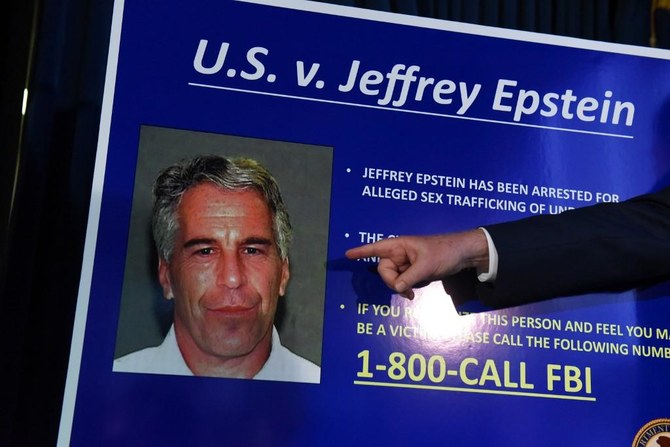

UK police defend decision not launch Epstein probe
- Prince Andrew gave a television interview which was widely condemned for lacking empathy for Epstein’s victims
- London’s MPS said it always takes any allegations concerning sexual exploitation seriously


Latest updates





© 2026 SAUDI RESEARCH & PUBLISHING COMPANY, All Rights Reserved And subject to Terms of Use Agreement.