FES, Morocco: Moroccan rapper Gnawi knew the police would come, after he and two friends released an unusually outspoken video exposing their country’s problems with migration and drugs and expressing frustration with the king.
And sure enough, they did.
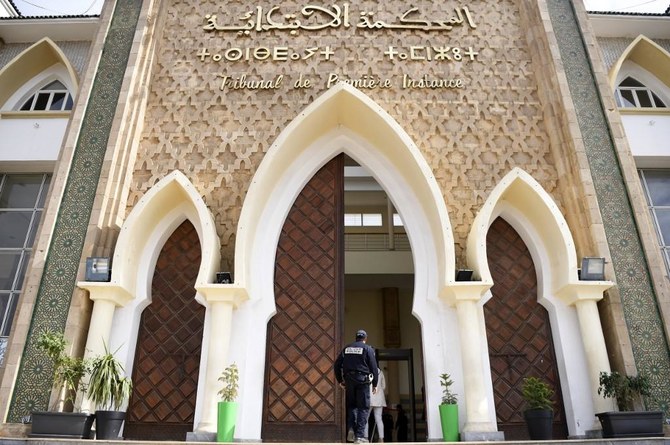
Gnawi, a former military serviceman whose real name is Mohamed Mounir, goes on trial Monday in a case that his supporters see as a backlash against expressions of growing public anger at authorities and lack of economic opportunity.
Moroccan authorities say the arrest was prompted by an earlier video in which Gnawi insults the police, which is a crime punishable with up to two years in prison.
But his supporters think his arrest was punishment for the song “3acha cha3b” (Long Live the People) by Gnawi and rappers Lz3er and Weld L’Griya. Released Oct. 29, it immediately went viral, and now has 15.6 million hits on YouTube.
Full of visual imagery familiar to struggling Moroccans, the five-minute manifesto speaks to the country’s disillusioned generation, raging against the powers-that-be and criticizing the country’s widening economic gap.
Gnawi was arrested two days after its release. He didn’t object, but het handed himself over and marched proudly out of his parents’ house. Behind him, bystanders murmured “Long Live the People.”
One passage of the song reflects on the Hirak protest movement in Morocco’s impoverished Rif mountain region. Another section, on a mother whose sons died attempting to migrate to Europe, pulls at listeners’ heartstrings. Another paints a picture of a young generation ruined by hashish and hard drugs.
Most shockingly to many Moroccans, the song also directly criticizes Morocco’s king and his adviser, taboo subjects and a criminal offense.
“The song added insult to the injuries of my country. We didn’t do this project to point fingers or create controversy. We voiced what the majority of Moroccans feel but fear to say. We said it all and it naturally upset those who do not want change,” Lz3er told The Associated Press in an interview.
“All Morocco knows that Gnawi is arrested because of 3ach cha3b song,” said the 31-year-old, whose real name is Yahya Semlali.
He said he was followed after the release of the song. Slouched by the door of his studio, a small room on the rooftop of his parents’ house in the Moroccan city of Fes, LZ3er waited for the loud boots of police to come stomping in.
He wasn’t, but Gnawi was, in what Amnesty International called “an outrageous assault on free speech.”
Grounded in the tradition of poetic spoken word rather than American rap culture, Morocco’s political rap has its own rhythm and meter. The language’s guttural syllables demand fury in delivery, and rap is a welcome outlet for political passions.
“All of us are in the ‘see and be quiet’ mode. But I do this because I don’t want to see and be quiet. That’s why people respond to my music,” Lz3er said in his house in Fes, a city prized by tourists for its beauty and royal sites. For the locals, Fes is known as Morocco’s capital of crime.
Lz3er and Weld L’Griya grew up in that world. Having dropped out of school, their education comes from watching young men like them sleeping in carton boxes in the cold, prostitutes dreaming of working in offices, boys turning to drugs to escape reality.
“We are stuck in a caste system and our rap mirrors exactly that,” Lz3er said.
But for government spokesman Hassan Abyaba, the rap song doesn’t reflect Morocco’s reality.
“Songs of all kinds must respect the citizens, the constancy of the nation and the principles and values that are part of the Moroccans’ education,” he told a news conference last week.
The Minister of Human Rights, Mustapha Ramid, dubbed the song “provocative and offensive.”
Morocco, a kingdom long known for its stability in the Arab world, adopted constitutional reforms in response during the 2011 Arab Spring, aimed at reducing corruption and abuse of power and expanding free speech. Today, Morocco is still struggling with poverty, corruption and unemployment. Freedom of expression is guaranteed in Morocco’s constitution, but with limits.
Researcher Zineb Harrouchi says “rappers are the spokespersons of a class of society” but that politically engaged rappers are often arrested for “offenses that have nothing to do with music or their artistic production.”
Opposition rapper Mouad Belrhouate, better known as El 7aqed or “the resentful one,” has been arrested three times for his music critical of Morocco’s social ills and ruling elite.
A political refugee in Belgium since 2015, he told the AP: “Though I love my country very much, it suffocated me. I was always followed, watched. I felt in prison outside of prison, and yet I dream of the day I return to my neighborhood, my little bunker in my neighborhood in Casablanca.”


![]()

Moroccan rapper on trial amid growing rage at powers-that-be
Moroccan rapper on trial amid growing rage at powers-that-be
- Moroccan authorities say the arrest was prompted by an earlier video in which Gnawi insults the police
- ‘All Morocco knows that Gnawi is arrested because of 3ach cha3b song’


Latest updates


© 2026 SAUDI RESEARCH & PUBLISHING COMPANY, All Rights Reserved And subject to Terms of Use Agreement.