KARACHI: Two years ago, Abdullah Khan, his skin ridden with infection, arrived from Hangu town in northwestern Khyber Pakhtunkhwa province to Pakistan’s seaside metropolis of Karachi to be cured.
But Khan didn’t travel the length of the country to see a credible skin doctor in the megacity, home to state of the art hospitals and medical experts. Instead, he went straight to Manghopir- an ancient 13th-century town that gained notoriety as a Taliban stronghold in 2013.
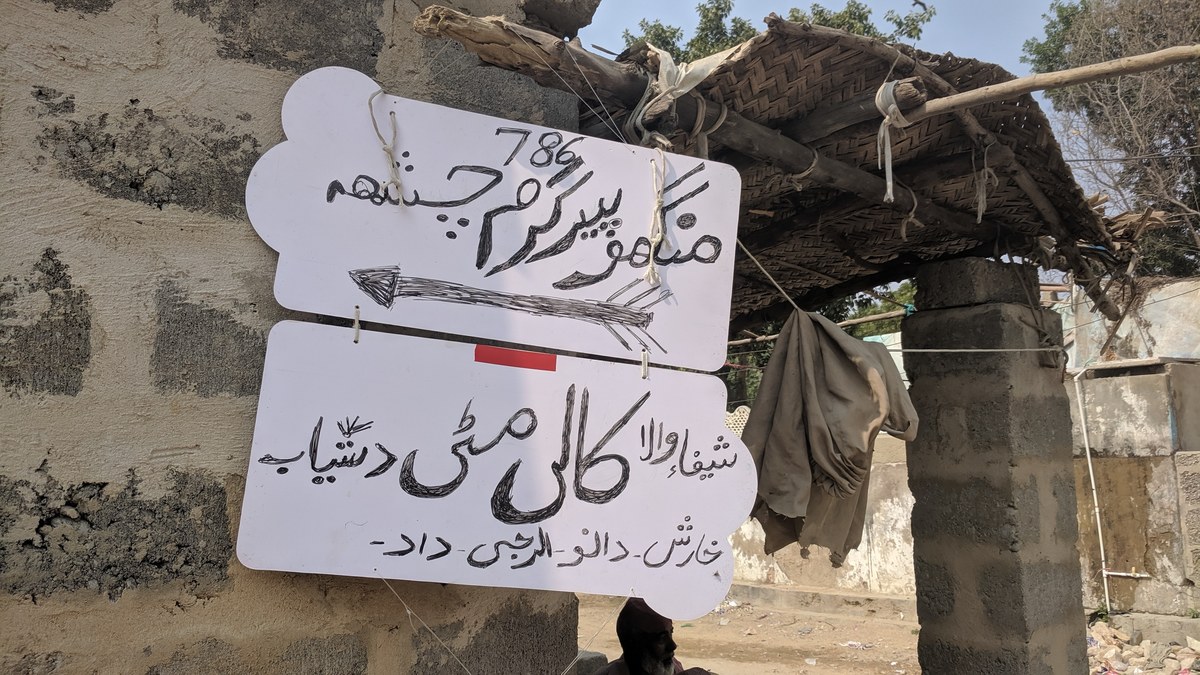
A board hanging near Manghopir’s hot spring reads “Black soil to heal itches, rashes and allergies is available at the shop. Nov 23, 2019 (AN Photo)
However, Manghopir owes its most lasting fame to its hot sulfur springs, which, legend has it, have miraculous healing powers that can cure most diseases of the skin.
For Khan, the springs worked their magic, and he said he was cured soon after bathing in their waters.
“I healed and then I stayed back here for work. When my relatives have skin problems now, I say board the bus and come to Manghopir!” Khan told Arab News. A few minutes later, he introduced a relative, Khattab Jan, a partially recovered stroke survivor.
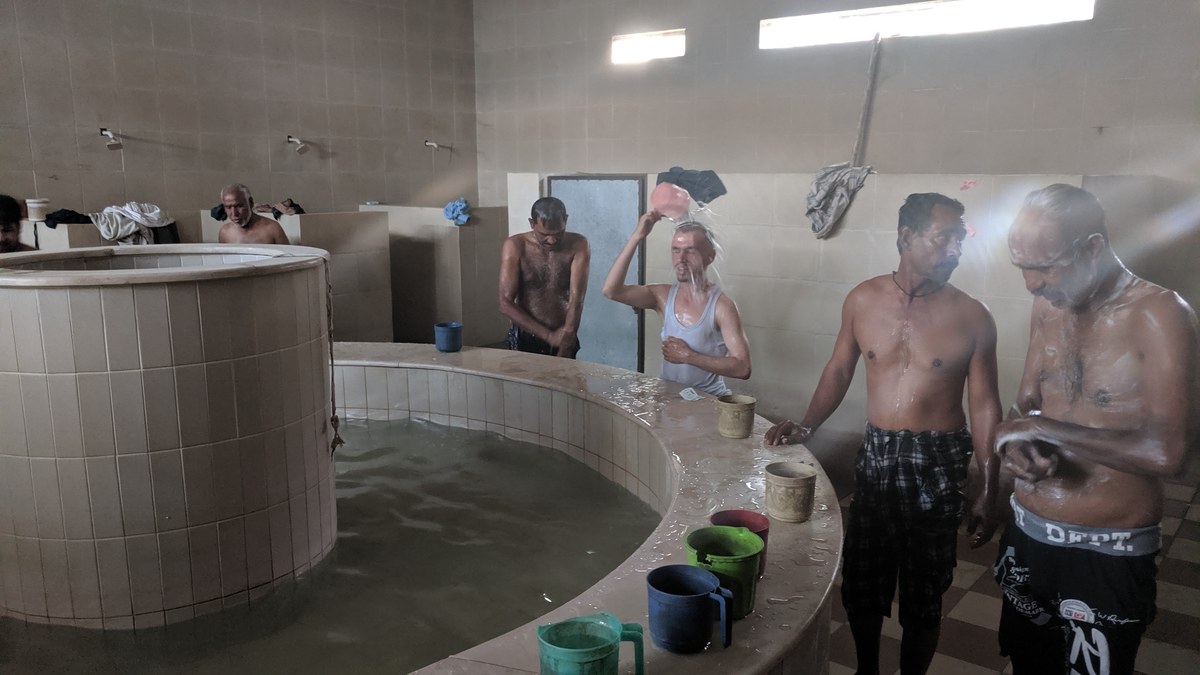
A group of men take a bath in Manghopir’s ‘healing’ hot springs as women wait for their turn outside Mama Bath on Nov 23, 2019. This is the only functional spring as other springs have dried up due to the pumping of underground water (AN Photo)
“After a bath or two, his arm will work fully,” Khan said with confidence, as a hopeful Jan nodded beside him at the entrance to Mama Bath.
Mama bath is one of the Manghopir’s six hot sulfur springs, but it is the only functional one, and every year for centuries, patients of stroke, leprosy and skin diseases from Afghanistan, Iran, and parts of Pakistan have thronged here to take a dip in its waters to heal themselves.
“In 1896, Dr. B.L. Roy, a Bengali alongside some British doctors came here for a picnic and they were astonished to see so many lepers of then British India, Iran and Afghanistan, laying on the grounds around the hot springs, hoping for a cure,” a Manghopir local, Noor Islam said, citing a book on the town.
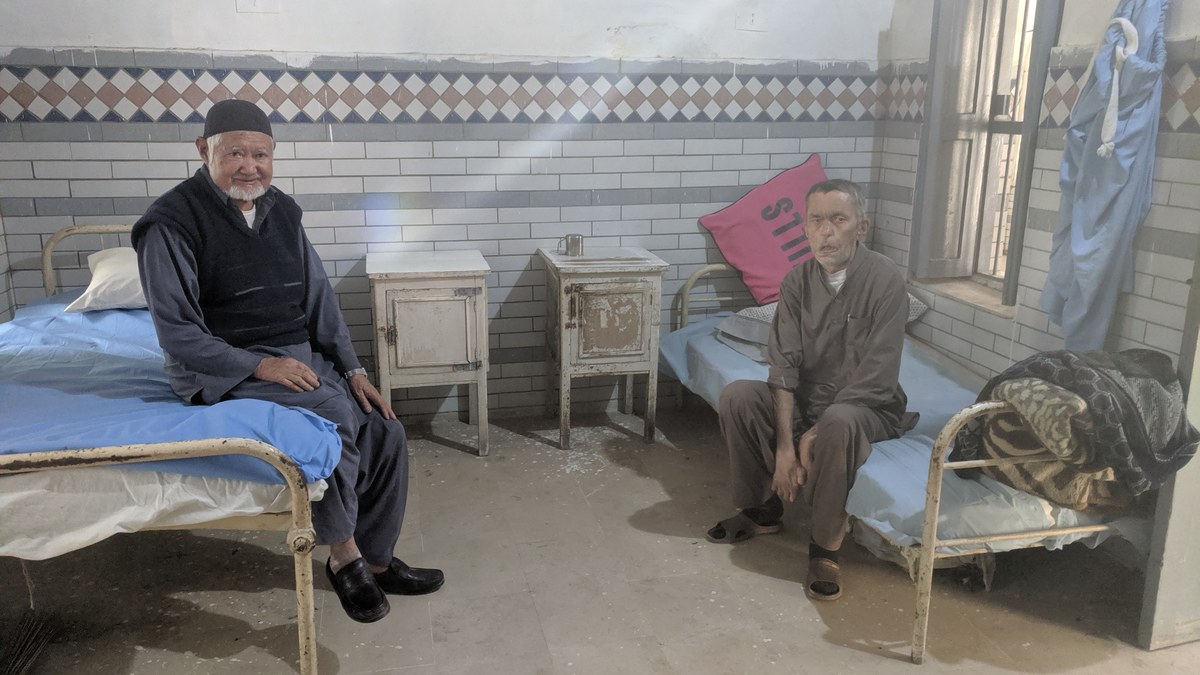
Muhammad Asal, (left) who is admitted at the KMC Leprosy Hospital in Manghopir Karachi, says he first came to the health facility during the India Pakistan war of 1965. Nov 23, 2019 (AN Photo)
“The doctors decided to raise funds and open a hospital for lepers,” he said.
It is hard to tell whether the stories surrounding the waters are folklore or whether there is any truth to them-- but it is certain that for the locals of Manghopir, the hot sulfur springs are a miracle of God thriving in their small town ridden with disease and poverty, and still reeling from the violence of the Taliban.
“This water belongs to Allah, who has kept in it Shifa (healing) for patients,” Fatima Baloch, a woman guard at the springs for the last 55 years, told Arab News. “I was a young girl when I joined it... I have seen people healing fast,” she said.
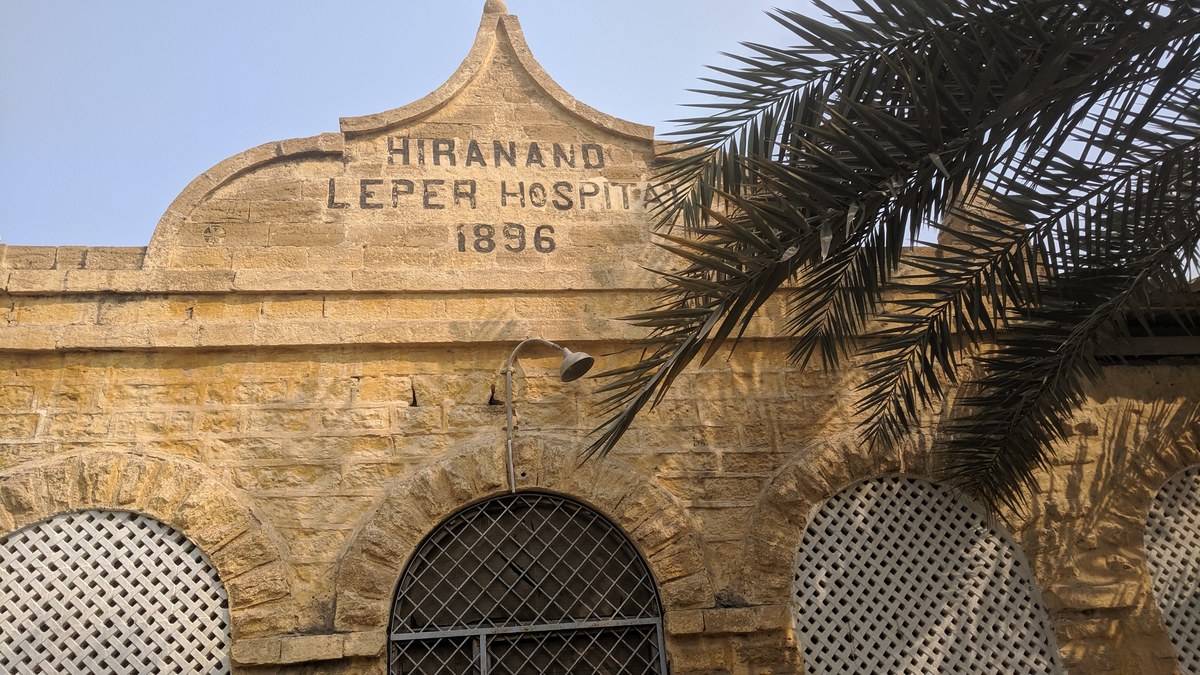
The Hiranand Leper hospital, now called KMC Leprosy Hospital, was established in 1896 by Dr B.L. Roy when him and some British doctors visited the hot springs for a picnic and saw the lepers laying at the ground near the springs, hoping for a cure. Nov 23, 2019 (AN Photo)
“People have come in on wheelchairs and have gone back on foot,” she said.
Amjad Ali, from the Liaquatabad neighborhood of Karachi, took his sister to the springs on Saturday in hopes she might be healed of a skin infection.
“We showed her to the doctors,” Ali said. “Someone suggested she should take a bath in Manghopir’s springs... so here we are.”
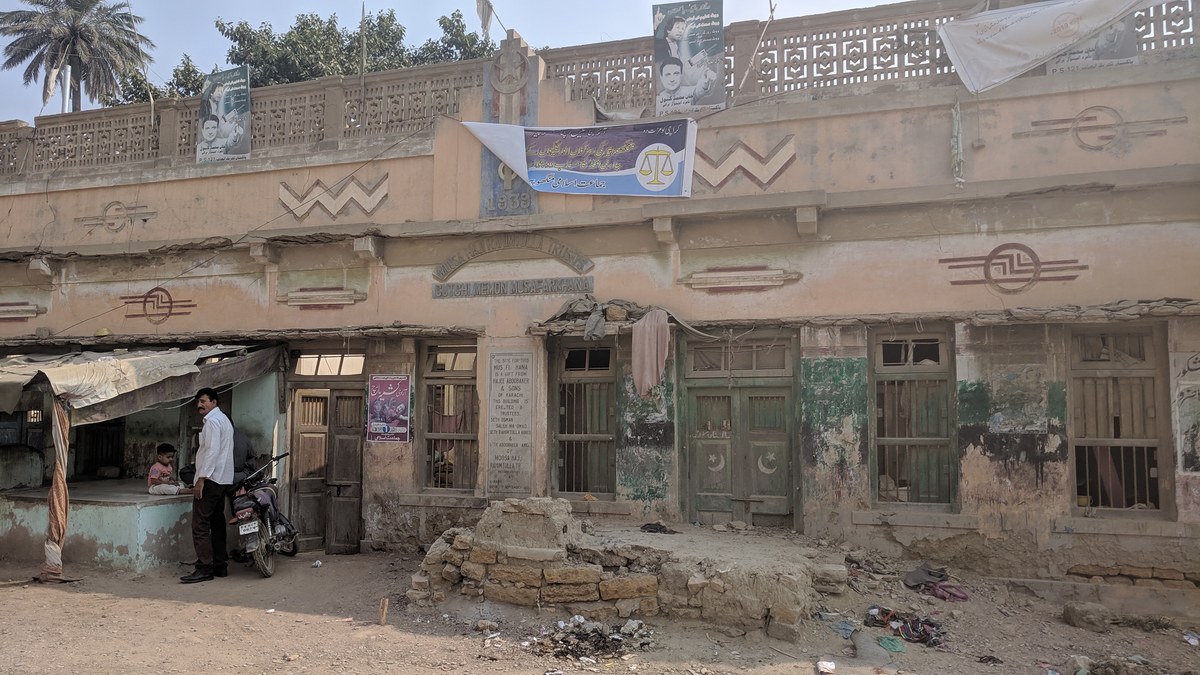
The Kutchi Memon Musafarkhana (guesthouse) built in 1939 to facilitate visitors from Afghanistan, Iran and far flung areas of Pakistan, who travelled to the hot springs for healing baths. The guesthouse is now on the verge of collapse. Nov 23, 2019 (AN Photo)
Photo13
“This does miracles. We are hopeful,” he said.
However, medical experts said patients with skin diseases who relied solely on the hot springs for treatment, needed proper medical checkups.
“The springs have been an attraction for patients for centuries,” Dr. Asif Usman Shaikh, a medical superintendent at KMC Leprosy hospital, told Arab News. “Maybe the water can heal some. But all skin related diseases can’t be healed with sulfur water,” he said.
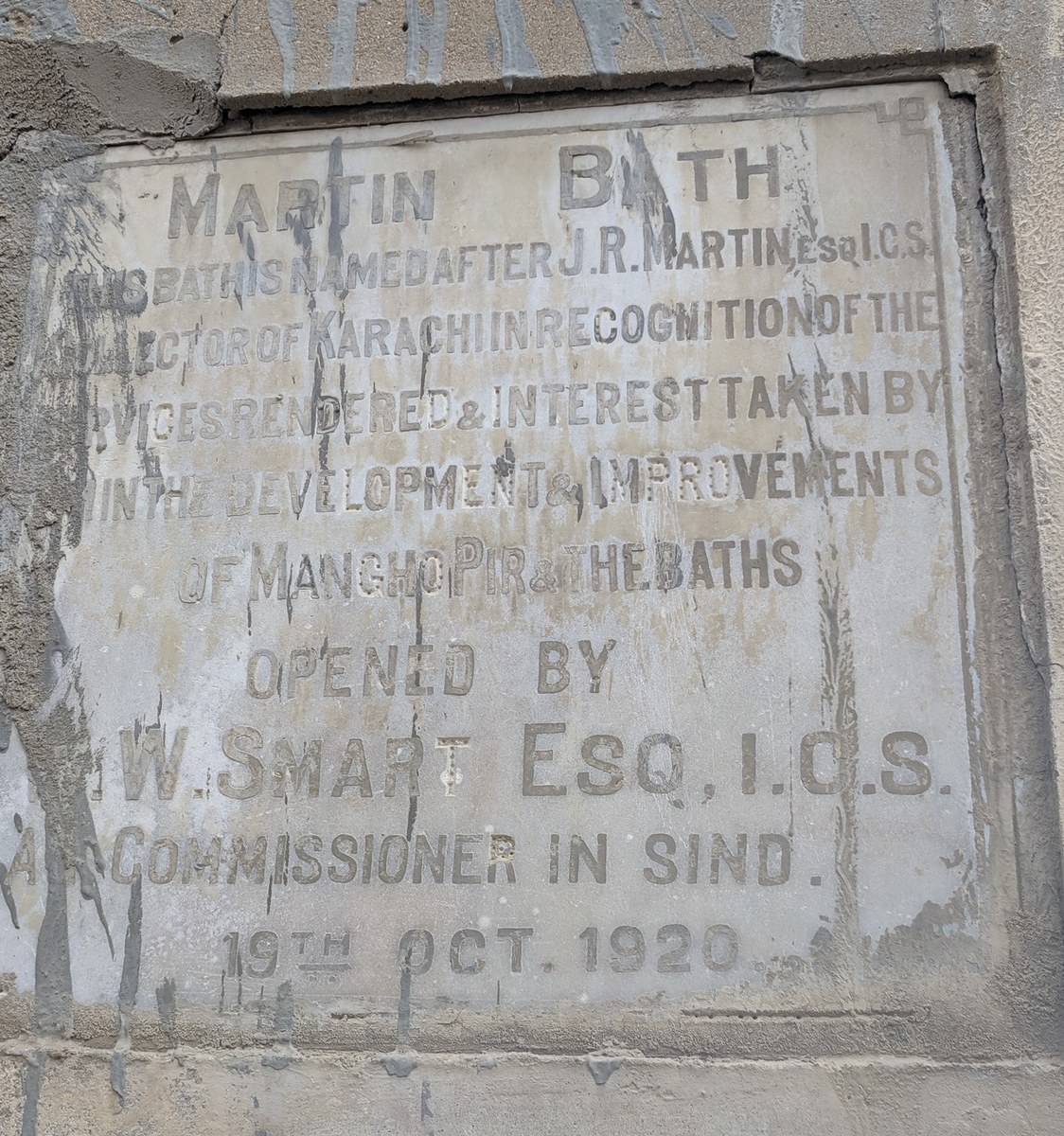
The bath, inaugurated in 1920, is officially named after J.R. Martin, ‘collector of Karachi’ in recognition of services rendered and interest taken by him in the development and improvement of Manghopir and the baths. Nov 23, 2019 (AN Photo)
“Leprosy patients can have skin diseases, but leprosy is not a skin disease,” Shaikh said and added that there was a lack of awareness and a misconception regarding the disease that the founding doctors of the leprosy hospital had hoped to address.
“For (other) skin patients, the springs may be therapeutic, but a proper investigation by a skin doctor is mandatory,” he said.
Now, a rising population and the excess pumping up of water to meet the needs of a rising population are leading to the last remaining hot spring of Manghopir showing signs of drying up-- with five before it already relegated to the pools of history.
“Even today, a large number of people – between 200 to 300 people– come from different parts of Pakistan (to the springs). On Saturday and Sunday, that number can reach 500 people,” Mehroz Rind, the caretaker whose family has looked after the springs for the last 70 years, told Arab News.
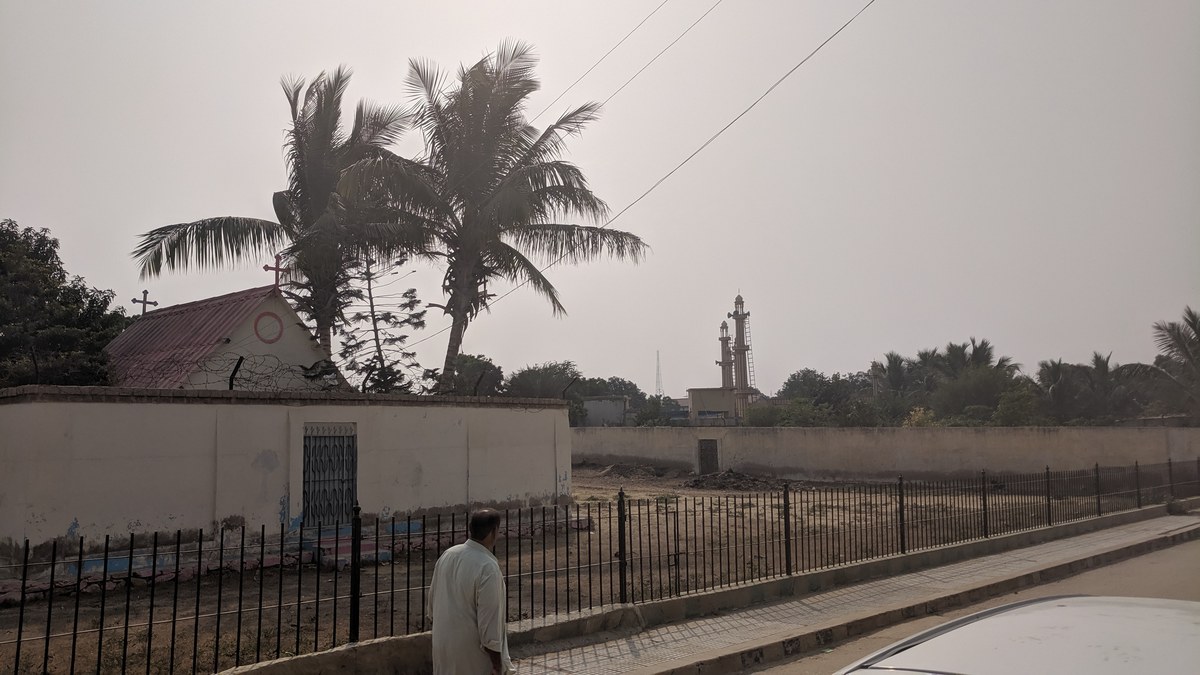
A church, mosque and Hindu temple behind the church [not pictures] depicts values of interfaith harmony among the community of lepers. “Even Taliban, who would summon courts in Sultanabad, a settlement a little over a kilometer away from the leprosy hospital, couldn’t disturb the interfaith harmony among the followers of Islam, Christianity and Hinduism,” Noor Islam, a local, told Arab News on Nov 23, 2019 (AN Photo)
Arab News could not independently verify that number.
He added: “But well-drilling due to a sprawling population is drying the natural springs up.”
“We charge Rs. 20 ($0.13) as determined by the Karachi district council, but this meager amount is not a source of earnings. We just hope the water will continue to benefit the people,” Rind said.
“For them, we pray the springs stay alive,” he said, looking worriedly around at the throngs of people heading to the water, hoping for a miracle.