ISLAMABAD: China and the United Arab Emirates are exploring opportunities for cooperation under the China Pakistan Economic Corridor (CPEC), China’s ambassador to Islamabad said on Friday.
The Belt and Road initiative is a Beijing-led program to boost economic and trade ties in dozens of countries in Asia, Europe and beyond, mostly through investments in energy and infrastructure.
In Pakistan, Beijing has pledged about $60 billion for the China-Pakistan Economic Corridor of power stations, major highways, new and upgraded railways and higher capacity ports, aimed to help turn Pakistan into a major overland route linking western China to the world.
The first phase of the corridor focused on the development of infrastructure and electricity projects and the second phase will be oriented towards industrialization and socio-economic development in nine special economic zones across the country.
“UAE is also a partner under the Belt and Road Initiative and has a lot of trade and economic links with Pakistan,” Ambassador Yao Jing told Arab News in an interview. “Between China and UAE, maybe we have some opportunities to cooperate for Pakistan’s development.”
Yao said since the ninth meeting of a Pakistan China Joint Cooperation Committee held this month, both countries had stepped up efforts to promote “third party investment” in the bilateral project.
After the visit of Pakistani Prime Minister Imran Khan to Saudi Arabia last September, Islamabad had invited Saudi Arabia to become a “strategic partner” in CPEC.
Ruling Pakistan Tehreek-e-Insaaf senator Syed Shibli Faraz welcomed investment in Pakistan from the UAE and Arab countries and told Arab News the government was discussing opportunities for Arab countries to join CPEC. They had shown “willingness,” he said.
Senator and Chairman of China-Pakistan Institute, Mushahid Hussain Syed, said the participation of friendly countries like UAE would be a “great plus” for CPEC.
In an earlier interview, UAE Deputy Head of Mission in Islamabad, Abdul Aziz Al Neyadi, told Arab News that UAE and China had common interests and were “ready to jointly work in a third country, as the government of UAE and China enjoy strong relations with Pakistan.”
UAE Ambassador to Pakistan, Hamad Obaid Ibrahim Salem Al-Zaabi, has also said: “Pakistan and UAE need to work together to further upgrade their ties aiming at developing a strategic partnership.”


![]()
![]()
![]()

UAE exploring opportunities for cooperation under CPEC — Chinese envoy
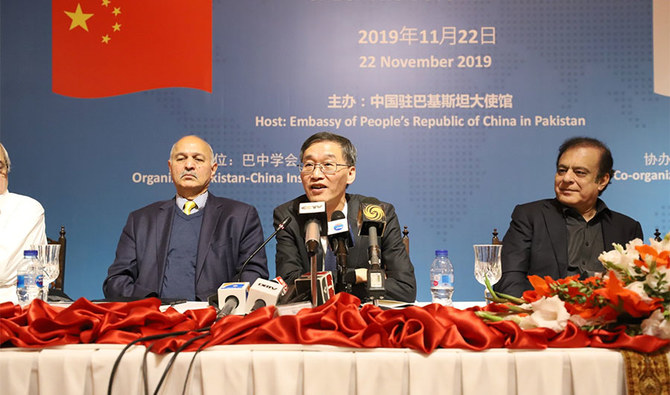


UAE exploring opportunities for cooperation under CPEC — Chinese envoy
- Yao says Pakistan and China have stepped up efforts to promote “third party investment” in the bilateral project
- Last September, Islamabad invited Saudi Arabia to become a “strategic partner” in CPEC
Latest updates






© 2026 SAUDI RESEARCH & PUBLISHING COMPANY, All Rights Reserved And subject to Terms of Use Agreement.