LAHORE: The government of Pakistan’s most populous province of Punjab is mulling using artificially generated rain to combat smog in the country’s second-largest city of Lahore and is in talks with firms in Malaysia, China and the United Arab Emirates to purchase the technology, the city commissioner said on Monday.
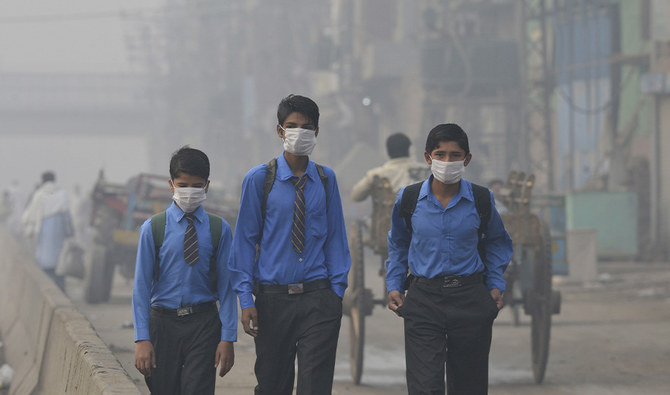
Lahore, a city of 11 million and the capital of Punjab, is choking on smog, driven in part by smoke from brick kilns and steel mills, burning of rice stubble and garbage, growing numbers of vehicles on the road and large-scale losses of trees as the expanding city makes way for new roads and buildings. According to The Lancet, a UK-based medical journal, at least 135,000 deaths per year in Pakistan are linked to air pollution; a majority of them occur in Punjab province.
On November 7, pollution levels in Lahore spiked to 600, six times the safe limits set by the American Environment Protection Agency. In recent weeks, the city has alternated between being the most polluted and the second most polluted city in the world, as per independent online air quality index monitor AirVisual.
As an increasing number of people in Lahore complained of headaches and burning eyes and throats, the Punjab chief minister set up a special ‘Smog Control Monitoring Committee’ comprising provincial ministers to find solutions.
At the inaugural meeting of the committee on November 7, Asif Bilal Lodhi, the Commissioner of Lahore, said he had proposed using cloud seeding to create artificial air and clear toxins in the environment.
Cloud seeding, releasing chemicals such as sodium chloride and magnesium oxide into the air from aircraft, can encourage water droplets to form and rain to fall. The method has been used this year by Malaysia to disperse smog wafting in from forest fires in Indonesia. China has also repeatedly used the method to trigger rain during dry spells.
“We are in contact with several firms in Malaysia, China and UAE to purchase the technology needed,” Lodhi told Arab News via phone.
The method is expensive and there are no guarantees of success.
“This will be a little expensive,” Lodhi said. “My own estimate is that it could cost over Rs. 300 million just for Lahore, so the federal government will have to decide whether or not to go ahead with it.”
The commissioner said he was hopeful that after getting a nod from the government, he could test the technology before the end of the year.
“This is something that can be used every year or whenever there is smoke in the air,” he said.
Dawar Nauman Butt, a data quality analyst in Lahore, said he was skeptical about the effectiveness of artificial rain in combating smog, calling it a “quick band-aid” type of solution.
“Few countries have experimented with artificial rain,” he said. “None have been able to show acceptable successes. Rather than artificial rain, the government should consider sprinkling water around open construction sites, wherever dust particles are being emitted from.”
Lodhi said the government was also pursuing long-term solutions to deal with smog, including shutting down brick kilns which had not converted to zigzag technology from November 18 and conducting emission tests on diesel vehicles.
“In the next four or five years, you will see that we will convert all public transportation in the city to either electronic or hybrid,” Lodhi said. “The federal government has already decided to start this process.”


![]()

Smothered by smog, Pakistan proposes using “artificial rain” to bring relief
Smothered by smog, Pakistan proposes using “artificial rain” to bring relief
- Punjab government in talks with firms in Malaysia, China and the United Arab Emirates to purchase cloud seeding technology
- Creating artificial rain through cloud seeding is an expensive solution with no guarantees of success
Latest updates


© 2026 SAUDI RESEARCH & PUBLISHING COMPANY, All Rights Reserved And subject to Terms of Use Agreement.