RIYADH: EF Education First released the ninth annual edition of its English Proficiency Index (EF EPI 2019) on Wednesday, analyzing data from 2.3 million non-native English speakers in 100 countries and regions.
This year, the Netherlands replaces Sweden as the top scorer. Saudi Arabia ranked 98th, scoring 41.6 on the English proficiency index. Saudi Arabia was ranked 83rd last year, dropping 15 positions this year.
Last year, the UAE had the highest ranking among the GCC countries, ranking 71 globally. This year it is ranked 70th. However, this year Bahrain scored the highest from the region, ranking 55th in the world.
The EF EPI is based on test scores from the EF Standard English Test (EF SET), the world’s first free standardized English test. The EF SET has been used worldwide by thousands of schools, companies, and governments for large-scale testing.
“English remains the undisputed global language of business. Our ninth edition of the EF EPI is more comprehensive than ever, providing valuable insights for governments to evaluate their language learning policies and the return on their investments in language training,” said Minh Tran, EF executive director of academic affairs.
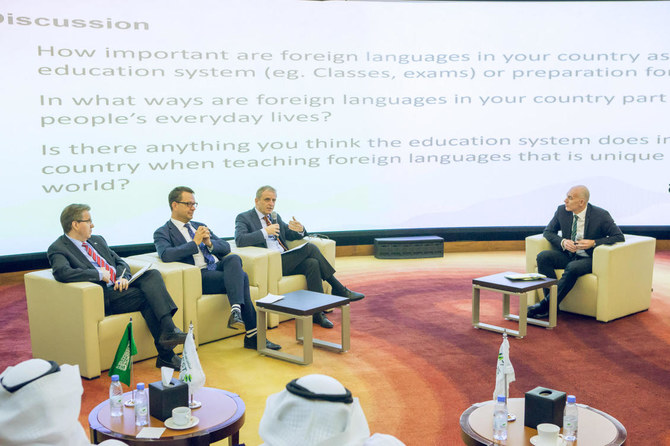
Speaking to Arab News, David Bish, director of academic management at EF in Zurich, said: “There are ways you can improve the figures quickly. But a long-term sustainable improvement is what Saudi Arabia should want and need, which is about working with teachers, raising the level of teaches in school, improving their standard of English and incentivizing them; maybe offering online training or outreach training through electronic means, then using local school teaching to raise the level of school students so they feed into university.”
He said that what Saudi Arabia’s tourism initiatives are a good way of incentivizing local people to get involved and interact through the medium of English and seize more opportunities to speak English.
“But for a quick fix, my magic recipe is simply to encourage more schools and businesses to adopt the use of this standard test platform, which is completely free and tests across some of your already well-performing institutions who must be doing so much better because you are already reporting their successes and things like ease of business. So we want them to engage and show what they can achieve. This is part of that openness. Take these tests to show what Saudis can do. I think that’s your quick fix,” he added.
“I think it is long-term to build the level up but we may not be seeing the true picture because unless more people take the test from the institutions that are performing well, we can’t tell. We need these superstar Saudi institutions to represent their country in this way and show what their high-performing students can do. Maybe this is the closest you have to a quick fix and maybe it will give us a clearer picture of what is really happening.”
Key findings of the EF EPI 2019 include: The network effect of English has never been stronger. The more people use English, the more useful it becomes for individuals, businesses, and countries to access resources and opportunities; European English skills are polarized, with most of the EU’s neighbors not developing English proficiency at the same pace as member states; Asia still has the largest gap between individual country scores, and China has moved from low to moderate proficiency for the first time; Latin America is finally turning around after years of stagnation.
Twelve out of 18 countries surveyed in the region improved their proficiency between 2017 and 2018; Africa’s overall average dropped significantly, and the gap between higher and lower proficiency countries is wider than ever; Women still outscore men in English skills worldwide, but the gender gap is closing; High English proficiency continues to correlate with various indicators of economic competitiveness, including higher income and increased labor productivity.


![]()

Global survey tests Saudi Arabia’s English skills
Global survey tests Saudi Arabia’s English skills


Latest updates


Recommended


© 2026 SAUDI RESEARCH & PUBLISHING COMPANY, All Rights Reserved And subject to Terms of Use Agreement.