DUBAI: When we feel unwell, we usually turn to a doctor for answers. But what if we were able to find out the diseases we are susceptible to and how to avoid falling ill?
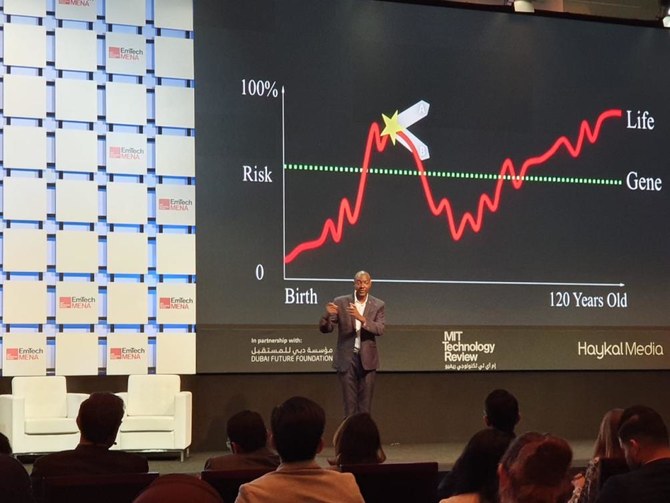
The concept of preventive healthcare technology was explained by Emmanuel Fombu, a physician and the author of “The Future of Healthcare,” on the second day of the EmTech MENA conference at Jumeirah Emirates Towers in Dubai.
Many believe that human genes are the main determinants of our disease risks based on family history.
Fombu believes that personal decisions made around data can change the world of medical care.
“Genes are just the beginning of your life story. Just because you have the genes for a disease, does not mean that you will get it. Your decisions make all the difference,” he said.
Environmental and socioeconomic factors play a key role in determining the probability of developing many diseases, with lifestyle factors such as diet and exercise being crucial to living a disease-free life.
However, Fombu argues that each individual is unique, and therefore requires a unique diet plan, medicine and treatment — a concept that is not currently practised.
Drugs analyzed in most clinical trials are tested on a small sample of people, often consisting of white men and very few women, before they are taken to the market for nationwide use, said Fombu.
“What is depressing in healthcare today is this concept of medicine. Two people suffering from diabetes are not the same,” said Fombu, adding that even twins who share the same gene pool are not destined to develop the same conditions.
Studies in the US have also shown disparity in disease rates in different parts of the same city, based on socioeconomic factors.
“Take diabetes in China. It went from 0.67 percent in 1980 to 9.7 percent in 2011,” Fombu said.
“Did their genes change? Or did people get wealthier and perhaps eat more junk food?”
Fombu highlighted existing and upcoming devices that work on monitoring and predicting disease, providing unique data to each patient.
He said research is underway to enable Apple Watch and other specialized fitness brands to be able to use voice to predict conditions such as Alzheimer’s disease and dementia, and even aid in suicide prevention.
Fombu favors leveraging technologies that give individuals more power over their health through personalized data.
One example is a phone-sized ultrasound device manufactured by a company called Butterfly Network, which can be used through automated instructions by patients at home.
“Why wait to get sick before you intervene? Why not understand the risk of disease going forward and modify your lifestyle?” said Fombu.
Moving from physical health to mental health, speaker Jason Kahn, chief science officer and cofounder of video game “Mightier,” discussed tackling mental health through AI technology.
“Mightier” helps children aged between 6 and 14 to develop emotional strength and build calming skills to meet life challenges.
The game, which is connected to users’ emotions, monitors their feelings and reactions while they go through the different stages.
“There are not enough mental health workers around. Studies show there is one mental health worker for every 11,000 people in the world who need care,” said Kahn.
After a comparison between traditional office-based therapy and AI therapy through “Mightier,” Kahn found that 80 percent of children playing the game showed improvement, as opposed to only 20 percent in regular therapy.
“We need to find new solutions,” he said.
The EmTech MENA conference, which took place on Nov. 4 and 5, was organized by “MIT Technology Review Arabia” in cooperation with the Dubai Future Foundation and Haykal Media.
The two-day event featured 31 prominent regional and international speakers including government officials, researchers and entrepreneurs.


![]()

Preventive healthcare technology — the future of medicine?
Preventive healthcare technology — the future of medicine?
- Author Emmanuel Fombu: Personal medical decisions will be influenced by data
- Fombu spoke at two-day EmTech MENA conference in Dubai


Latest updates




Recommended


© 2026 SAUDI RESEARCH & PUBLISHING COMPANY, All Rights Reserved And subject to Terms of Use Agreement.