

Cirque du Soleil promises unforgettable Riyadh Season show

1 / 7
Cirque du Soleil Bazzar set up a white tent out of consideration for visitors, as darker shades would heat up. (AN Photo)
2 / 7
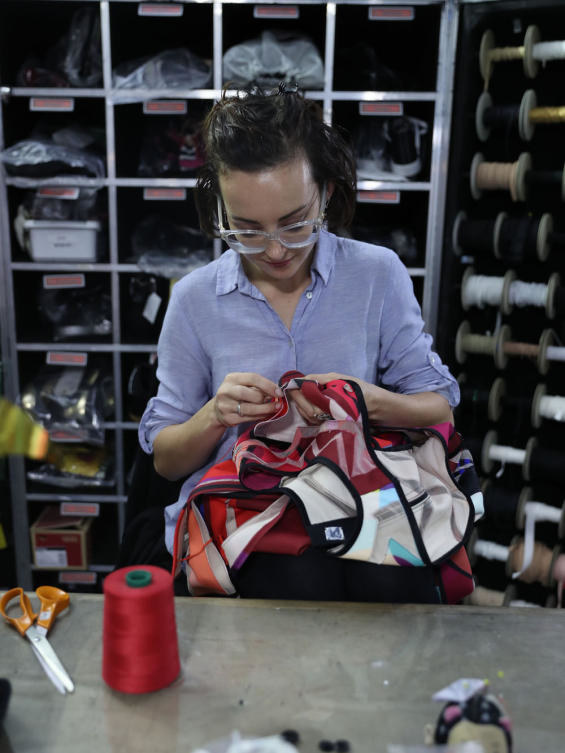
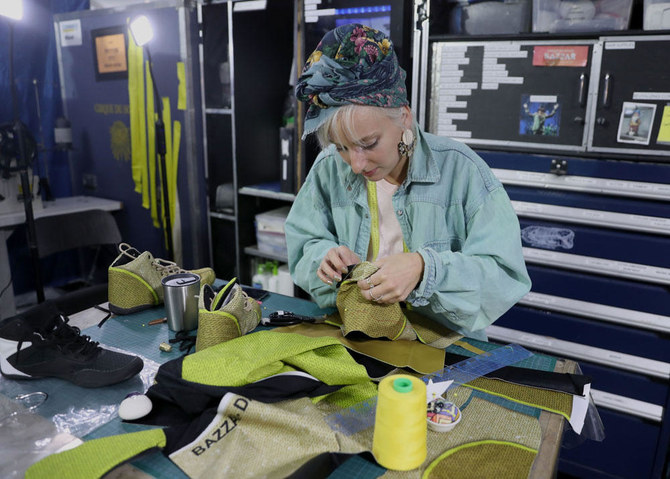
Cirque du Soleil’s wardrobe team worked hard on modifying 15 outfits out of respect for the Saudi culture and traditions. (AN Photo)
3 / 7
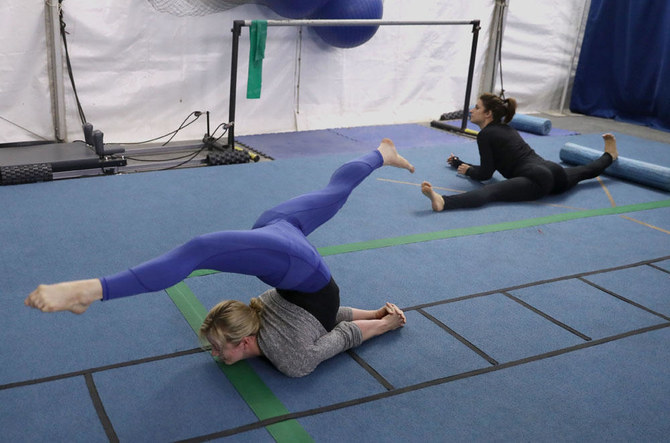
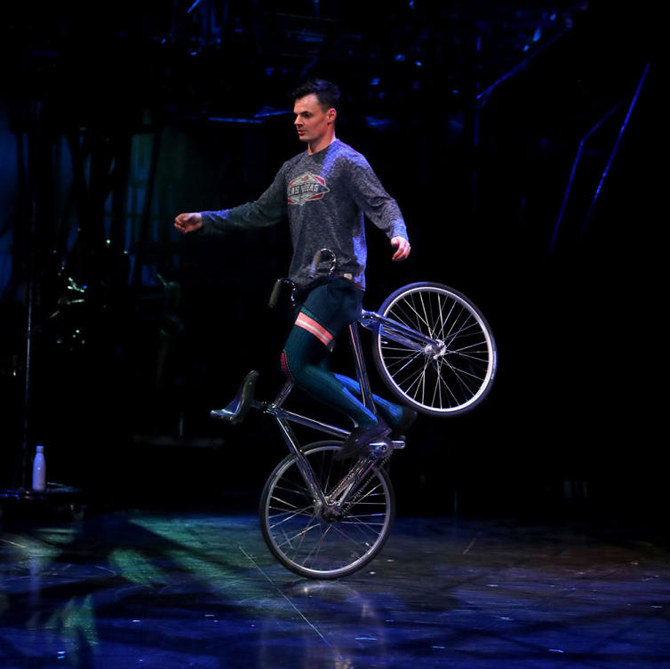
Cirque du Soleil Bazzar will bring in 32 performers of different nationalities to deliver 10 powerful acts for the Riyadh Season. (AN Photo)
4 / 7
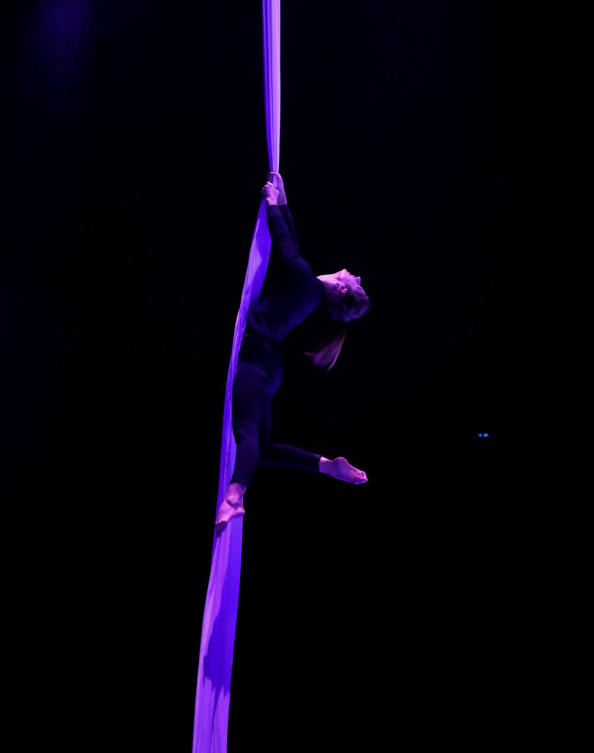
Lauren Joy Herley worked on Cirque du Soleil Sand during Saudi National Day in 2018, and she loved Saudi Arabia’s enthusiastic reactions during the performance, calling them ‘very vocal.’ (AN Photo)
5 / 7
Lauren Joy Herley is loving her character, the Floating Woman, who is rebellious and a trickster, but has good intentions and loves to have fun. (AN Photo)
6 / 7
Cirque du Soleil Bazzar will bring in 32 performers of different nationalities to deliver 10 powerful acts for the Riyadh Season. (AN Photo)
7 / 7
Cirque du Soleil’s wardrobe team worked hard on modifying 15 outfits out of respect for the Saudi culture and traditions. (AN Photo)
Updated 01 November 2019
Follow

Cirque du Soleil promises unforgettable Riyadh Season show

  • Cirque du Soleil Bazzar tells the tale of a maestro and a floating woman who keeps disrupting him and a mini maestro who wants to take his leading role
  • The acrobatic performers on stage will be accompanied by three musicians — one of them can play up to 17 instruments

RIYADH: Set in a white tent at Riyadh Front, the international team of artists and crew behind the sensational Cirque du Soleil gathered to prepare for their opening night on Nov. 1 as part of the Riyadh Season.

The show’s publicist Nicolas Chabot told Arab News about Cirque du Soleil Bazzar, which will tell the tale of a maestro and a floating woman who keeps “disrupting” him and a mini maestro who wants to take his leading role.

“People come to see Cirque du Soleil shows to see acrobatic acts, and Bazzar will hold 10 impressive acts with 32 artists in the choreographed show. We have beautiful costumes and amazing music in what is known as contemporary circus,” he said.

That means there will be no animal tricks during the show. Instead, it will have a mixture of acts, dance, music and theater. “That is what Cirque du Soleil has been doing for 35 years,” added Chabot.

The acrobatic performers on stage will be accompanied by three musicians — one of them can play up to 17 instruments. But unlike operas and plays, the acrobatic performance will lead the music. The songs will vary from pop to folk and classical music, to appeal to all ears.

This is not Lauren Joy Herley’s first visit to Saudi. The performer who plays the floating woman, a rebellious trickster, in Bazzar was part of Cirque du Soleil’s Sand on Saudi National Day last year, and she is excited to be back.

“Last year in Riyadh, the audience was very, very vocal, and I am hoping they are this year too,” she said.

As an intimate show, Herley thinks that “it brings about a raw, energetic atmosphere that does not rely on projections and side effects but the individuals that you see bringing their presence and skill.”

She said she was very proud to present Cirque du Soleil to Saudi Arabia, describing her previous experience as “different but positive.”

In order to show respect for Saudi audiences and to the kingdom’s culture, head of wardrobe Alexandra revealed that they had to modify 15 outfits.

But that did not decrease the performers’ mobility. “We made sure the artists trained in their modified outfits, and everyone is really excited for their upgraded clothes.”

Rania Al-Ghamdi, from Jeddah, has been a huge fan of Cirque du Soleil and she pledged to visit Bazzar during the Riyadh Season. Part of her obsession goes back to the fact that the circus giants refuse to incorporate animals in their performances, and were against it from the start.

“They spread awareness by leading by example, a movement that is led by many nowadays, but they did it first,” she said.

Al-Ghamdi also likes that there is always a tale to their performances; it is not “just an acrobatic show,” the costumes, makeup, the story, the art and the effort they put into their shows are what makes them unrivaled.

“They dig deep and research, learn languages to create songs that tell the tale in a very artistic way,” she added.

Cirque du Soleil Bazzar will open on Nov. 1 until Dec. 7 to dazzle the Riyadh Season, before moving on to the Caribbean.


How science is reshaping early years education 

Updated 27 December 2025
Follow

How science is reshaping early years education 

DUBAI: As early years education comes under renewed scrutiny worldwide, one UAE-based provider is making the case that nurseries must align more closely with science.

Blossom Nursery & Preschool, which operates 32 locations across the UAE, is championing a science-backed model designed to close what it sees as a long-standing gap between research and classroom practice.

“For decades, early years education has been undervalued globally — even though science shows the first five years are the most critical for brain development,” said Lama Bechara-Jakins, CEO for the Middle East at Babilou Family and a founding figure behind Blossom’s regional growth, in an interview with Arab News.

Lama Bechara-Jakins is the CEO for the Middle East at Babilou Family and a founding figure behind Blossom’s regional growth. (Supplied)

She explained that the Sustainable Education Approach was created to address “a fundamental gap between what we know from science and what actually happens in nurseries.”

Developed by Babilou Family, the approach draws on independent analysis of research in neuroscience, epigenetics, and cognitive and social sciences, alongside established educational philosophies and feedback from educators and families across 10 countries. The result is a framework built around six pillars; emotional and physical security, natural curiosity, nature-based learning, inclusion, child rhythms, and partnering with parents.

Two research insights, Bechara-Jakins says, were particularly transformative. “Neuroscience shows that young children cannot learn until they feel safe,” she said, adding that stress and inconsistent caregiving can “literally alter the architecture of the developing brain.” 

Equally significant was evidence around child rhythms, which confirmed that “pushing children academically too early is not just unhelpful — it can be counterproductive.”

Feedback from families and educators reinforced these findings. Across regions, common concerns emerged around pressure on young children, limited outdoor time and weak emotional connections in classrooms. What surprised her most was that “parents all sensed that something was missing, even if they couldn’t articulate the science behind it.”

At classroom level, the strongest body of evidence centres on secure relationships. Research shows that “secure attachments drive healthy brain development” and that children learn through trusted adults. At Blossom, this translates into practices such as assigning each child “one primary educator,” prioritising calm environments, and viewing behaviour through “a neuroscience lens — as stress signals, not misbehaviour.”

Bechara-Jakins believes curiosity and nature remain overlooked in many early years settings, despite strong evidence that both accelerate learning and reduce stress. In urban centres such as Dubai, she argues, nature-based learning is “not a luxury. It is a developmental need.” 

For Blossom, this means daily outdoor time, natural materials, gardening, and sensory play — intentional choices aimed at giving children what science says they need to thrive.