

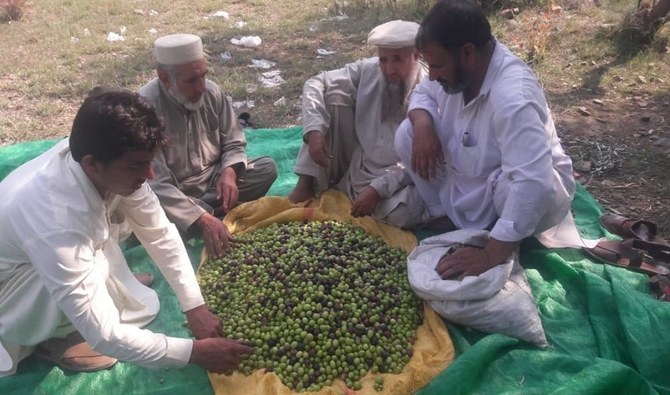

PESHAWAR: The first ever olive processing plant set up in a Pakistani tribal district, in a region that borders Afghanistan, has started producing olive oil, the top district administrator said on Thursday.
Wild olive plants grow in the millions in the erstwhile tribal regions, but until about a decade ago, these plants had little commercial value and were used mainly for timber and fire-wood.
But following the grafting of 150,000 wild olive plants into cultivars, an artificially bred and improved variety of the plant, the olive oil processing plant in Bajaur is now in business. The cultivars are created through grafting, where a single bud from a desirable tree is slipped into the bark on a small seedling to produce farmer-friendly varieties of the plant that are resistant to diseases, have a low juvenile period and a longer fruiting life.
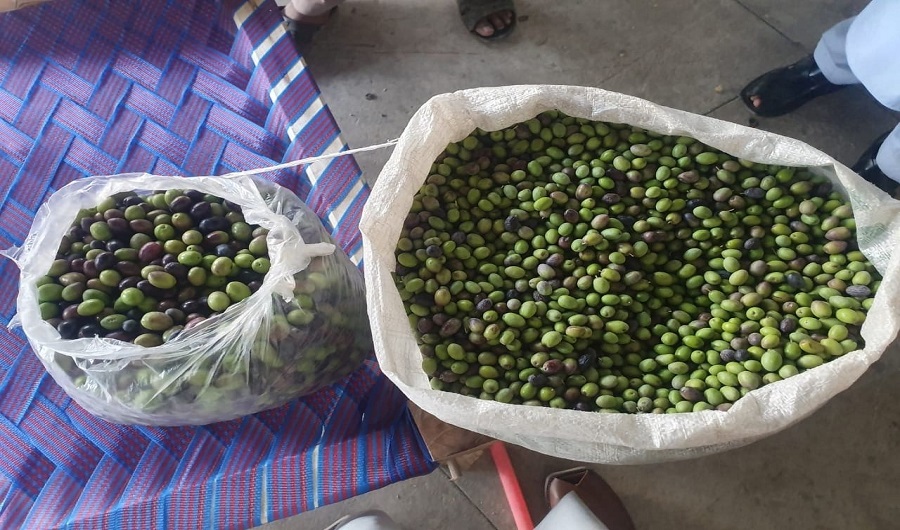
Olive fruits picked and ready for processing at Bajaur’s oil processing plant on Tuesday, Oct. 22, 2019 (Photo credit: Bajaur agriculture extension department)
“Oil production has started but in low quantity. I hope from next year, oil production will increase for commercial purposes,” Muhammad Usman Mehsud, deputy commissioner of Bajaur, told Arab News, and added that efforts had been intensified to begin exporting the oil from next year.
“The agriculture extension department intends to graft 1.6 million wild olive groves through improved olive varieties. Right now, we have up to 6,000 grafted olive plants bearing fruit,” he said.
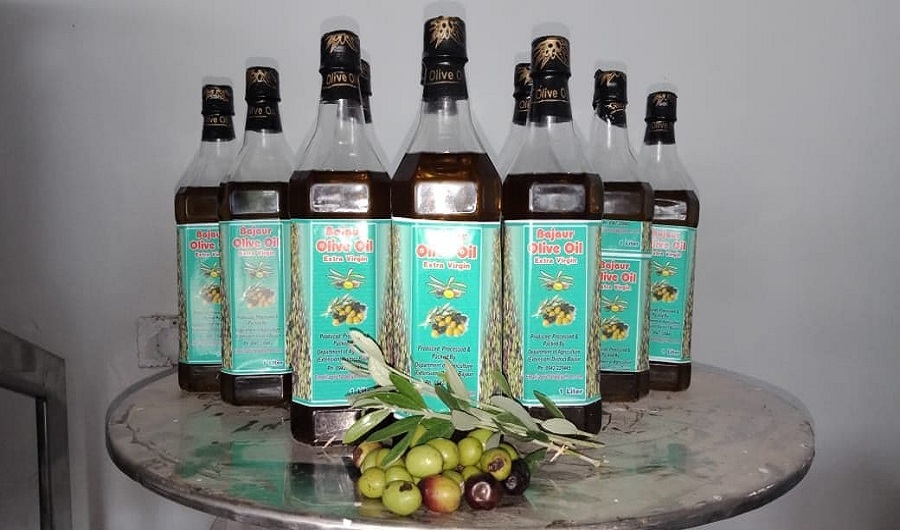
Bottles of refined olive oil labelled “Bajaur Olive Oil,” on display, from the district’s first oil processing plant. Oct. 22, 2019 (Photo credit: Bajaur agriculture extension department)
Olives, known locally as Zaintoon or Khuna, have 30 different species and a life span of between 900 to 1,000 years. According to experts in Pakistan, they are one of the world’s most drought resistant trees and thrive well where annual average rainfall is between 900 to 1,000 mm without irrigation.
Of the grafted olive species, 30,000 olive plants are already bearing fruit, Zia-ul-Islam Dawar, the district agriculture officer, told Arab News.
“One olive plant produces 60 to 70 kg of oil, while the processing plant has the capacity to produce 200 kg of oil per hour,” he said and added that his department planned on grafting wild olive groves under a government scheme known as the ‘Promotion of Olive Cultivation for Oil Production in Bajaur.’
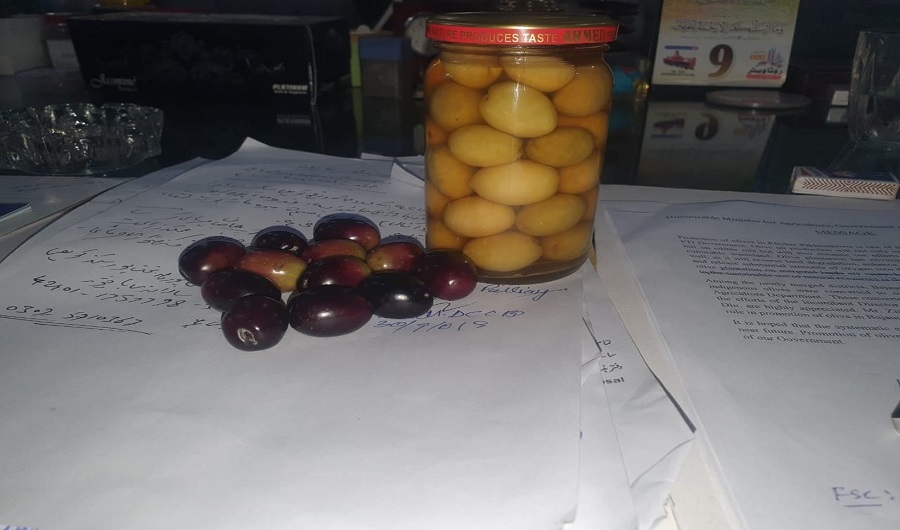
Pickled olives from Bajaur’s first ever olive processing plant. Oct. 22, 2019 (Photo credit: Bajaur agriculture extension department)
“The agriculture department has established new orchards on 160 acres of land in the district under various developmental schemes in the year 2018-19,” Dawar said, and added that the farmers too, are looking to cash in on the increase in business in the region.
One liter of olive oil costs approximately Rs. 1,600 ($10) in the open market.
Shah Khalid, a tribal elder and farmer, said the district’s tribesmen were enthusiastically participating in the planting and development of olive cultivars due to the increase in demand in local as well as international markets.
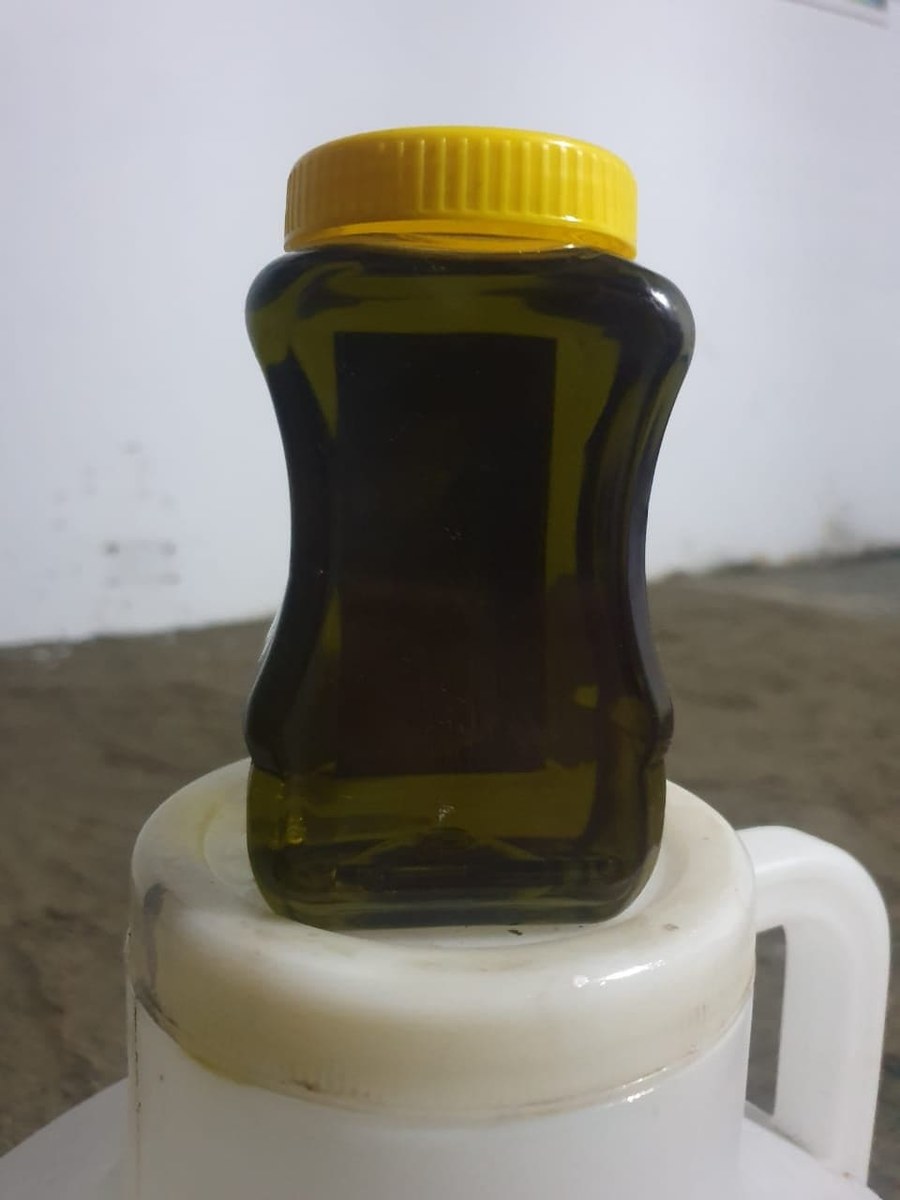
A bottle of olive oil, a product of Bajaur’s lone oil processing plant. Oct. 22, 2019. (Photo credit: Bajaur agriculture extension department)
“More and more farmers are now inclined to establish olive orchards in Bajaur because they know about its skyrocketing price. I suggest the government should declare Bajaur Pakistan’s olive valley to spur a revolution in the economy and to woo more growers and investors,” Khalid said.
Parts of Khyber Pakhtunkhwa province and the newly-merged tribal districts have conducive agro-climatic conditions for olive plantation, with 36,000 million wild olive trees growing in Pakistan’s mountainous tribal areas, he said.
Olive oil is used in Pakistan and around the world for cooking, eating, confectionary, cosmetics and for its many health benefits.


